Both former NBA players say they identify as women and meet every requirement under the collective bargaining agreement

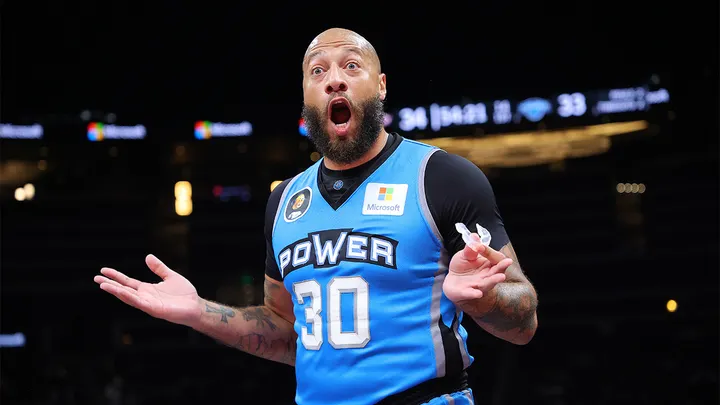
Enes Kanter Freedom and Royce White placed the WNBA in an almost impossible spot on Friday when they declared for the 2027 Draft in the wake of the Sophie Cunningham drama, leaving the league with a series of limited and unappealing options. Neither former NBA star is likely itching to return to professional basketball; instead, they have effectively called the WNBA’s bluff by declaring their intentions to enter next year’s draft within hours of each other. Freedom noted that if simply declaring who you are is all that is required, he meets every necessary requirement. White similarly added that he identifies as a woman for the purpose of professional basketball and expects to be a dominant force, leaving the league with a massive headache.
“After careful consideration and reviewing the current eligibility guidelines, I’m officially declaring myself a WNBA prospect. If simply declaring who you are is all that’s required, then I meet every single requirement necessary to compete in the WNBA. My team and I have carefully examined the WNBA’s eligibility criteria and governing framework surrounding self-identification and inclusion. Based on the current guidelines, I can and am officially declaring my eligibility for the upcoming WNBA draft in April 2027.
I know my presence on the court will stir up strong opinions. I am definitely not here to mock, make fun of, or disrespect any community or personal choices. I’m simply asking that the current rules be applied equally to everyone — the rules that represent the very values many WNBA players and coaches have publicly advocated for. My team and I are prepared to ensure these guidelines are applied equally, consistently, and without exception, and I look forward to the WNBA honoring its stated principles. See you at training camp.
This bold move sets up a dramatic scenario where the WNBA must respond, with the best-case scenario for the players being a direct rejection stating they are not eligible because they are clearly not women. Such a rejection would challenge the performative positions the league has pushed for years. As the situation unfolds, observers have outlined a few potential paths forward for the league’s leadership.”
The first path is for the WNBA to reject the declarations outright with no explanation. This clean break fits a rudderless league, allowing officials to simply state that the players are ineligible under current rules and refuse further comment. This strategy relies heavily on a compliant media ecosystem willing to avoid asking difficult follow-up questions, keeping the controversy contained. Outlets critical of the league, such as OutKick, are already largely barred from WNBA facilities, meaning traditional independent scrutiny inside the arenas would be non-existent.
RELATED STORY: Man dominates Women’s Basketball League in France Wants to Come to the WNBA

A man competing in France’s women’s basketball league has sparked intense debate over the WNBA’s policies regarding transgender athletes. Julie Tétart, a six-foot-three male player, dominated the Ligue Féminine 2—the second-highest tier of professional women’s basketball in France—during the 2025–26 season by averaging 21 points and 20 rebounds per game while shooting nearly 61% from the field.
Tétart shattered league records by becoming the first player to grab 30 rebounds in a single game, recording at least 20 rebounds in 12 separate contests. Consequently, Tétart swept BeBasket’s annual awards, earning Player of the Year, Defensive Player of the Year, and French Player of the Year honors.
A second option involves rejecting the candidates specifically as cisgender men. Cisgender refers to individuals whose gender identity matches the sex they were assigned at birth. The league could argue that Freedom and White have historically lived and identified as men rather than transgender women, thereby failing to meet draft requirements. However, Article XIII, Section 1(a) of the WNBA Collective Bargaining Agreement states only that “Only players who are women are eligible to play in the WNBA,” without formally defining the word “woman” or establishing gender identification standards. This loophole means the league would likely face immediate, probing questions about what precisely distinguishes an eligible transgender woman from Enes Kanter Freedom.

Sophie Cunningham, a guard for the Indiana Fever, has publicly stated that biological men should not compete in women’s sports or share locker rooms with female athletes.
In a July 2026 interview with ESPN, Cunningham argued that it is “common sense” to protect young girls and biological women, stating, She emphasized that her position is rooted in honesty and love, clarifying, and asserting that there is room for everyone while maintaining that women’s sports require protection under Title IX.
A third alternative is for the league to scramble and create an objective trans-eligibility standard by inserting a new clause into the rulebook. By outlining specific criteria regarding transition history and hormone levels out of thin air, the league could manufacture a mechanism to keep White and Freedom out while preserving its ideological alignment. Ultimately, this approach would merely kick the can down the road.
A fourth route involves defining eligibility strictly by biological sex, an approach likened to navigating Florida’s notoriously dangerous Interstate 4. Coming out and explicitly stating that the two men cannot play because they are biological men would dismantle the league’s carefully crafted narrative, ending years of virtue-signaling and pandering. Such a decision would inevitably provoke fierce backlash from the transgender community and political left, shattering the foundational stance of a league that has made trans rights its explicit battle. Because this sanest route would upend the current narrative, the league is expected to avoid it at all costs.

Finally, the league could choose the nuclear option by accepting both players as eligible and letting the chips fall where they may. Because the trans rights movement has been a definitive hill to die on for years, a major pivot is virtually impossible without unraveling past positions. By allowing both players into the draft, the WNBA would close its eyes and hope for the best, setting an unprecedented precedent. Such an outcome would likely trigger a massive exodus of sane individuals and fans, serving as a profound slap in the face to actual women in the league and potentially spelling the beginning of the end. As players like Sophie Cunningham, Caitlin Clark, and Angel Reese navigate their respective paths amidst the chaos, the ball remains squarely in the WNBA’s court.