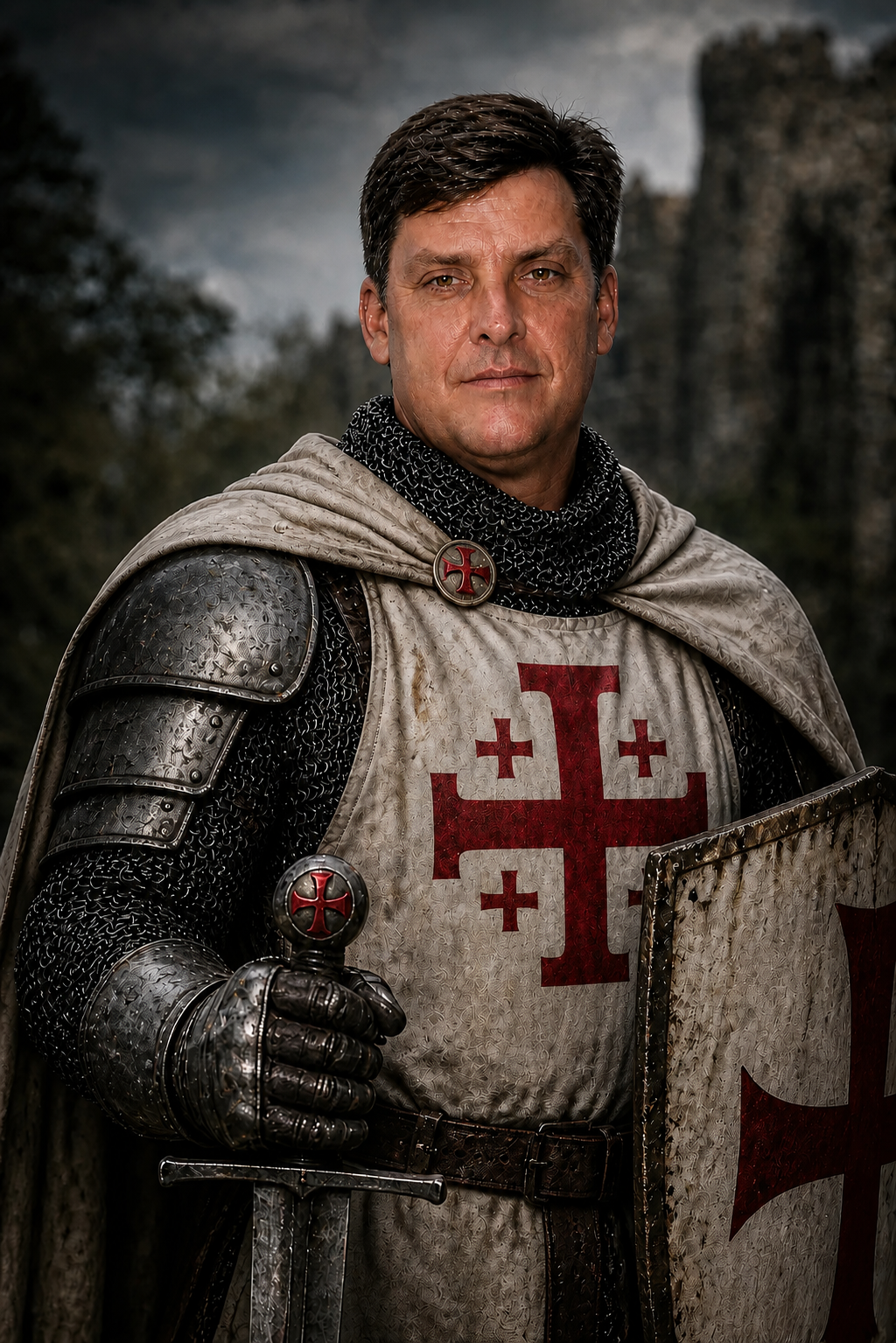
Traditional, Orthodox, Crusader for Christ.
I was born, baptized, raised and married at Emmanuel Episcopal Church in Winter Park, Florida – part of the worldwide Anglican Communion. Being a member was something I was very proud of for many years. Like many, I drifted away from the church and my walk with the Lord was weak and I put zero effort into my faith. After the ordination of a homosexual bishop named Gene Robinson on November 2, 2003, I felt the church had nothing left for me. I could not attend a service where my church exalted an abomination of sin.
A ‘dust up” with my former sister in law was the final blow when I realized that friends and family around me were changing their views on gay marriage and homosexuality – a sign of the times. A change in society that would eventually rock the church to it’s foundations and cause tremendous damage and schism. Look no further than the United Methodist Church, The Presbyterian Church USA and the Episcopal Church in North America for evidence of massive infighting, church closures and a massive exodus of members. The homosexual community and liberal, progressive church elders could not care less about what has happened to the church.
Cut to 2022 when there was an event in my life that Calvinist’s refer to as Irresistible Grace, one of the 5 pillars of T.U.L.I.P. which describes God’s call to salvation that effectively overcomes human resistance, ensuring the elect respond in faith. October of that year I was quite happy with my life, my marriage and where I was with God. That all changed during the Thanksgiving season when the Holy Spirit came into my life and convicted me in a very profound way. Thus began my path to deeper understanding of scripture, and a broken sinner was truly saved by the grace of God.
I am not a professional writer. My college experience was rooted in mathematics and computer science, specifically programming. My background afforded me the skills to publish a website since the 90’s (Many will remember the WISYWIG interface (What You See Is What You Get) of Microsoft FrontPage. Quite often I would simply hand code hypertext markup language (html) and publish what was then called a weblog. A digital diary of sorts. Not many saw my posts at all, but it was a ton of fun.
After an 8 year stint as a grocery store manager following college in the 80’s, I worked as a service technician for 30 years in two different industries beginning with the local phone company. I went back to college in 2014 and studied electrical and mechanical engineering and went to work in the commercial and industrial refrigeration business. My work as a service technician was extremely lucrative, however I paid a price later in life. A month ago I underwent the first of two surgeries to replace both of my knees with artificial.
Although I had been reading the bible cover to cover every year, I currently have the time to study, research and take classes in theology. Reformed Theological Seminary (RTS) is literally 15 minutes from my house in Oviedo. Praise God. The reading plans that I enjoy the most are primarily the M’Cheyne Daily Plan in a year, The 1517 Project Plan by Chad Bird and my own carefully thought out daily plan that can be found here.
My current interest involves Systematic Theology. I have Grudems 2nd Edition, Charles Ryrie’s Basic Theology, Finis Dake’s God’s Plan for Salvation, John Frame’s Systematic, Berkof’s Systematic, Charles Hodge’s Systematic and just yesterday Essentials from Beeke and Smalley arrived. My interest in systematic theology was born out of my disdain for Christians that quote a single verse of the bible and build a theological argument from it. Systematics examine a topical doctrine and discuss what the entire bible says about the given topic. This approach affords the reader support for an argument from a pure apologetic point of view. I just love it. It is currently my most favorite way to study aside from reading the bible using a daily reading plan. Charles Ryrie’s work on Demons and Angels is particularly insightful – one of the first topics I explored.
This day, I still consider myself an Anglican. I believe in the 39 articles and the traditions and sacraments including the Daily Office which I read every day – morning and evening. Click here for an article on how I created an Anglican reading plan and setup my 2019 Book of Common Prayer. If a biblically astute person were to hear me speak about God, religion or theology – one would assume that I was 100% pure Dutch reformed Calvinist. A title that I would embrace whole heartedly.
I’m a dispensationalist, which means I believe God still has planes for Israel. I am a cessationist when it comes to the gifts of the spirit and I believe there is no rapture but a single second coming. I don’t believe in gay marriage or female pastors (although women skillfully perform all other skills in church.
I no longer attend a church as organized religion defines it. Although I previously attended a pretty good Anglican Church near my house until I realized there are zero programs designed for my spiritual life. Area churches focus on children almost exclusively and you would be hard pressed to find a solid weekday night bible study for adult men. Like my Rector said recently, there simply isn’t any interest in bible study. Imagine that, no interest in bible study beyond the liturgical Sunday service. Heartbreaking.
If the ACNA where to plant a church in Orlando I would certainly attend. Mega churches and non-denominational church’s are completely out of the question. Living in Florida, I am reminded daily of the scandal and abuse by church leaders and I don’t want to be a part of that kind of a gathering (something I am heavily criticized for, and I get it.)
I no longer able to evangelize to young people as in the past, simply because I am no longer in those social circles after retirement. What prompted this article was a phone call from a young person that I once worked with who called me. Honestly, I couldn’t remember who he was, which is not normally the case for me. He described our interactions together which were not many and in tears he gave me his witness and his conversion to a protestant understanding of Salvation from Catholicism. Although not a new believer, he did understand the gospel and realized Catholicism was wrong – something I preached on the daily to anybody that would listen. Praise the Lord!
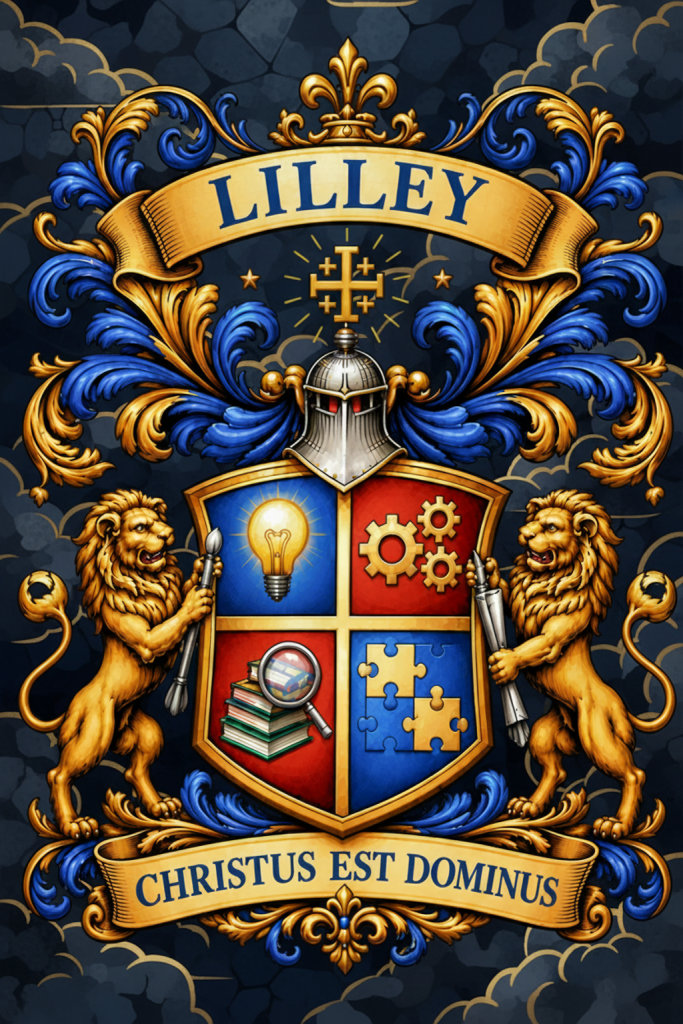
My Worldview
On Theology
God is that only omnipotent, omnipresent, and omniscient being whose reason for existence is in himself. There is one God (Deuteronomy 6:4) in three persons (Matthew 28:19), each co-equal in power, knowledge, understanding, wisdom, majesty, and glory. Arianism, Modalism, and Partialism are heretical representations of the Trinity and are adamantly rejected. He is wholly sovereign.
On Christology
Jesus Christ is the second-person of the Godhead and possesses all of the attributes of God. He eternally exists with the Father (John 1:1), active in Creation (John 1:3), the prophesied Messiah of the Old Covenant (Isaiah 53), the perfect Lamb of the New Covenant (Hebrews 9:12), the only way of salvation (John 14:6) the Judge of the World (II Timothy 4:1), and the Ruler of the age to come (Revelation 19:15). He is the child that was born and the Son that was given (Isaiah 9:6). He was virgin born (Micah 5:2), sinless (Hebrews 4:15), crucified by the Father (Isaiah 53:10), dead of His own volition (John 10:17-18), resurrected under His own power (John 2:19), ascended to the Father (John 20:17), presented blameless (Hebrews 9:12), intercedes for the saints (I Timothy 2:5), and is coming again to claim His bride (I Thessalonians 4:9-18). In the person of Jesus Christ exists the Hypostatic Union — the perfect union between Christ’s divinity and humanity.
On Pneumatology
The Holy Spirit is the third-person of the Godhead and possesses all of the attributes of God. He was active in creation (Genesis 1:2). He actively convicts of sin, magnifies the Lord Jesus Christ, and is that Comforter and indweller (Romans 8:9) of the saints prophesied by the Lord (John 14:26). Believers are sealed and eternally secured by Him (Ephesians 1:13).
On Humanity
Man is the pinnacle of God’s creation. The first man, Adam, was created in the image of God (Genesis 1:26-27) perfect in the Garden of Eden and enjoyed a model relationship with God prior to his fall. Adam sinned in the Garden resulting in the curse of man — including the sin nature (not direct sin or guilt of another’s sin) and death to be passed down to all mankind (Romans 5:12). Man is thereby in a state of total depravity meaning that without the direct and express drawing of God there is no way that man would or could choose or come to God on his own (John 6:44). Man has a free will that is in perfect harmony with God’s full sovereignty.
On Soteriology
Because man is totally depraved and unable and unwilling to choose or come to God on his own (John 6:44), salvation is wholly of God. The unbeliever is condemned already (John 3:18, John 3:36). God Himself provided a Lamb (Genesis 22:8). Salvation is by grace through faith (Ephesians 2:8-9) in Jesus Christ through His redemptive work at Calvary. The saved are justified by faith alone (Romans 3:28, Romans 5:1, Galatians 2:16). Faith, while essential for salvation, is a gift of God (Romans 10:13-17, Ephesians 2:8). The believer is eternally secure in the finished work of Christ (John 6:39-40) and by the sealing of the Holy Spirit (Ephesians 1:13).
On Existence
Angels, all created beings, the universe and all that it contains was created in six, literal, twenty-four hour days (Genesis 1). All old-earth theories including, but not limited to, evolution, Gap theory, Day-Age theory must be repudiated and conflict with Biblical and scientific records. All of Creation, was perfect and flawless prior to the fall (Genesis 1:31). There was no sin prior to Adam’s. There was no sickness, death, decay, or disease prior to Adam’s sin. The first death and sacrifice was at God’s own hand as He killed a lamb for the express purpose of providing a satisfactory covering or atonement for Adam and Eve (Genesis 3:21).
On Ecclesiology
A New Testament Church is an autonomous local assembly of baptized believers who have joined themselves together for worship, fellowship, and to carry out the Great Commission both expressly and through sending and supporting missionaries (Acts 2:46, Acts 13:1-4). Christ is the only head of the church (Ephesians 5:23, Colossians 1:18, I Peter 5:1-4).
On Ordinances
Two ordinances are commanded of our Lord: baptism as an open and outward expression of salvation (Matthew 28:19) and the Lord’s Supper (Luke 22:19, 1 Corinthians 11:24-25).
On Eschatology
The believing dead are currently present with the Lord (II Corinthians 5:8). The unbelieving dead are currently in a place of torment (Luke 16:22-23). Jesus Christ is coming again to “rapture” His bride (1 Corinthians 15, 1 Thessalonians 4). Immediately following the Rapture the earth will experience a seven year period known as the Great Tribulation or the Time of Jacob’s Trouble where Israel will be dealt with as a nation (Matthew 24). The Rapture shall be ended with the triumphant return of the King of Kings resulting in the Battle of Armageddon (Revelation 16:16). The Millennial Reign of Jesus Christ will succeed his return. Christ will rule and reign from Jerusalem for a thousand years when Satan will be loosed for a season culminating in Gog and Magog making war against Christ (Revelation 20:8). The Great White Throne Judgment follows where death and hell are cast into the Lake of Fire (Revelation 20:10-15) — ushering in the Eternal Age.
CREEDS AND CONFESSIONS
Creeds and confessions are formal, written statements that summarize key biblical teachings and doctrines, serving as guides for Christian belief and practice while remaining subordinate to Scripture.
Creeds are short, universal statements of allegiance to the Trinity, historically used in baptism and public worship to distinguish orthodox Christianity from heresy. They focus on in whom Christians believe, such as the Nicene Creed, the Apostles’ Creed, and the Athanasian Creed.
Confessions are longer, more detailed documents that articulate what specific Christian groups or denominations believe. Developed largely during the Reformation, they address local issues, secondary doctrines, and church order, such as the Westminster Confession, the Heidelberg Catechism, and the Belgic Confession.
Apostle’s Creed
I believe in God, the Father almighty,
creator of heaven and earth.
I believe in Jesus Christ, his only Son, our Lord,
who was conceived by the Holy Spirit
and born of the virgin Mary.
He suffered under Pontius Pilate,
was crucified, died, and was buried.
he descended to hell. [I prefer the more accurate, “Hades”]
The third day he rose again from the dead.
He ascended to heaven
and is seated at the right hand of God the Father almighty.
From there he will come to judge the living and the dead.
I believe in the Holy Spirit,
the holy catholic church,
the communion of saints,
the forgiveness of sins,
the resurrection of the body,
and the life everlasting. Amen.
Nicene Creed:
We believe in one God,
the Father, the Almighty,
maker of heaven and earth,
of all that is,
seen and unseen.
We believe in one Lord, Jesus Christ,
the only Son of God, eternally begotten of the Father,
God from God, Light from Light, [Deum de Deo, from the Western Church]
true God from true God, begotten, not made,
of one Being with the Father.
Through him all things were made.
For us and for our salvation
he came down from heaven:
by the power of the Holy Spirit
he became incarnate from the Virgin Mary, and was made man.
For our sake he was crucified under Pontius Pilate;
he suffered death and was buried.
On the third day he rose again
in accordance with the Scriptures;
he ascended into heaven and is seated at the right hand of the Father.
He will come again in glory to judge the living and the dead,
and his kingdom will have no end.
We believe in the Holy Spirit,
the Lord, the giver of life,
who proceeds from the Father and the Son. [Western addition of the filioque]
With the Father and the Son he is worshiped and glorified.
He has spoken through the Prophets.
We believe in one holy catholic and apostolic Church.
We acknowledge one baptism for the forgiveness of sins.
We look for the resurrection of the dead,
and the life of the world to come. Amen.
- The 39 Articles of Religion
- The 39 Articles of Religion, also known as the XXXIX Articles, are the historic doctrinal statement of the Church of England and a primary standard of faith for the Anglican Communion. Adopted in 1571 under Queen Elizabeth I and directed by Archbishop Matthew Parker, they were designed to establish a theological middle way between Roman Catholicism and the Protestant Reformation.
- The Westminster Confession
- The Westminster Confession of Faith is a Reformed statement of doctrine drafted between 1643 and 1647 by the Westminster Assembly, a synod of Puritan and Presbyterian theologians convened by the English Parliament to reform the Church of England. Comprising 33 chapters, the document systematically outlines core Protestant beliefs, including the supreme authority of Scripture, the Trinity, covenant theology, and Calvinist soteriology such as predestination and limited atonement.
- The Augsburg Confession
- The Augsburg Confession is the primary confession of faith for the Lutheran Church and one of the most significant documents of the Protestant Reformation.
Drafted primarily by Philipp Melanchthon with the approval of Martin Luther, it was presented to Holy Roman Emperor Charles V at the Diet of Augsburg on June 25, 1530.
- The Augsburg Confession is the primary confession of faith for the Lutheran Church and one of the most significant documents of the Protestant Reformation.
- Chalcedonian Definition
- The Chalcedonian Definition is a theological statement adopted at the Council of Chalcedon in AD 451 that defines the nature of Jesus Christ as one person existing in two natures: fully divine and fully human. It asserts that these two natures are united without confusion, without change, without division, and without separation, thereby safeguarding the integrity of both Christ’s deity and humanity within a single hypostasis.
- The Canons of Dort
- The Canons of Dort are a set of doctrinal statements adopted by the Synod of Dort in 1618–1619 to settle the Arminian controversy within the Reformed churches of the Netherlands. Formally titled The Decision of the Synod of Dort on the Five Main Points of Doctrine in Dispute in the Netherlands, they serve as a judicial rejection of Arminianism and an affirmation of orthodox Reformed soteriology.
- The 1689 Baptist Confession of Faith
- The 1689 Baptist Confession of Faith, also known as the Second London Confession of Faith, is a formal doctrinal statement written by Calvinistic (Particular) Baptists in England. It serves as the primary confession for Reformed Baptist churches, expressing Reformed and Protestant theology with a distinct Baptist perspective, particularly regarding believer’s baptism.
- The Chicago Lambeth Quadrilateral of 1886 and 1888
- The Chicago-Lambeth Quadrilateral is a four-point articulation of Anglican identity that serves as the foundational basis for ecumenical dialogue and the search for Christian unity. Originally proposed by American Episcopal priest William Reed Huntington in 1870, the four points were adopted by the House of Bishops in Chicago in 1886 and formally endorsed by the Lambeth Conference in 1888.
- The Creed of Jerusalem – AD 381
- The Creed of Jerusalem is a baptismal formula used by early Christians to confess their faith, primarily known from the Catechetical Lectures of Cyril of Jerusalem in the mid-fourth century. Some scholars, such as Philip Schaff, believe this creed was a source for the Nicene-Constantinopolitan Creed adopted in 381 AD, though Cyril’s original form was recited from memory and not written down to prevent heretics from exploiting its wording.
- The Didache – AD60
- The Didache, meaning “Teaching” in Greek, is an early anonymous Christian document composed in the first century (likely between 50–100 CE) in regions such as Syria, Egypt, or Palestine. It is considered the oldest surviving Christian church order and the earliest known example of Christian catechism, serving as a practical manual for early Christian communities.
- The Heidelberg Catechism
- The Heidelberg Catechism is a foundational document of Reformed Protestant theology, published in 1563 in Heidelberg, Germany. It was commissioned by Elector Frederick III of the Palatinate and primarily authored by Zacharias Ursinus and Caspar Olevianus to provide clear, unified instruction on Christian doctrine for churches and schools.
- Martin Luther’s 95 Theses
- Martin Luther’s 95 Theses, formally titled Disputation on the Power and Efficacy of Indulgences, is a document written in 1517 by Martin Luther, a German professor of theology, that challenged the Catholic Church’s sale of indulgences and sparked the Protestant Reformation. Originally written in Latin and traditionally posted on the door of the Castle Church in Wittenberg on October 31, 1517, the theses were intended as an invitation for academic debate rather than a direct call for schism.
- The document primarily argues that true repentance is a lifelong, inner spiritual process rather than a transactional purchase of forgiveness. Luther contested the Pope’s authority to remit sins or punish souls in purgatory, asserting that salvation comes through faith in Christ and that the Church’s promotion of indulgences—promising release from temporal punishment for money—was theologically corrupt and spiritually misleading.
[Note: I do understand that some of the statements in the creeds and confessions contained on this page are in conflict with each other. My faith, beliefs, and my understanding of the nature of God is a work in progress.]