
Here’s what you’ll learn when you read this story:
- The discovery in 2014 of an ancient basilica in Turkey later revealed the remains of an even older church beneath it.
- The smaller church, identified as the Church of Saint Neophytos, was likely the location of the First Council of Nicaea in 325 C.E.
- An earthquake destroyed the original church 43 years after the council meeting, leading to a second church being built on top of it.
Emperor Constantine I convened the leaders of the early Christian Church in 325 C.E. at ancient Nicaea for what is now known as the First Council of Nicaea. This historic gathering produced the Nicene Creed, one of the most significant unifying statements of Christian doctrine in the early Church. Although the council’s importance has long been recognized, the precise location where it met has remained uncertain for centuries. Archaeologists in Turkey now believe they have identified the site.
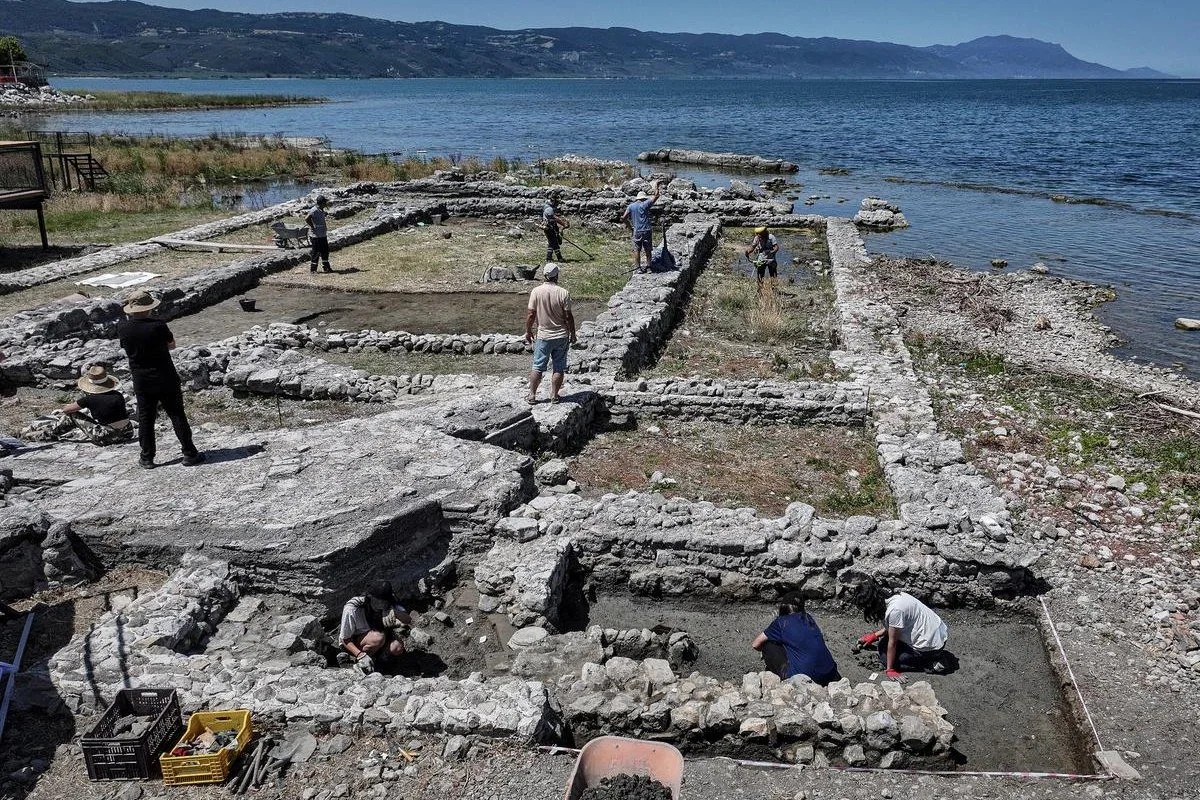
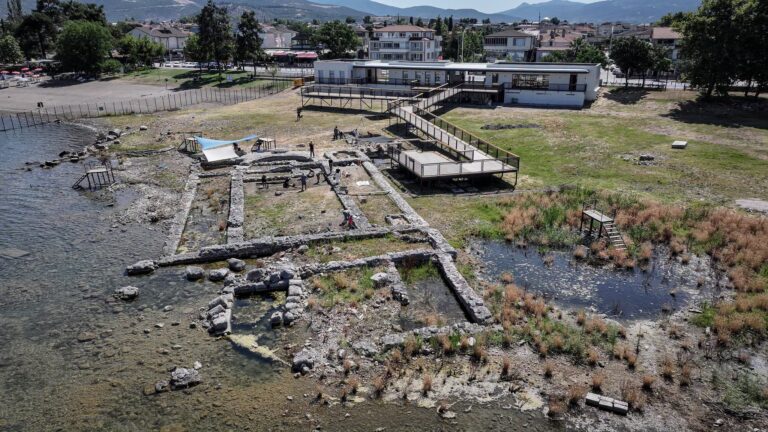
The breakthrough began with an aerial photograph taken in 2014, which revealed the outline of a church submerged beneath the waters of a lake near modern-day Iznik, the site of ancient Nicaea. This discovery sparked an archaeological investigation into the remains of an ancient basilica and raised the possibility that it was the “place of worship” described by Eusebius of Caesarea, a participant in and chronicler of the First Council. The council marked the first major effort by the Christian Church to establish doctrinal consensus, most notably addressing the Arian controversy over whether Christ was a created being. Approximately 300 bishops attended the council, with Emperor Constantine personally financing their travel.
Excavations, which began in 2015, focused particular attention on wooden architectural features beneath the later basilica. Archaeologists discovered a distinctive floor surface in a storage area for liturgical objects that extended beyond the walls of the newer church. A trench excavated east of the basilica revealed evidence of an earlier phase of construction, indicating that an older church had once occupied the site.
The most significant discovery came with the unearthing of wall sections, floor paving, and the base of a column. A team led by Mustafa Şahin of Bursa Uludağ University identified these remains as the Church of Saint Neophytos, an earlier sanctuary that predated the larger stone basilica constructed above it. Historical records indicate that the Church of Saint Neophytos was destroyed in the earthquake of 368 C.E. According to Şahin, the later structure was the Church of the Holy Fathers, built sometime after 380 C.E. to commemorate the bishops who participated in the First Council of Nicaea.
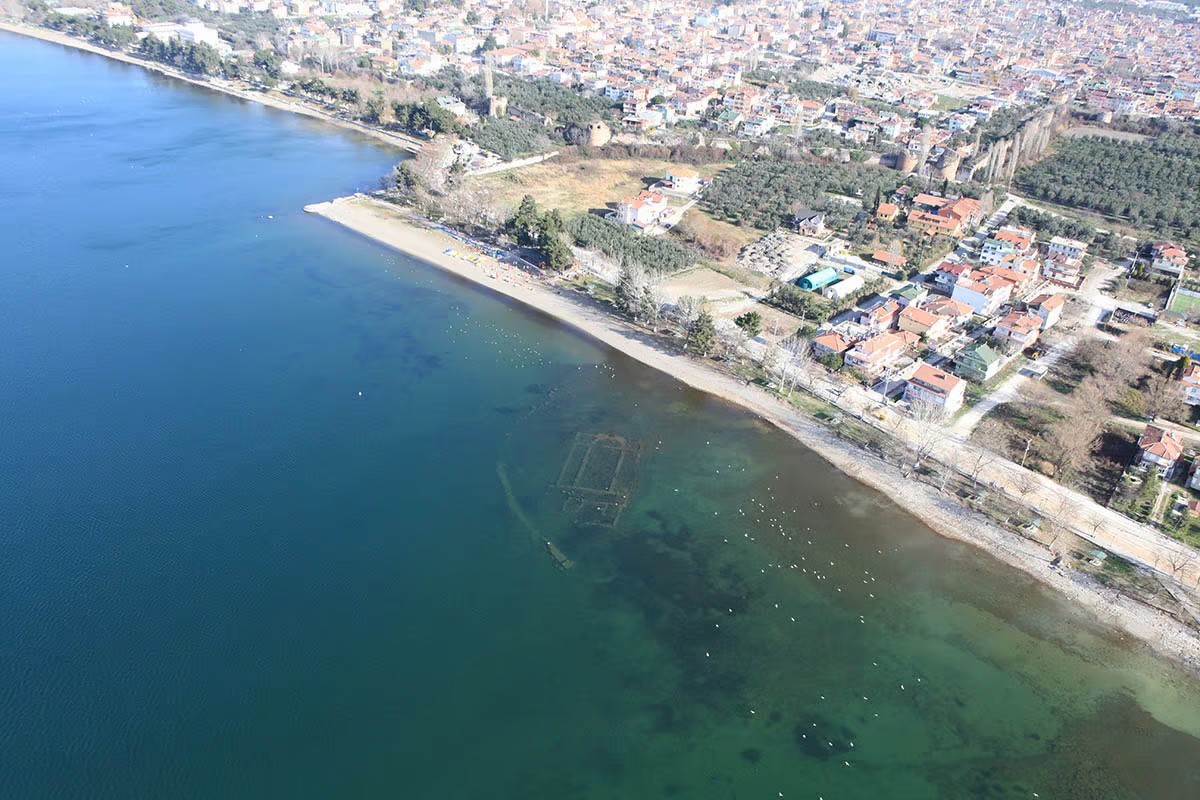
Now in its eleventh year, the excavation has also uncovered numerous graves and artifacts that have helped establish the chronology of the site. Among the discoveries are a gold ring decorated with palm tree and sword motifs and a bronze thimble, both dating to the period of the Umayyad siege of Iznik in 729 C.E. Historical sources record that an Umayyad commander entered the Church of the Holy Fathers during the siege, although the city itself successfully resisted capture. Each new discovery continues to strengthen the archaeological record and deepen our understanding of the location and enduring legacy of the First Council of Nicaea.
Key Facts about the Site
- The Location: The ruins are located just off the shore of İznik (historically known as the ancient city of Nicaea), which sits about 100 miles southeast of Istanbul.
- Historical Significance: Built around AD 380–390, this early Christian basilica is believed to have been constructed on the site where the historically crucial First Council of Nicaea was convened by Emperor Constantine the Great in AD 325.
- The Destruction: The church stood for several centuries until it was entirely destroyed by a major earthquake in AD 740, causing the ground to shift and the structure to sink beneath the lake’s surface.
- The Discovery: Though it sat forgotten for over a millennium, the precise foundation layout of the church was dramatically rediscovered in 2014 during a routine aerial photography inventory of the area. It was named one of the top ten archaeological discoveries of that year.
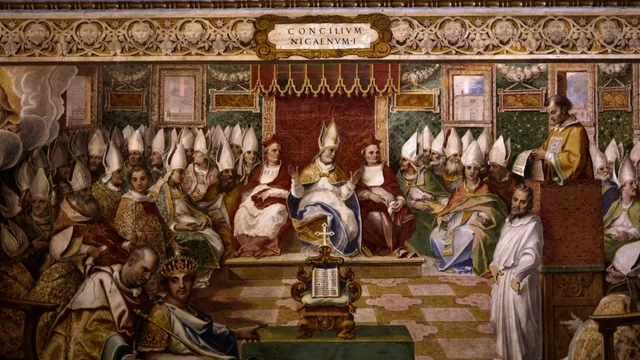
The First Council of Nicaea 325AD
The First Council of Nicaea was the first ecumenical council of the Christian Church, convened by Emperor Constantine I in 325 AD in Nicaea (modern-day İznik, Turkey). It was the first effort to attain consensus in the church through an assembly representing all of Christendom.
The council’s primary accomplishments included:
- Condemning Arianism: It declared the heresy that Jesus was a created being to be false, affirming instead that Jesus is homoousios (of one substance) with God the Father.
- Formulating the Nicene Creed: It produced the original version of this statement of faith, which became the touchstone of orthodoxy for the doctrine of the Trinity.
- Establishing Uniform Practices: It set a universal date for Easter and issued 20 canons (church laws) addressing various disciplinary issues.
Attended by at least 200 bishops, the council marked a pivotal moment in establishing doctrinal unity and defined the relationship between the Roman state and the Christian Church.
The Creed
The original Nicene Creed was adopted in 325 AD at the First Council of Nicaea to resolve the Arian controversy and establish that Jesus Christ is consubstantial (of one substance) with God the Father. Unlike the later Niceno-Constantinopolitan version, the original text was shorter, ending with “We believe in the Holy Spirit” followed immediately by anathemas condemning Arian beliefs, such as the claim that the Son was created or had a beginning.
Key distinctions of the 325 version include:
- Purpose: It was designed primarily to define the divinity of Christ and refute Arianism, rather than provide a comprehensive statement of faith.
- Structure: It lacked the detailed sections on the Holy Spirit, the Church, baptism, and the resurrection that were added in the 381 revision.
- Language: It introduced the term homoousios (of one substance) to explicitly assert the equality of the Father and the Son.
- Origin: While traditionally attributed to the council fathers, scholars suggest it was likely based on a local baptismal creed from Caesarea or a Syro-Palestinian source, modified by the bishops present.