The Apostle Paul explicitly identifies the location of Mount Sinai as being in Arabia in Galatians 4:25. The verse states: “Now this Hagar is Mount Sinai in Arabia, and corresponds to Jerusalem which now is, and is in bondage with her children.”
Galatians 4:25 [ESV]
25 Now Hagar is Mount Sinai in Arabia; she corresponds to the present Jerusalem, for she is in slavery with her children.
This geographical assertion has led to varying interpretations regarding the specific modern location:
- Traditional/Ancient Geography View: Many scholars argue that in the 1st century, the term “Arabia” broadly included the Sinai Peninsula, placing Mount Sinai within the biblical and ancient definition of Arabia.
- Alternative Location View: Other interpreters contend that “Arabia” referred exclusively to the region south and east of Palestine (modern-day Saudi Arabia), specifically Arabia Felix, arguing that the Sinai Peninsula was distinct from Arabia in Paul’s time.
Regardless of the specific site debated (such as the traditional Sinai Peninsula or sites in Saudi Arabia like Jebel al-Lawz), the text of Galatians 4:25 clearly places Mount Sinai within the geographical region known as Arabia.
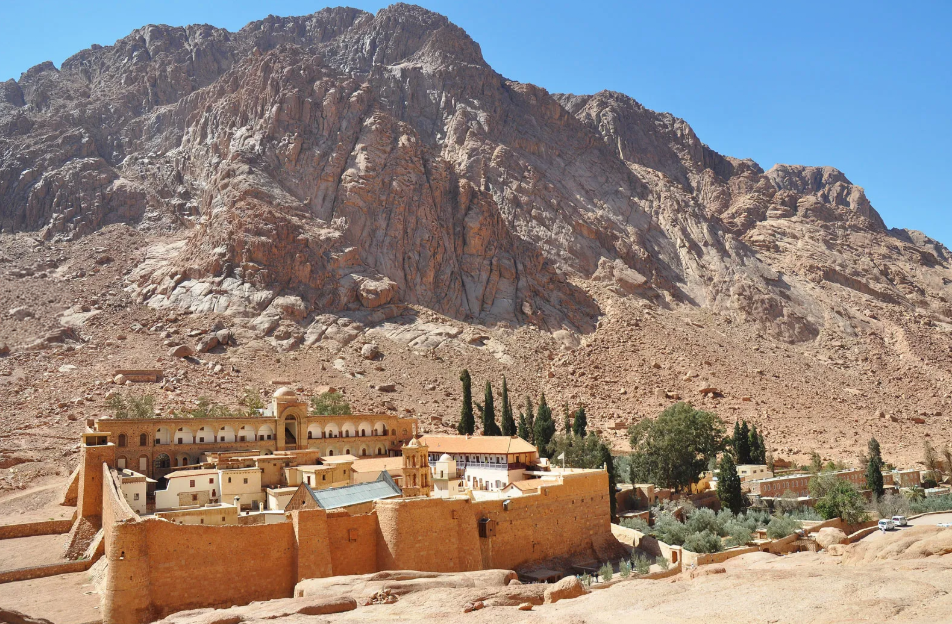
Mount Sinai, also known as Jabal Musa (Mountain of Moses), is traditionally located in Egypt, specifically in the south-central Sinai Peninsula within the South Sinai Governorate. The mountain stands approximately 2,285 meters (7,497 feet) above sea level, situated near the town of Saint Catherine and adjacent to Saint Catherine’s Monastery, a UNESCO World Heritage Site.
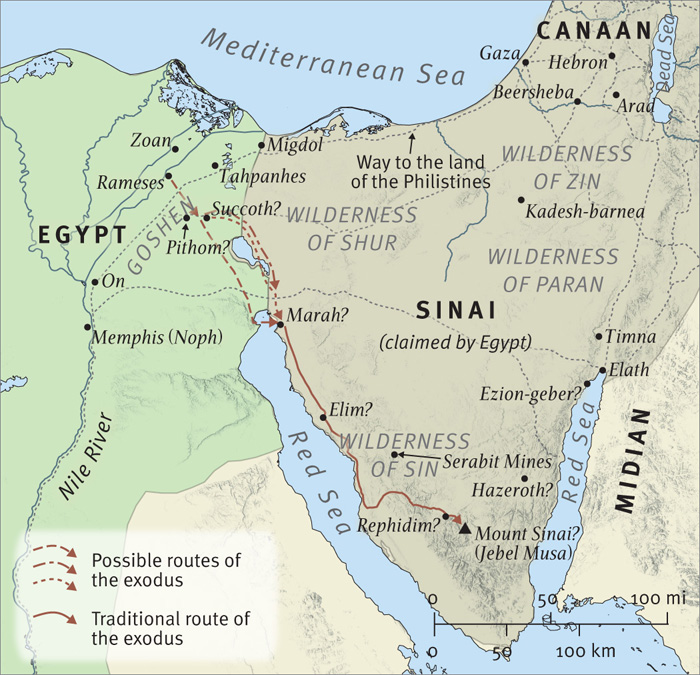
While the traditional and most widely accepted location is in Egypt, supported by nearly 1,700 years of pilgrimage history, the exact site of the biblical Mount Sinai remains a subject of scholarly debate. Alternative theories propose locations in northwestern Saudi Arabia (such as Jabal al-Lawz), southern Israel (such as Har Karkom), or Jordan, often citing different interpretations of biblical geography and the term “Arabia” found in the New Testament. However, for tourists, pilgrims, and most historians, Mount Sinai in Egypt is the definitive location.
Both Sides – A Comparison:
Core argument: The popular claim (made by researchers like Robert Cornuke and Glen Fritz) that Galatians 4:25 (“Mount Sinai in Arabia”) proves the real Mount Sinai is in Saudi Arabia rather than Egypt’s Sinai Peninsula. This reasoning rests on a mistake about what “Arabia” meant in Paul’s day.
The key evidence:
- Ancient “Arabia” was a loose, sprawling label, not a fixed modern nation-state border.
- The Septuagint (the Greek Old Testament Paul used) calls Goshen — in Egypt’s eastern Nile Delta — “Gesem of Arabia.” Since Goshen lies west of the Sinai Peninsula, Paul’s own Bible already applies “Arabia” to territory that encompasses the peninsula.
- Writers like Herodotus, Strabo, and Pliny the Elder, along with the later Roman province of Arabia Petraea, all used “Arabia” broadly enough to include the Sinai Peninsula.
- Paul’s own travels (Galatians 1:17, 2 Corinthians 11:32) show his “Arabia” stretched from near Damascus to the southern deserts — too vast a region to pinpoint one mountain.
The opposing view, presented fairly: Old Testament usage often points Arabia eastward (toward Midian), and Moses tended flocks in Midian near Horeb — so some serious scholars favor an eastern/Saudi location on other grounds. The article grants this has real weight but argues Galatians 4:25 specifically can’t decide the question either way, since “Arabia” was broad enough to fit both readings.
The real point of the passage: The author pivots to Paul’s actual purpose in Galatians 4 — an allegory contrasting Hagar/Ishmael/Sinai (slavery, law) with Sarah/Isaac/the heavenly Jerusalem (freedom, promise), aimed at Judaizing teachers pressuring Gentile converts. Citing Calvin, Ridderbos, Schreiner, Vos, and others, the piece argues Paul mentions Arabia only to place Sinai within Hagar’s family line, not to stake a geographic claim.
Conclusion: The verse can’t settle where Sinai is; conservative scholars like Hoffmeier and Kitchen still favor a peninsula site. The deeper point is theological, not archaeological — closing with the Hebrews 12 contrast between the earthly Sinai and the heavenly Mount Zion.