
INTRODUCTION
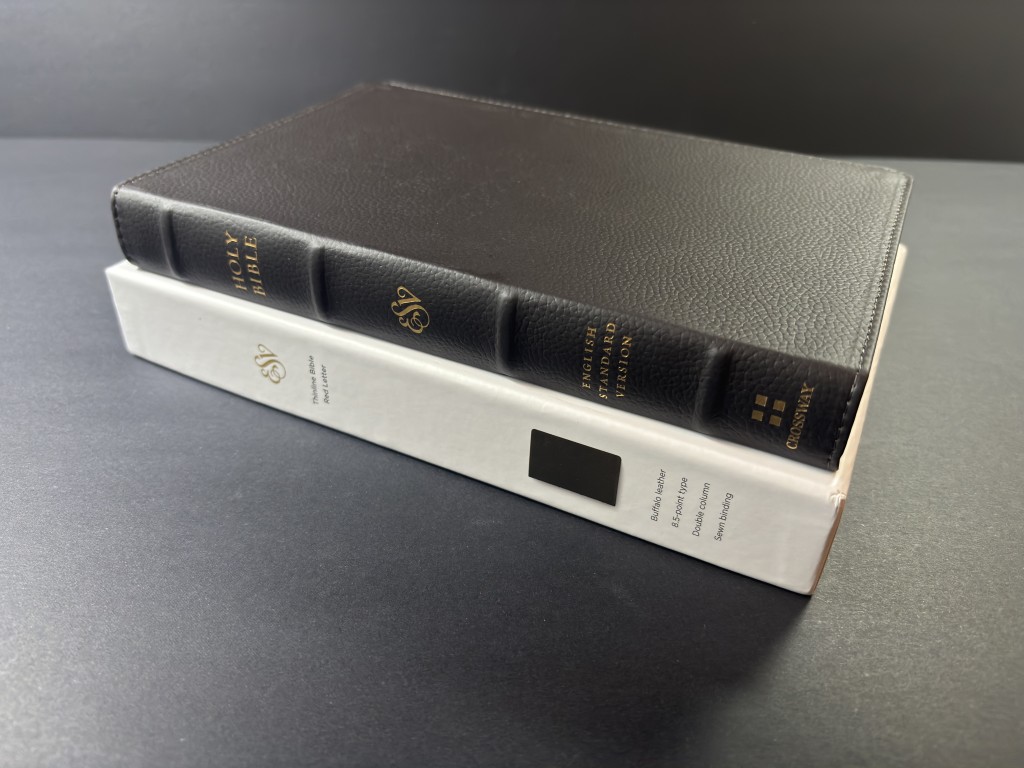
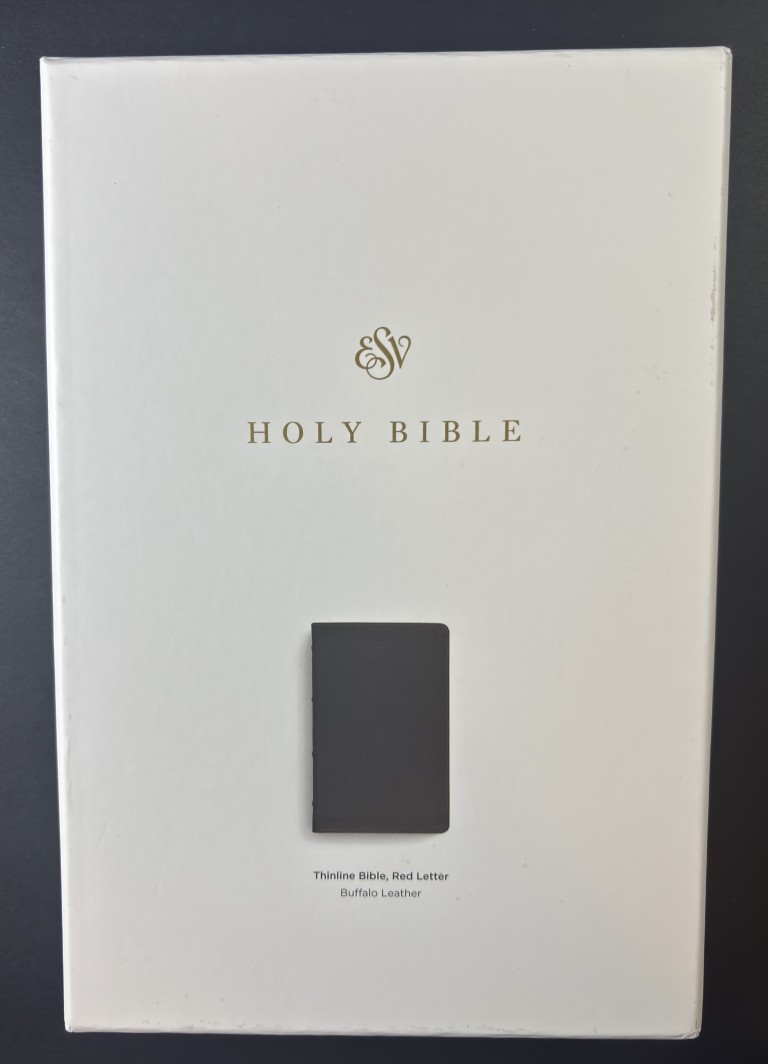
The thinline is one of the most popular types of Bibles available. Practically every translation has a thinline edition, and they are available in a wide range of price points. Crossway’s ESV Thinline is one of the most popular, and it is available in several cover options, including buffalo leather. In this review, I’ll take a look at the buffalo leather edition, ISBN 9781433570865, which was made in China.

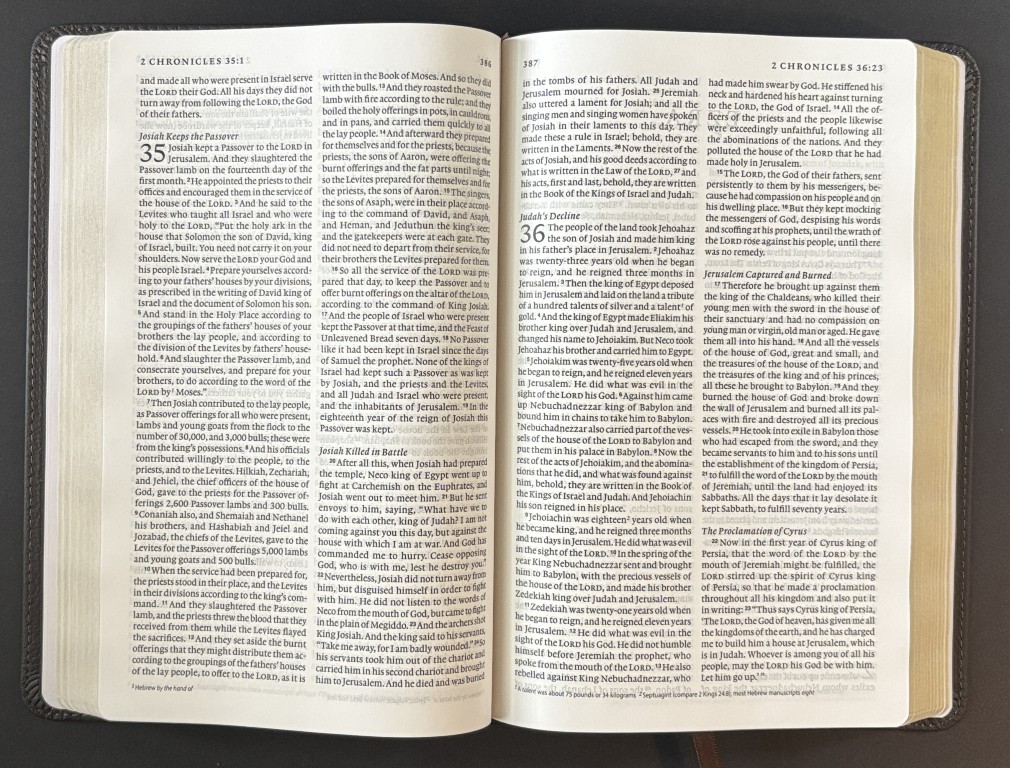
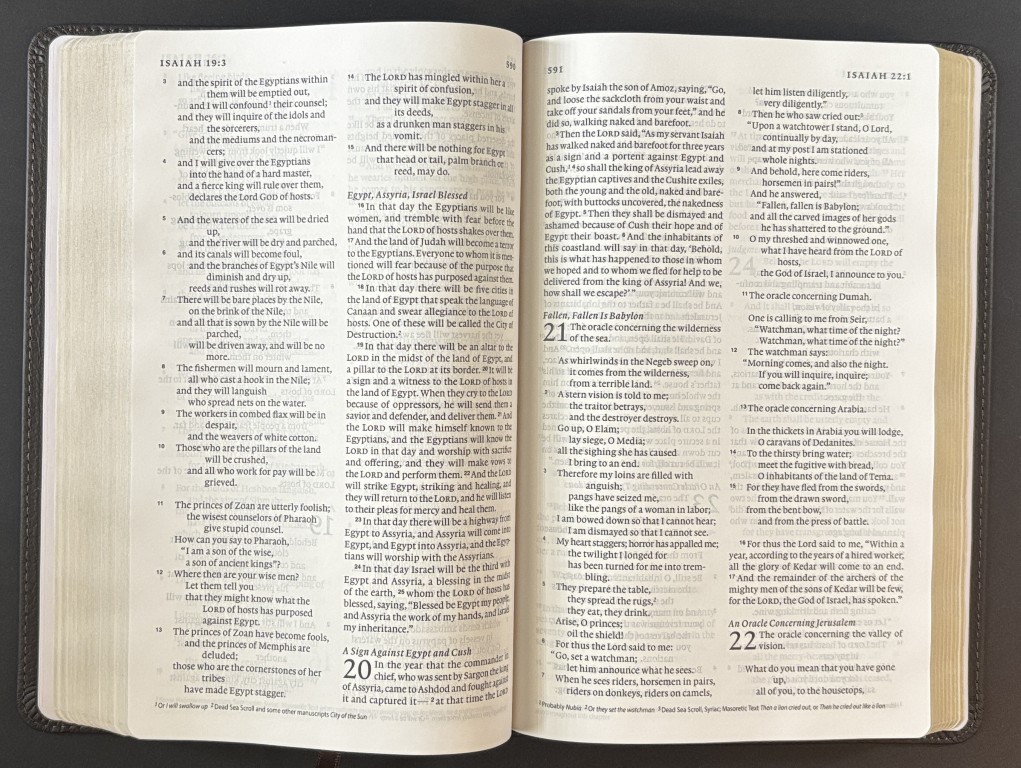
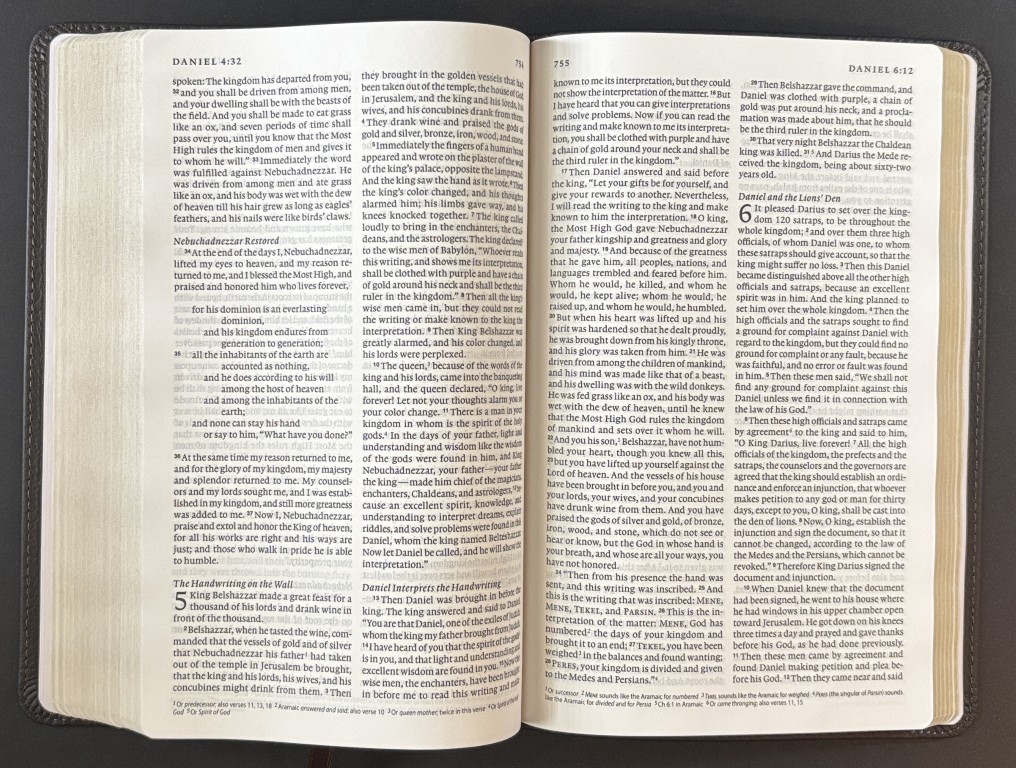
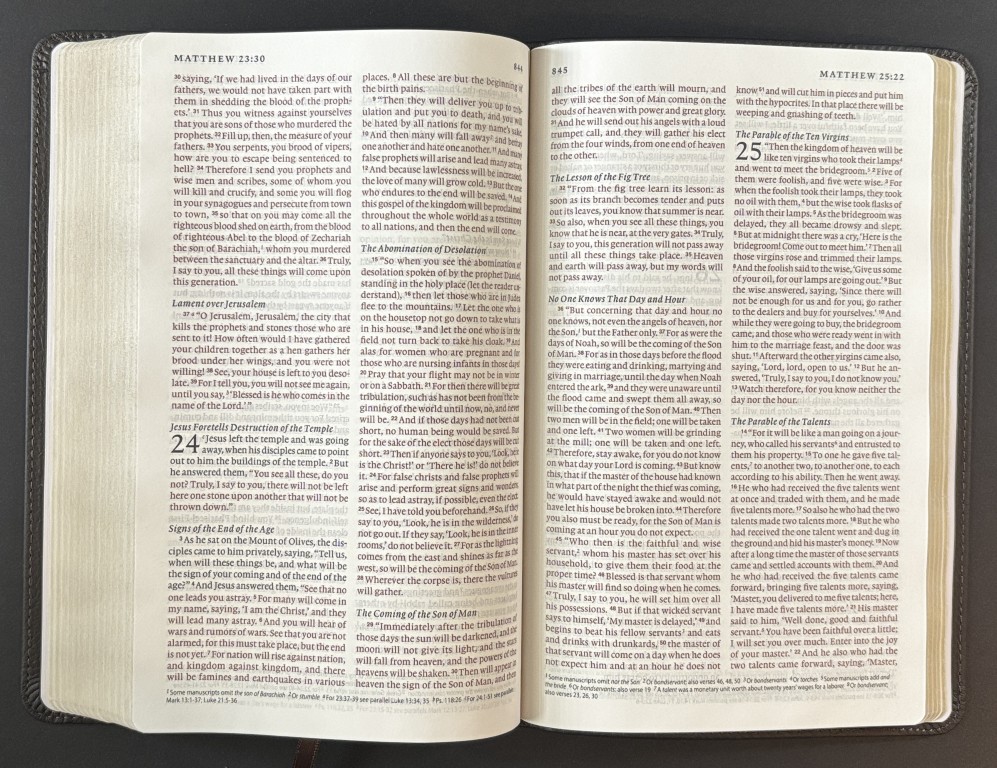
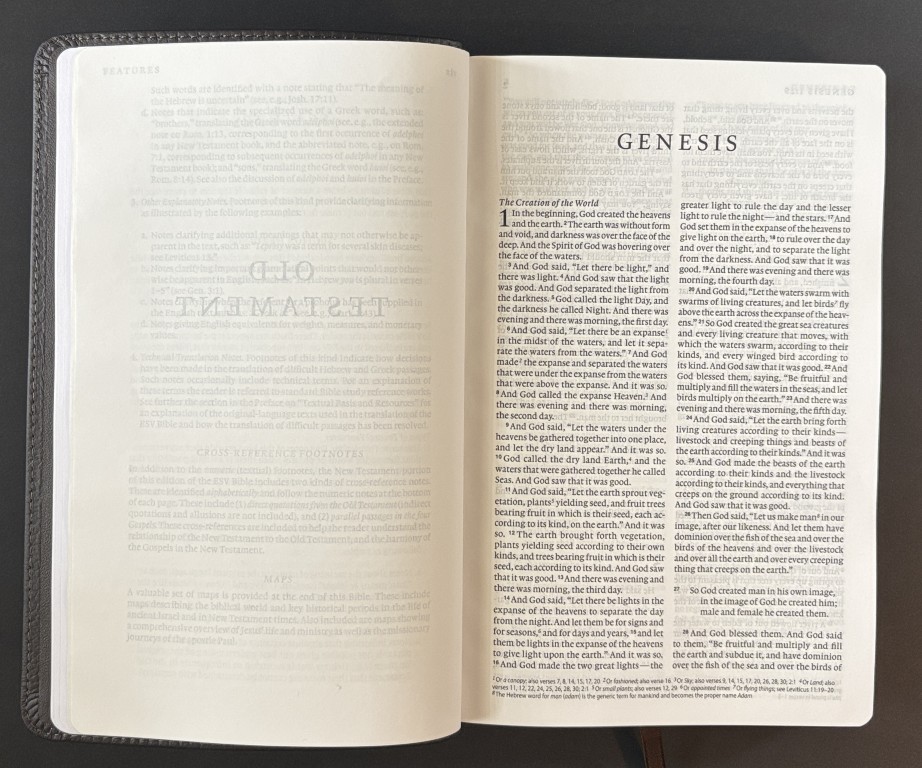
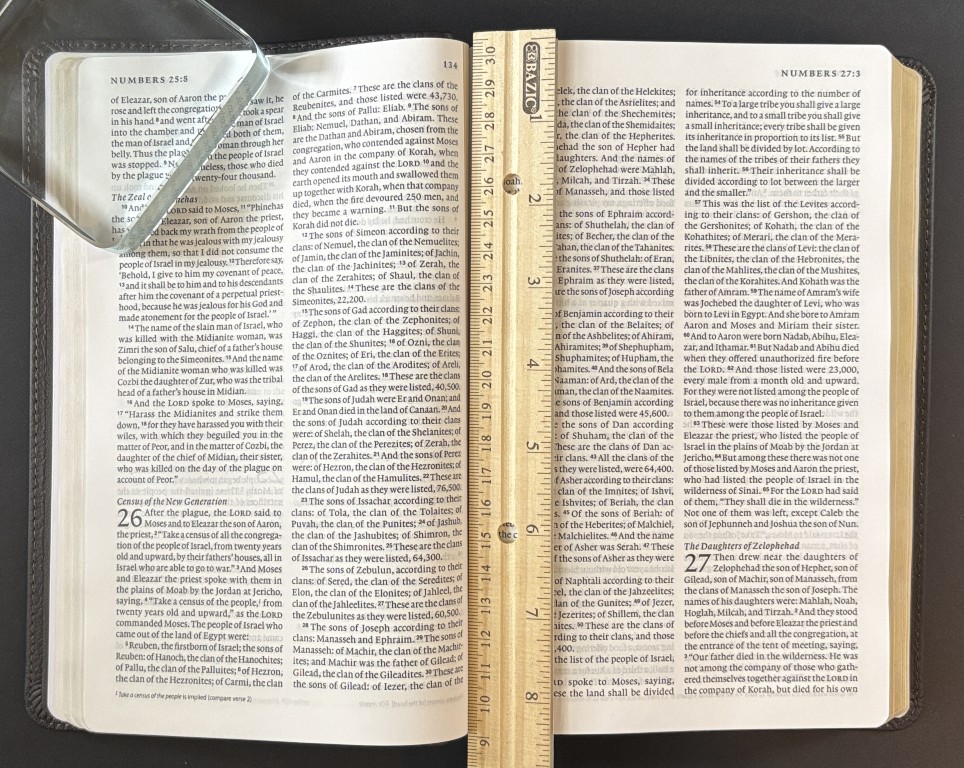
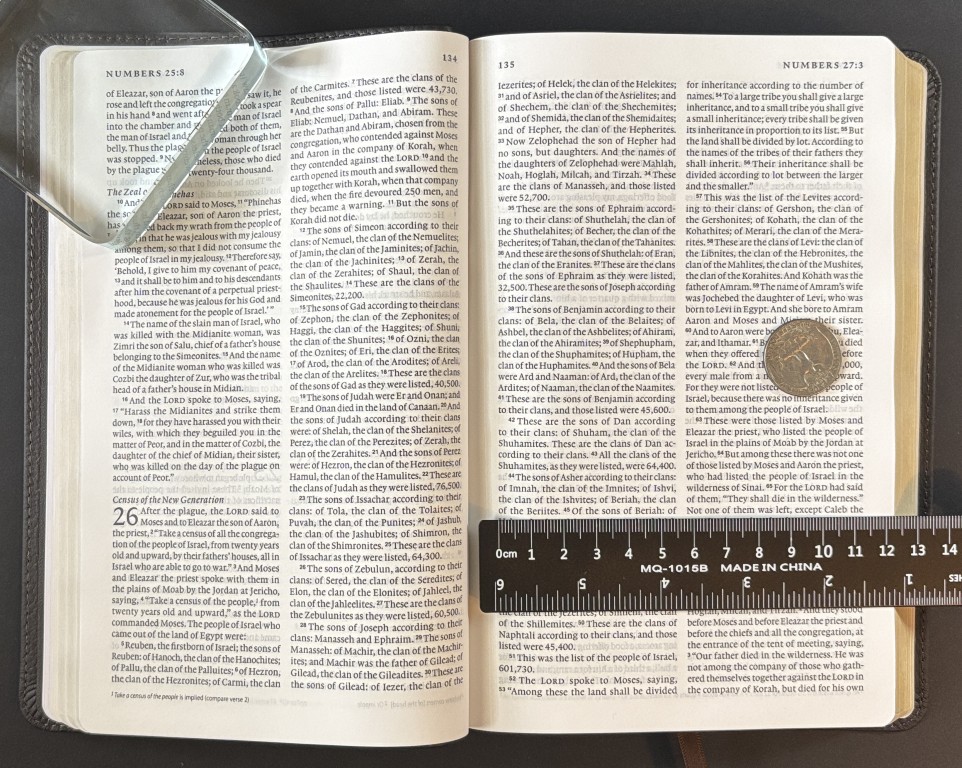
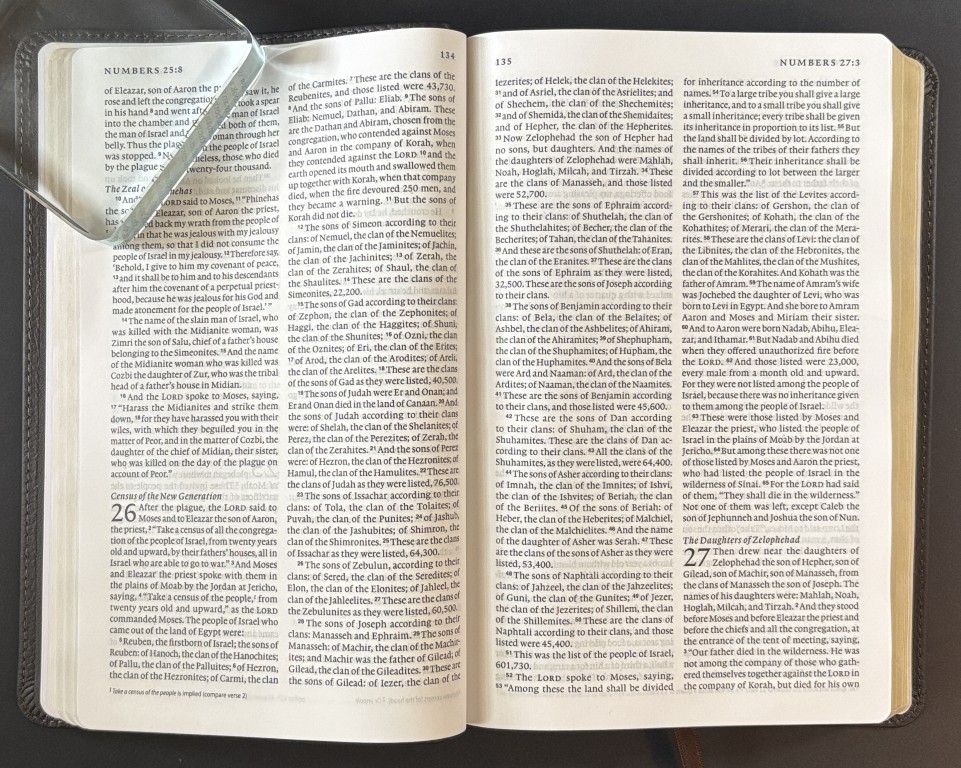
Cover and Binding
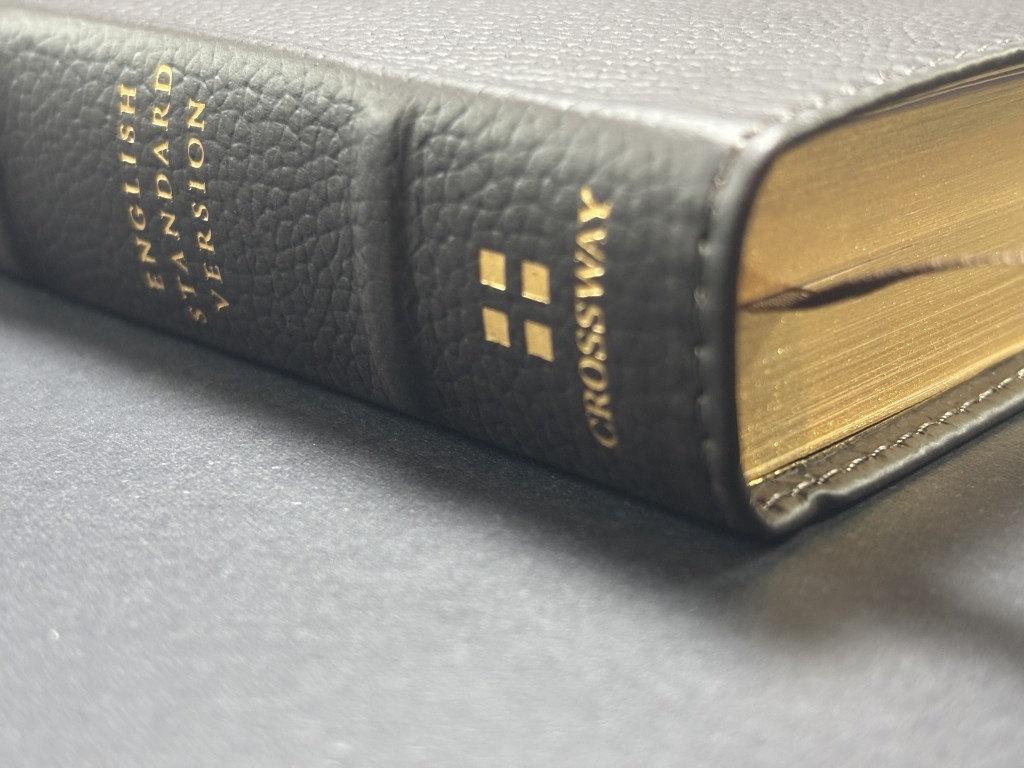
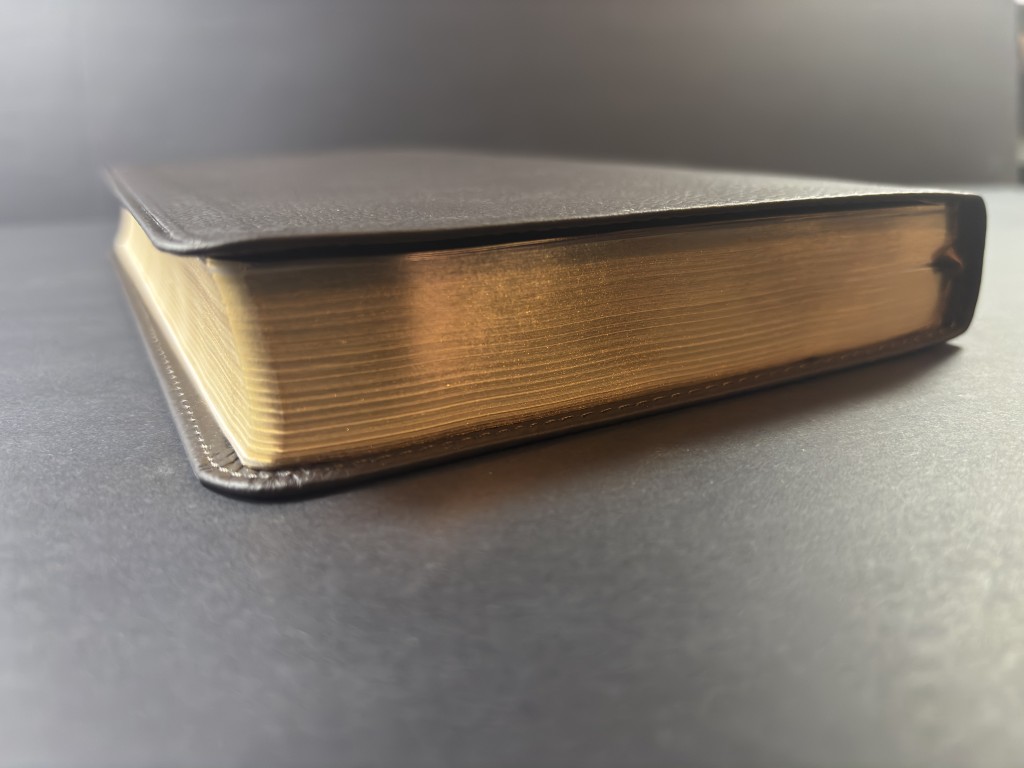
The cover is made of deep brown buffalo leather with a tight, pebbly grain that reminds me of the surface of a football. There is no writing on the front cover. The perimeter is stitched with brown thread, and the spine features four raised ribs. The text and Crossway logo are stamped in gold. I love the look and feel of the leather, and I find it much better than Crossway’s genuine leather.
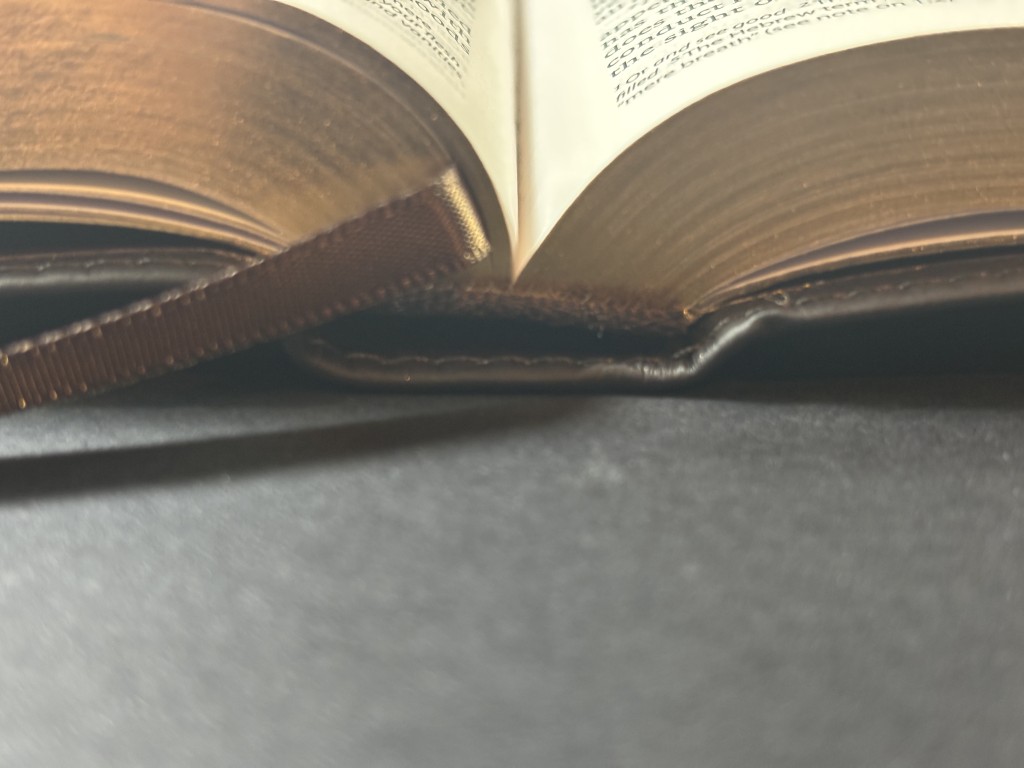
The liner is a brown vinyl paste-down, and the block is Smyth sewn. The binding is stiff out of the box, so it will take some use before it stays open easily in Genesis.
The Bible has one brown 1/4-inch ribbon marker and brown head and tail bands. The ribbon is long enough to pull toward the corner to help open the page. The overall size is 8 7/8 x 5 5/8 x 1 inch, and it weighs 1 pound, 5.9 ounces. This is an excellent size and weight for a Bible intended for carrying and reading. The thinline format is one of my favorite Bible sizes.
Paper
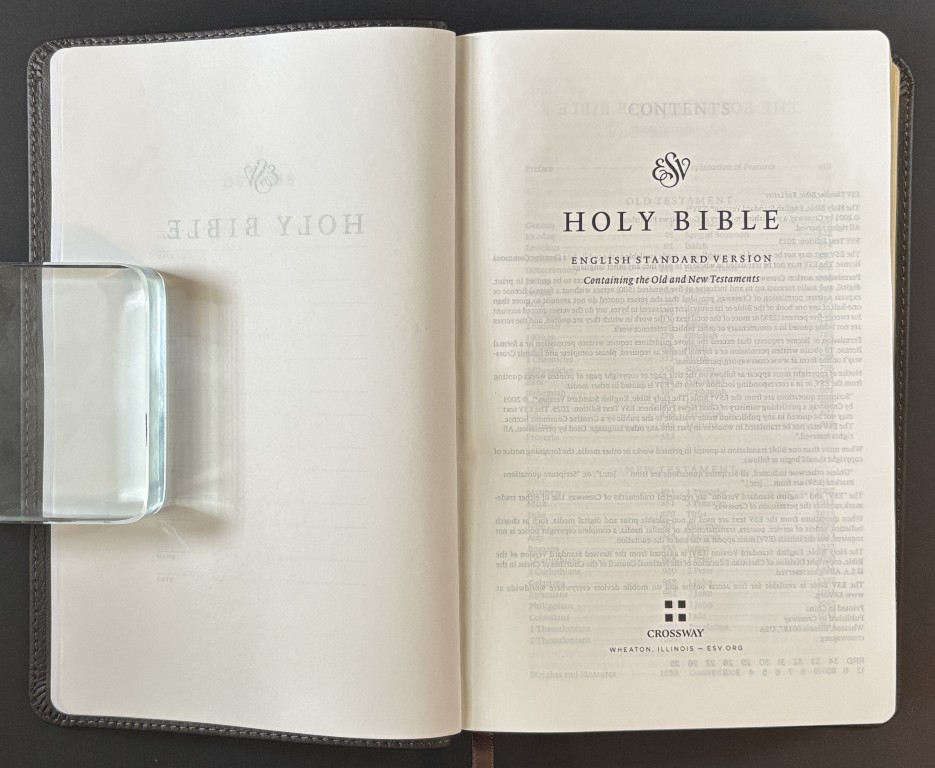
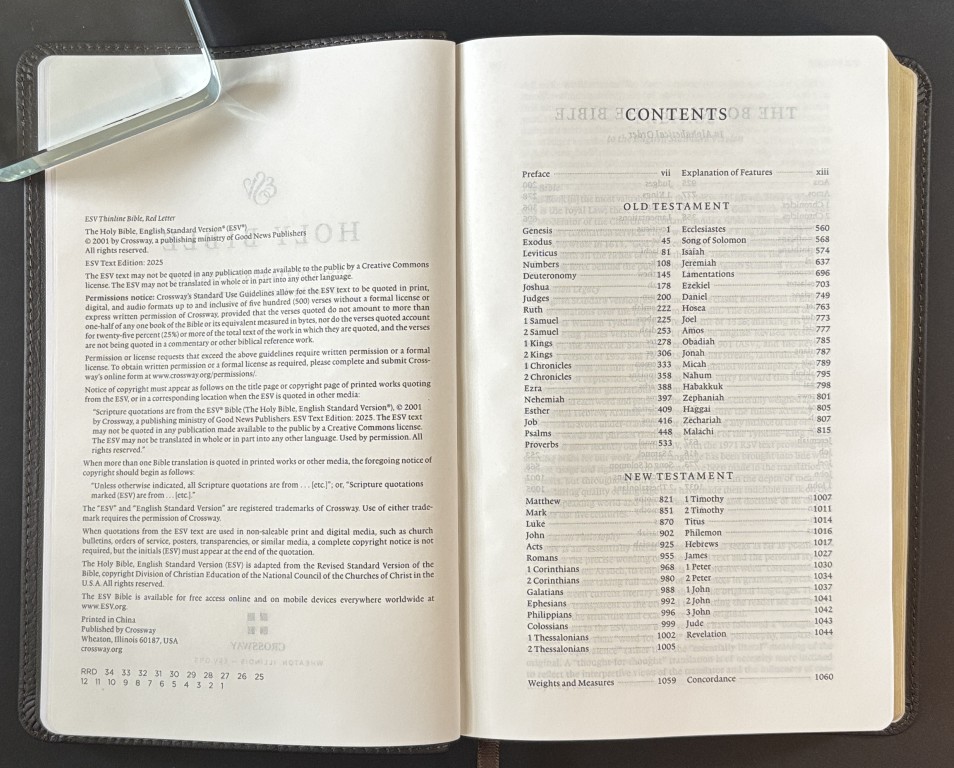
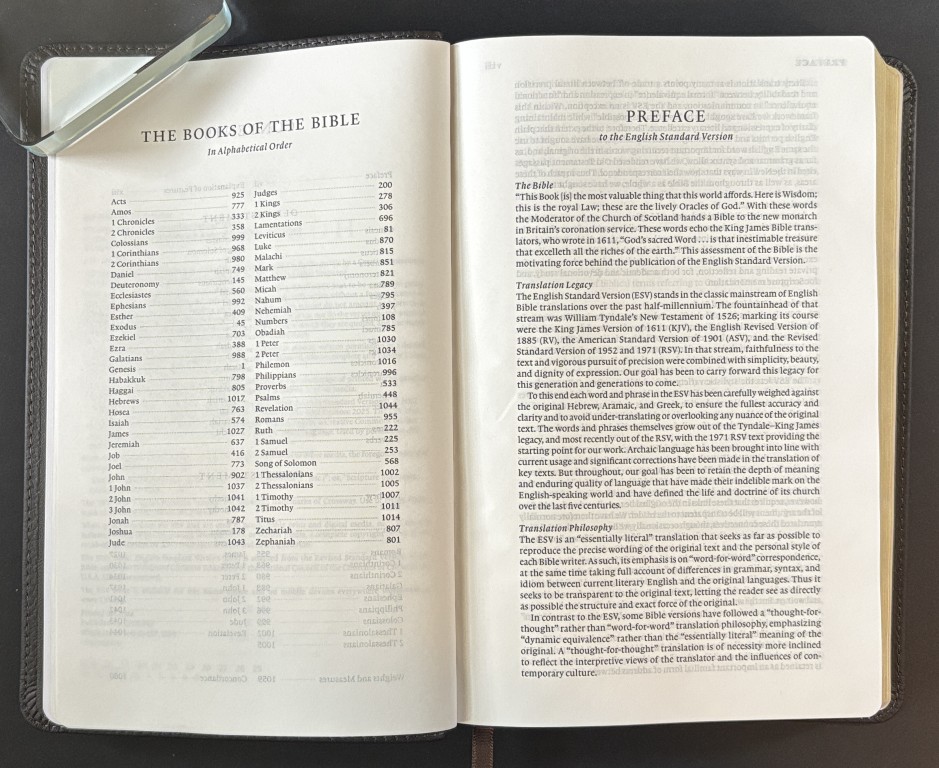
The paper is approximately 30 gsm and is the same paper used in Crossway’s lower-cost editions. It is white and highly opaque, with no noticeable glare under direct light. The texture is slightly rough, making the pages easy to separate and turn. Show-through is mostly noticeable in the poetic sections. The page edges are gold gilt.
Typography
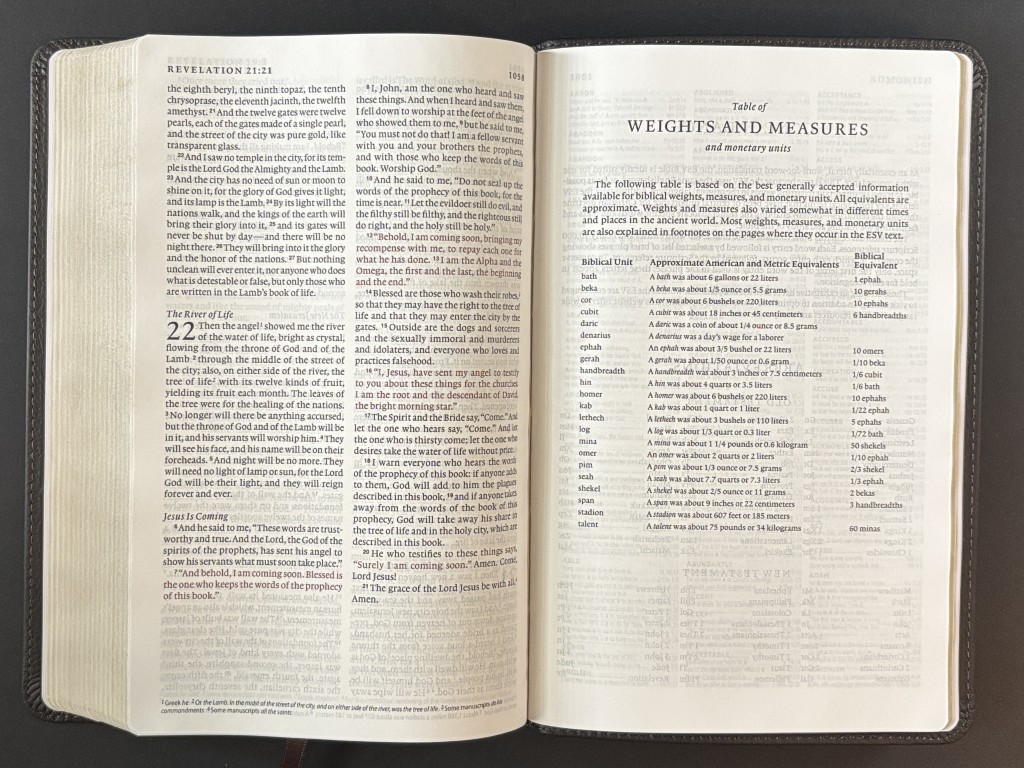
The text is presented in a double-column paragraph layout, while poetry is arranged in stanzas. Section headings are set in italics. The header includes the book name, chapter number, and verse number in the outer margin, with the page number in the center. Translation footnotes are placed in the footer and keyed to the text with numbers.
The typeface is 8-point, and the text is sharp. This is a red-letter edition, and both the black and red text are medium in darkness and highly consistent throughout. There are approximately nine words per line, with a good amount of space between the lines, making the text comfortable to read. The edition does not include line matching, which is most noticeable in the poetic sections. There is enough space in the inner margin to keep the text from bending too far into the gutter.
The poetic settings look good, although the lines are not always divided in the most ideal places. Instead of breaking poetry into phrases, the text sometimes extends to the end of the line, with the remainder indented underneath. This can result in some poetic lines containing only a single word or syllable, which I find distracting.
Verse numbers are small but bolder than the surrounding text, making them easier to locate. They do not stand out excessively, but I had no trouble finding them quickly. The footnotes are also small and keyed to the text with numbers. I found the footnote indicators easy enough to ignore, allowing me to read without distraction.
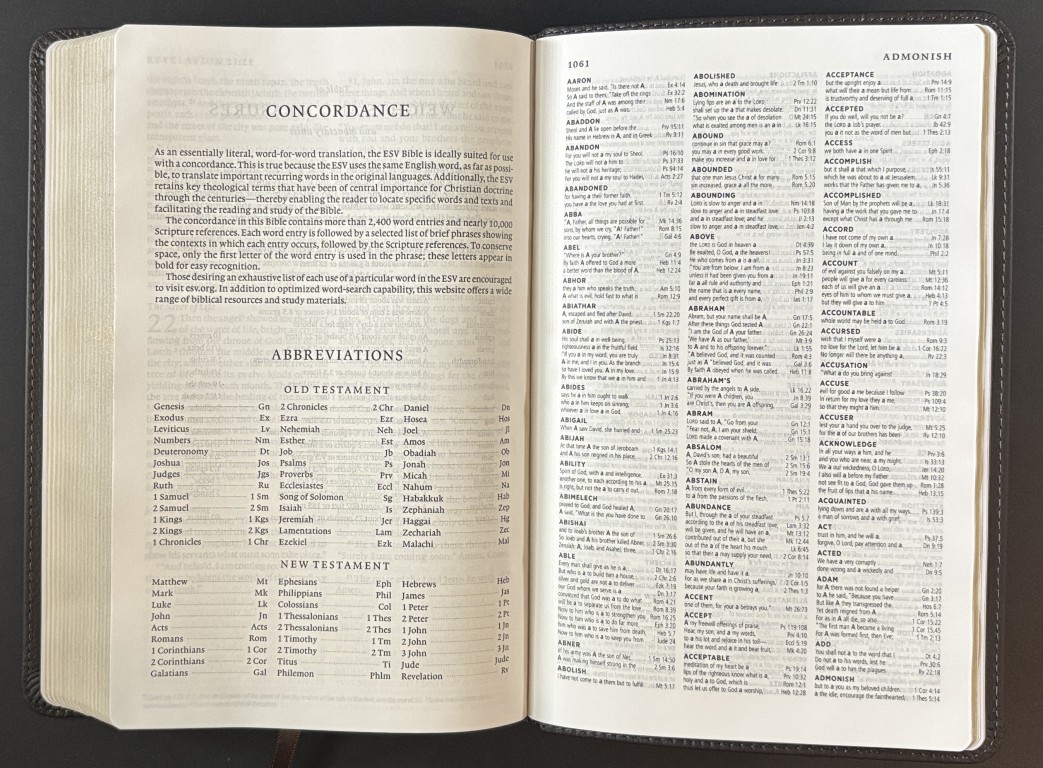
Concordance
The concordance is 58 pages long, with three columns per page. It is not a large concordance, but it contains enough references for basic sermon preparation and Bible study. I prefer this approach to adding more thickness to the Bible with a larger concordance.
Some sample entries and the number of references provided include:
- Christ — 16
- Christ’s — 4
- Christian — 2
- Faith — 31
- Faithful — 11
- Faithfulness — 7
- Faithless — 1
- God — 52
- Godliness — 5
- Godly — 3
- Gods — 2
- Praise — 21
- Praised — 4
- Praises — 3
- Praising — 4
- Pray — 10
- Prayed — 3
- Prayer — 11
- Prayers — 6
- Praying — 3
Maps
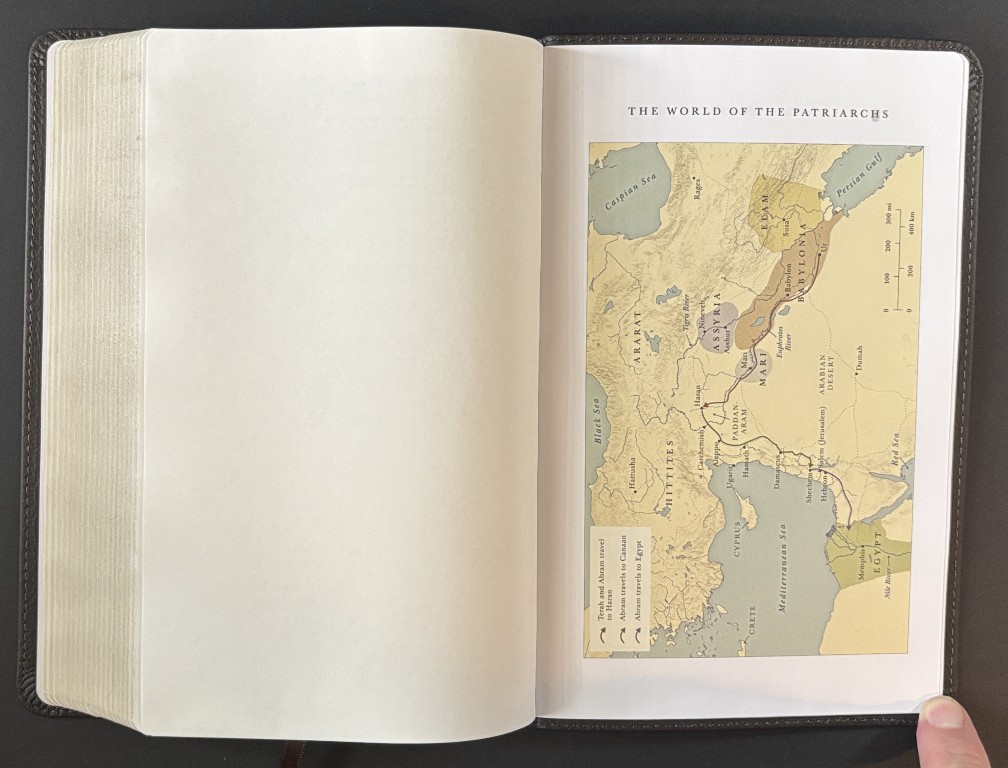
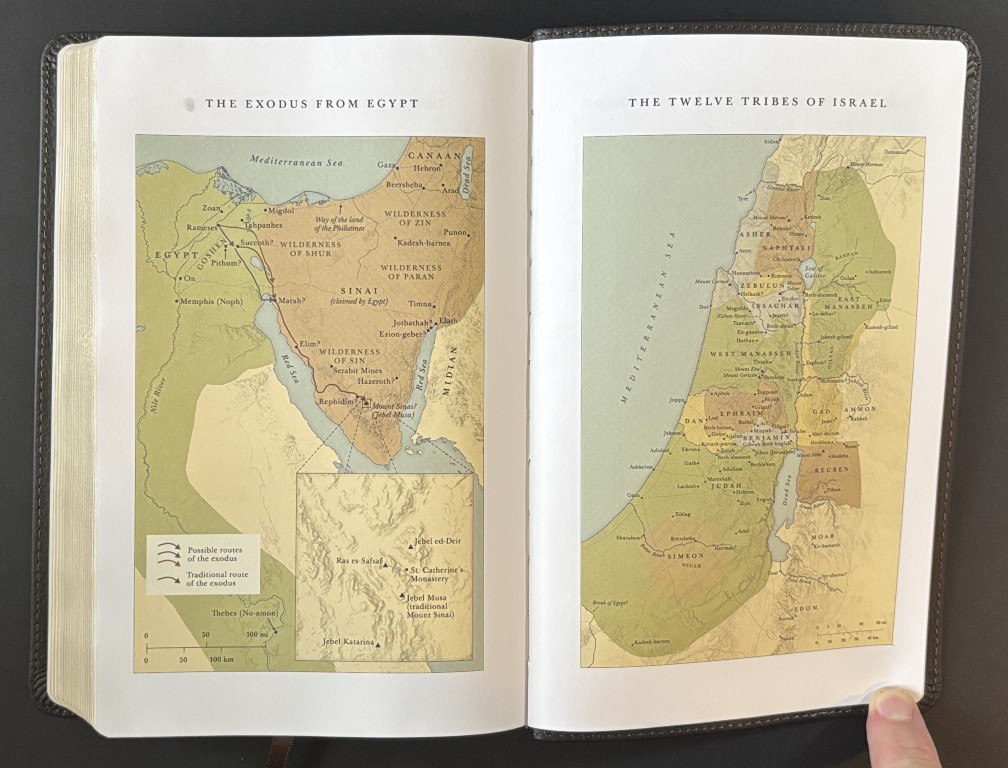
The Bible contains eight full-color maps printed on thick pages. The maps are presented in earth tones and have a clean design that I find appealing. There is no map index, but the maps are well labeled and easy to use. They include information about distances, topography, borders, routes, rivers, kingdoms, and other geographical details.
The maps include:
- The World of the Patriarchs
- The Exodus from Egypt
- The Twelve Tribes of Israel
- Israel Under Saul, David, and Solomon
- Jerusalem in the Time of Jesus
- Palestine in the Time of Jesus
- Paul’s First and Second Missionary Journeys
- Paul’s Third Missionary Journey and His Voyage to Rome