
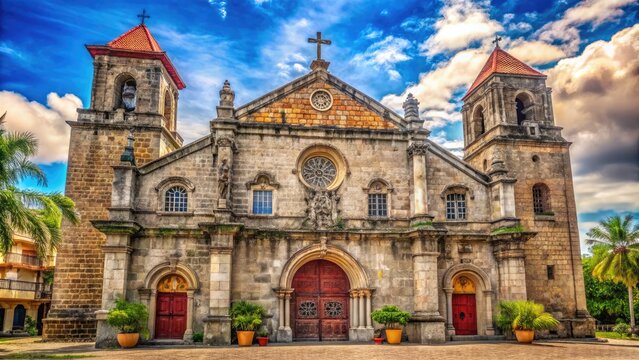
Millions of Catholics believe that the bread and wine used during mass are not merely symbols of Jesus. After consecration, their substance truly becomes the body and blood of Christ, even though their outward appearance remains unchanged.
Many Protestants understand the Lord’s supper differently. Some see it primarily as a memorial of Christ’s sacrifice, while others affirm his spiritual or mysterious presence. Yet, they do not accept the Catholic doctrine of transubstantiation.
Both traditions read the same words Jesus spoke at the last supper. This is my body. Why then do they understand them so differently?
This is only one of 10 major differences between Catholicism and Protestantism. Their disagreements go far beyond worship styles and church organization. They raise deeper questions. How are sins forgiven? What happens after death? What role does Mary hold? And who has the final authority to interpret Christian truth?
Catholicism and Protestantism are both broad traditions. Protestantism includes many denominations with different beliefs. This video presents their most representative positions without judging anyone’s personal faith.
1) Marriage and Church Leadership
In the Roman Catholic Church, most priests of the Latin right commit themselves to celibacy. They do not marry or raise families, allowing them to devote their lives more fully to God and the communities they serve. Celibacy is understood as a calling and a sign of dedication, not as a rejection of marriage.
However, priestly celibacy is a discipline rather than a doctrine requiring every Christian minister to remain unmarried. In several Eastern Catholic churches, married men may be ordained as priests. Limited exceptions also exist within the Latin church. Most Protestant denominations allow pastors to marry and have children. Family life is often seen as a gift that can enrich ministry. A pastor who has experienced marriage, parenthood, and family struggles may understand the congregation in a deeply personal way. Protestants also point out that several apostles, including Peter, were married. For them, having a family does not prevent someone from serving God faithfully.
2) To Whom Should Christians Confess Their Sins?
Catholics and Protestants agree that sinners must repent. The difference lies in how confession and forgiveness are practiced. In Catholicism, the sacrament of reconciliation plays an important role. A Catholic who has committed a mortal sin is called to confess sincerely to a priest, express repentance, and receive absolution. According to Catholic teaching, the priest does not replace God or forgive sins by personal power. He exercises a ministry entrusted to the church and acts in the name of Christ.
Protestants generally emphasize that believers can confess directly to God through Jesus. They often point to 1 Timothy 2:5, which says there is one mediator between God and humanity, Christ Jesus. Protestants may still admit their faults to other believers, ask a pastor for guidance, and seek prayer from the church community. However, they do not consider confession to a priest necessary for receiving forgiveness. The disagreement is not about whether repentance matters. It concerns whether Christ gave the church sacramental authority to administer forgiveness through ordained priests.
3) How Many Sacraments are There?
A sacrament may be understood as a visible sign through which God communicates invisible grace. The Catholic Church recognizes seven sacraments. Baptism, confirmation, the Eucharist, reconciliation, anointing of the sick, holy orders, and matrimony. These accompany Catholics through the major stages of Christian life.
Most Protestant churches recognize only two ceremonies clearly instituted by Jesus for all believers. Baptism and the Lord’s Supper. Many call them ordinances rather than sacraments. Practices such as marriage, ordination, confession, and prayer for the sick are still respected. However, Protestants generally do not understand them as channels of grace in the same sacramental sense taught by Catholicism.
Catholicism emphasizes God’s work through the sacramental life of the church. Protestantism generally places greater emphasis on scripture, personal faith, and the believer’s direct relationship with Christ.
4) Saints, Sacred Images, and Intercession.
A Catholic church may contain statues, icons, stained glass windows, and images of important figures from Christian history. Catholics believe these images preserve the memory of faithful believers and direct the mind toward God. Catholic teaching distinguishes worship, which belongs to God alone, from the honor given to saints. When Catholics ask a saint to intercede for them, they understand it as asking another member of the Christian family to pray on their behalf. Those who have died in Christ remain part of the communion of saints.
Many Protestants reject this practice because they believe prayer should be directed to God alone through Jesus. Although Catholics insist they do not worship statues or saints, Protestants worry that the boundary between veneration and worship can become unclear. Protestants describe all true believers as saints. They believe no departed Christian is needed between the believer and the savior because Jesus alone is the sufficient mediator.
This disagreement reflects two different understandings of the church and the relationship between Christians on earth and those who have died in Christ.
5) What Place Does Mary Hold?
Catholics and Protestants recognize Mary as the blessed woman chosen to become the mother of Jesus. Both honor her humility, courage, obedience, and faith. Beyond that shared foundation, however, their teachings begin to separate. Catholicism calls Mary the mother of God. This does not mean she existed before God or created the divine nature of Jesus. The title affirms that the person she gave birth to, Jesus Christ, is both fully God and fully human. The Catholic Church also teaches Mary’s perpetual virginity, the immaculate conception, and her bodily assumption into heavenly glory.
Catholics may ask Mary to pray for them while affirming that Christ remains the savior and the essential mediator between God and humanity. Protestants generally accept only teachings about Mary that they believe are clearly supported by scripture because they find no explicit biblical foundation for several Catholic Marian doctrines. They do not consider those doctrines binding upon Christians. Protestants worry that devotion to Mary may obscure the unique place of Jesus. Catholics respond that authentic devotion to Mary leads believers toward Christ, not away from him.
Beneath this disagreement lies a larger question. How much authority should Christians give to scripture, historic tradition, and the teaching church?
6) Why Does the Catholic Bible Have More Books?
The Catholic Bible contains 73 books while Protestant Bibles generally contain 66. The main difference involves seven Old Testament books, Tobat, Judith, Wisdom, Sirak, Baroo, First Mcabes, and Second Mcabes along with additional passages in certain other books.
Catholics call these writings the duderokonical books and receive them as inspired scripture. They appeared in the Septuagent, the ancient Greek translation of the Old Testament widely used among early Christians. Catholics call these writings the dudero canonical books and receive them as inspired scripture. They appeared in the Septuagent, the ancient Greek translation of the Old Testament. Widely used among early Christians.
During the 16th century Reformation, Protestant reformers gave greater weight to the Hebrew cannon. They did not accept these additional writings as having the same authority as the rest of scripture. Protestants often classified them as the apocrypha, valuable for historical and moral instruction, but not a final foundation for doctrine.
In response to the reformation, the Council of Trent formally reaffirmed the Catholic cannon of 73 books. This difference, therefore, reflects two judgments about the formation of the biblical cannon and the authority by which its books are recognized.
7) Purgatory and What Happens After Death.
Catholicism teaches that purgatory is neither a second chance for those who rejected God nor a milder form of hell. It is a state of final purification for people who die in God’s grace but are not yet completely purified. According to this view, divine forgiveness removes guilt, but the wounds and attachments caused by sin may still require healing. Final purification prepares a person to enter the perfect holiness of heaven.
Catholics often connect this belief with 1 Corinthians 3:15 and prayers for the dead reflected in 2 Maccabees. Most Protestants reject purgatory because they do not believe it is clearly taught in scripture. They emphasize that the sacrifice of Jesus was complete and sufficient. Those who are saved do not need additional suffering after death to complete Christ’s work. Protestants fear that purgatory weakens the finality of Jesus words, “It is finished.” Catholics answer that purgatory does not add to his sacrifice, but apply his saving grace through a final purification.
Behind this disagreement lies a deeper question. Is salvation primarily a completed declaration received through faith or does it also involve a transformation that must be brought to completion?
8) What Are The Bread and Wine in the Lord’s Supper?
At the last supper, Jesus took bread and said, “This is my body.” Christians agree that this was a sacred moment. But they disagree about what happens to the bread and wine.
Catholics believe in transubstantiation. After consecration, the outward qualities of the bread and wine remain, but their substance becomes the body and blood of Christ. The Eucharist is therefore not merely symbolic. It is the real and substantial presence of Christ. Protestantism has no single interpretation. Lutheran affirm Christ’s real presence in the Lord’s supper without using the Catholic explanation of transubstantiation.
Reformed Christians usually speak of a true spiritual presence. Many Baptist and Pentecostal churches view the bread and wine primarily as symbols commemorating Christ’s sacrifice. It would therefore be inaccurate to say that every Protestant considers communion only symbolic. Significant differences exist within Protestantism itself.
For Catholics, the Eucharist stands at the center of worship. For Protestants, the Lord’s Supper remains sacred, but its meaning varies among denominations.
9) How is a Sinner Justified Before God?
This question stood at the heart of the Protestant Reformation. How can a sinner be declared righteous before a holy God? Catholicism teaches that justification comes entirely from God’s grace. No one can earn salvation through good works. Yet grace does more than change a believer’s legal standing. It also transforms that person from within. Faith must become active through love, obedience, and good works.
The Protestant reformers emphasize justification by faith. When sinners trust in Christ, his righteousness is credited to them. They are accepted by God not because they have become morally perfect but because Christ’s righteousness is counted as theirs. In this view, good works do not purchase salvation. They are the fruit and evidence of genuine faith. Christians do not perform good works to earn salvation. They do them because God has saved them.
Both traditions speak of grace, faith, obedience, and transformation. They disagree about the relationship among these elements. Protestants usually distinguish justification, the believer being declared righteous, from sanctification, the lifelong process of becoming more like Christ. Catholicism sees justification and inward renewal as more closely united within the journey of salvation.
10) Who Has the Final Authority?
The final difference may explain the previous nine. Catholicism understands authority through three inseparable elements. sacred scripture, sacred tradition and the magisterium or teaching authority of the church. From the Catholic perspective, the Bible did not arrive as a completed book with its table of contents already attached. Its writings were preserved and recognized within the Christian community. Therefore, the church has a responsibility to guard and interpret the faith it received.
The pope holds a special office, but papal infallibility does not mean everything he says is free from error. It applies only under limited conditions involving definitive teachings on faith and morals.
Protestantism follows the principle of Solo Scriptura or scripture alone. The Bible is the supreme and infallible authority for Christian faith and life. Tradition, reason, creeds, experience, and church leaders may be valuable, but they remain secondary and must be tested by scripture.
Catholics worry that without a common teaching authority, Christianity will continue dividing into competing interpretations. Protestants worry that granting binding authority to a human institution may eventually obscure the word of God. The debate is therefore not only about which interpretation is correct. It is also about who or what has the authority to make the final judgment.
Wrap Up
Despite these differences, Catholics and Protestants share a profound foundation. Both confess the Trinity. Both proclaim that Jesus Christ is God incarnate. Both affirm his death on the cross and his resurrection. Both teach that salvation is a gift of God’s grace, not something humanity can earn by its own strength.
CS Lewis compared Christianity to a great house. The hallway represents the essential beliefs Christians share, while denominations resemble different rooms opening from that hallway. Each person eventually enters a room to live out the Christian faith within a real community. But choosing one room does not give anyone permission to despise those who entered another.
Theological differences deserve serious examination because truth matters. Yet, if our debates make us arrogant, bitter, and unloving, we must ask an uncomfortable question. Are we defending the truth or are we merely trying to defeat another person?