As an Anglican, I observe the commemorations of the Saints in the liturgical calendar. Additionally I observe and read background of men and women in history that have made extraordinary contributions to the Kingdom of God. This has been my tradition from birth.
Every morning and Evening, I pray The Daily Office from the 2019 ACNA Book of Common Prayer. I use this particular edition for several reasons: readability, a return to a common prayer much closer to the 1662 and a complete departure from the Episcopal 1979 Book of Common Prayer, which I believe is an abomination.
At one point during the office prayer, I am presented with a time to allow for intercessional prayers. I pray to God directly and ask that blessings may be bestowed on others. I would never consider a request of God for myself as the Lord has provided much for me and my family. I would NEVER consider asking a dead Saint or Mary or any other miserable offender that is now in the presence of the Lord.
Roman Catholics think otherwise, their doctrine provides for asking the saints for their intercession. Catholics do not worship saints, but rather view them as members of the Communion of Saints who are alive in Christ and can pray to God on behalf of those on earth.
I provide my scriptural support as evidence for my doctrine.
The Bible strictly forbids necromancy, defining it as consulting mediums, spiritists, or the dead to reveal the future or influence events, labeling such practices as an abomination to God.
Old Testament Prohibitions
- Deuteronomy 18:10–12: Explicitly bans anyone who practices divination, sorcery, interprets omens, or acts as a medium, necromancer, or one who inquires of the dead.
- Leviticus 19:31: Commands believers not to turn to mediums or necromancers, warning that doing so results in defilement.
- Leviticus 20:6, 27: States that those who turn to mediums will be cut off from their people, and mandates the death penalty for the necromancers themselves.
- Isaiah 8:19–20: Questions why a people would consult the dead instead of inquiring of their God, emphasizing that true guidance comes from Scripture.
New Testament Affirmations
- Galatians 5:19–21: Lists sorcery (often translated as witchcraft or necromancy) among the works of the flesh, warning that practitioners will not inherit the kingdom of God.
- Revelation 21:8: Includes sorcerers among those whose portion is in the lake of fire, described as the second death.
Key Narrative Example
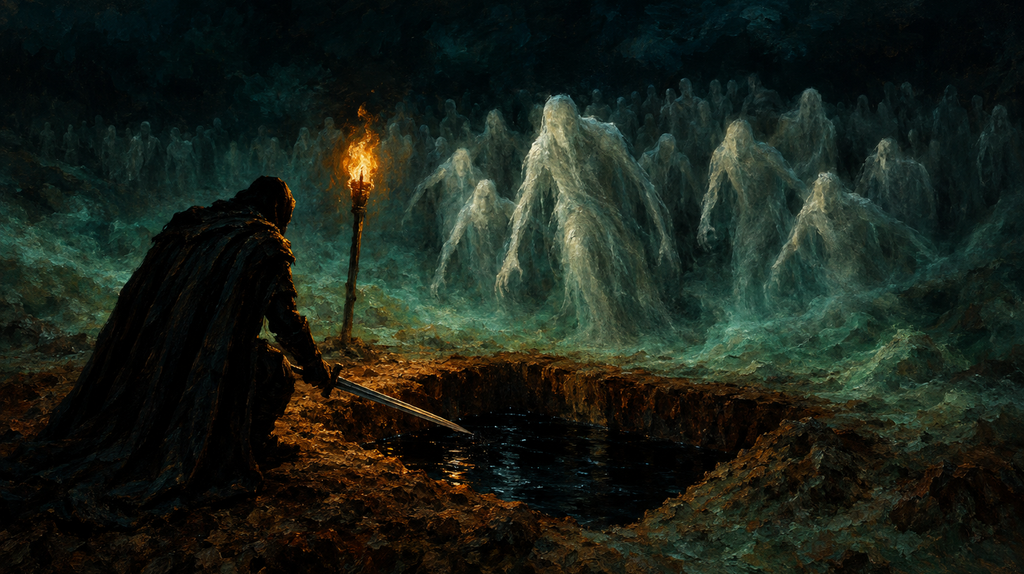
- 1 Samuel 28:7–19: Describes King Saul consulting the medium of Endor to summon the spirit of Samuel after God had abandoned him, demonstrating the desperate and forbidden nature of seeking such contact.
Prayers to Mary likely began in the mid-3rd century (c. 250 AD), while prayers to saints generally emerged in the late 3rd to early 4th century.
- Early Marian Devotion: The earliest known prayer to Mary, Sub tuum praesidium (“Beneath Thy Protection”), is dated to approximately 250 AD. By the late 2nd and early 3rd centuries, early Christians honored Mary, evidenced by her depiction in the Priscilla catacombs in Rome and titles like “Mother of God” (Theotokos).
- Veneration of Saints: Invoking the intercession of deceased saints began in the late 3rd century, with the earliest clear funerary inscriptions requesting their prayers appearing around 300 AD.
- Theological Consolidation: Marian devotion became a central focus of the Church following the Council of Ephesus in 431 AD, which officially affirmed Mary as the Theotokos. By the 5th and 6th centuries, veneration of Mary began to rival that of other saints, and by the 12th to 13th centuries, high Marian devotions like the Rosary became widespread.