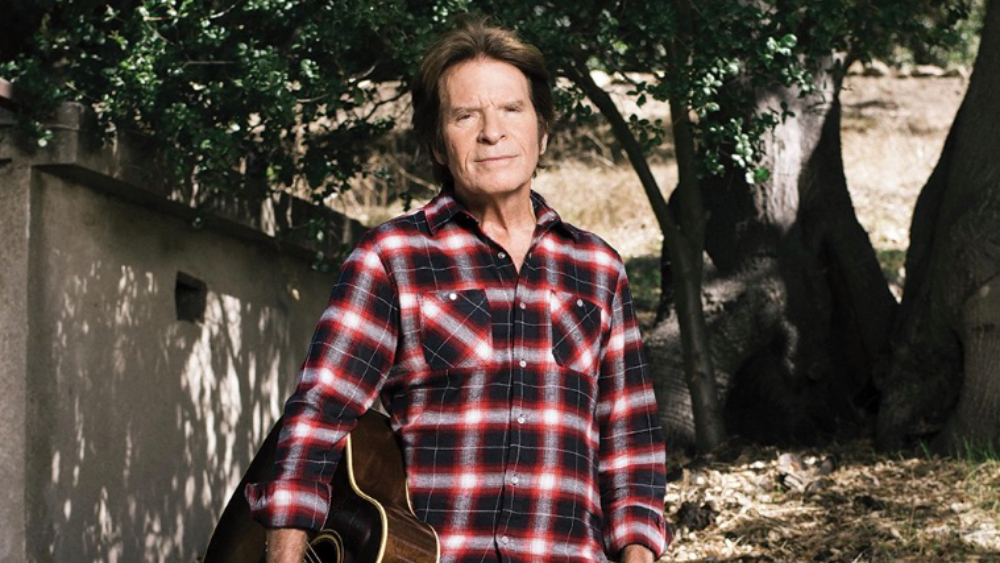
More than 50 years after their initial release, rock legend John Fogerty achieved a long-awaited personal milestone by acquiring a majority interest in the global publishing rights to his Creedence Clearwater Revival catalog from Concord. This acquisition brought a definitive close to one of the most protracted and contentious legal sagas in the history of the music industry. For decades, the creator of American rock staples like “Proud Mary,” “Fortunate Son,” and “Bad Moon Rising” had been locked out of owning his own artistic output due to a series of deeply restrictive contracts.
The roots of this bitter feud traced back to the mid-1960s, when a young Fogerty and his bandmates signed with Fantasy Records, a label later acquired by movie and music mogul Saul Zaentz. The initial agreement proved to be punishingly draconian, prompting Fogerty to make the desperate concession in 1980 of relinquishing his past royalties just to break free from the label. What followed was a decades-long war of attrition characterized by lawsuits, public animosity, and even a bizarre legal retaliation from Zaentz over Fogerty’s 1985 solo track “Vanz Kant Danz”. Even as Zaentz built a legendary Hollywood career financed largely by Creedence profits.
Key Legal Conflicts:
- Self-Plagiarism Lawsuit: In 1985, Fantasy sued Fogerty for allegedly plagiarizing his own CCR hit “Run Through the Jungle” with his solo song “The Old Man Down the Road.” Fogerty won the jury trial in 1988 and subsequently won a landmark U.S. Supreme Court case in 1994 (Fogerty v. Fantasy, Inc.) to recover his $400,000 in legal fees, establishing that prevailing defendants should be treated equally to plaintiffs.
- Defamation Counter-Claim: Fogerty’s song “Vanz Kant Danz” (originally “Zanz Kant Danz”) mocked Zaentz, leading to a $140–$144 million defamation lawsuit from Zaentz, which was settled with Fogerty paying a portion of the costs.
- Royalty Disputes: Fogerty claimed Fantasy withheld royalties and mismanaged investments, forcing him to sue annually starting in 1980 just to receive payments owed to him as a songwriter.
When Concord Music Group acquired Fantasy Records in 2004, the corporate relationship vastly improved; the company immediately reinstated and elevated Fogerty’s royalty rates. However, full ownership of the publishing rights remained elusive until a strategic window opened. Realizing that U.S. copyright law’s 56-year reversion rule would soon begin returning domestic portions of his catalog piece by piece, Fogerty and his wife and manager, Julie, chose to take a more aggressive, proactive approach. Enlisting powerhouse manager Irving Azoff, they negotiated a comprehensive buyout that secured worldwide control rather than waiting for a piecemeal domestic return.
Resolution and Recent Disputes:
- Catalog Acquisition: In January 2023, after acquiring a majority stake from Concord Records (which had bought Fantasy in 2004), Fogerty finally secured global publishing rights to the CCR catalog, ending the half-century feud with Zaentz’s estate.
- Bandmate Feuds: Despite the catalog victory, Fogerty faced renewed litigation from former bandmates Doug Clifford and Stu Cook, along with the widow of Tom Fogerty. In 2014, they sued him for trademark violations and breach of a 2001 settlement regarding the use of the CCR name by their touring act, Creedence Clearwater Revisited. Fogerty countersued in 2015 for unpaid royalties, vowing that no further lawsuits would stop him from performing his songs.
While Concord retained the original master recordings and agreed to temporarily administer the remaining publishing shares, the deal handed Fogerty the control he had fought for a half-century to attain. In stark contrast to many of his contemporaries who have recently sold their catalogs off to corporate buyers for massive windfalls, Fogerty’s move was driven purely by emotional reclamation and artistic integrity. Reflecting on the monumental shift, a visibly relieved Fogerty noted that he was finally ready to move past the decades of pain and genuinely feel good about performing his music again.
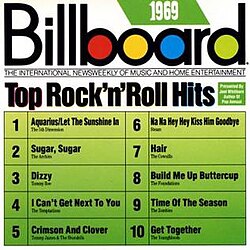
In 1969, Creedence Clearwater Revival achieved their most prolific and successful period, releasing three studio albums and scoring four Top 5 hits on the Billboard Hot 100.
Their album Green River topped the Billboard 200 chart for four weeks starting in October, marking the band’s first No. 1 album.
Based on Billboard Hot 100 chart performance, the top ten Creedence Clearwater Revival songs are ranked by their peak positions, with ties broken by longevity or secondary metrics where applicable. The band achieved nine Top 10 hits but never reached Number 1 on the US chart, often being blocked by year-end Number 1 singles.
- Bad Moon Rising – Peaked at No. 2 (1969); also reached No. 1 on the UK Singles Chart.
- Proud Mary – Peaked at No. 2 (1969); spent 3 weeks at the peak.
- Green River – Peaked at No. 2 (1969); spent 1 week at the peak.
- Travelin’ Band / Who’ll Stop the Rain – Peaked at No. 2 (1970); a double A-side single.
- Lookin’ Out My Back Door / Long As I Can See The Light – Peaked at No. 2 (1970); another double A-side single.
- Up Around The Bend / Run Through The Jungle – Peaked at No. 4 (1970); a double A-side single.
- Down On The Corner / Fortunate Son – Peaked at No. 3 for “Down On The Corner” and No. 14 for “Fortunate Son” (1969); released as a double A-side.
- Sweet Hitch-Hiker – Peaked at No. 9 (1971).
- Have You Ever Seen The Rain / Hey Tonight – Peaked at No. 8 (1971); a double A-side single.
- Someday Never Comes – Peaked at No. 25 (1972); the highest-charting post-breakup solo single credited to the band name.
Key Chart Notes:
- Five No. 2 Hits: CCR holds the record for the most singles peaking at No. 2 without ever reaching No. 1 on the Hot 100.
- Historical Context: Their No. 2 finishes were often blocked by major hits like The Archies’ “Sugar, Sugar” (1969) and Simon & Garfunkel’s “Bridge Over Troubled Water” (1970).
- Recent Resurgence: “Fortunate Son” recently re-entered the Billboard Hot 100 and Streaming Songs charts in July 2026, demonstrating enduring popularity.