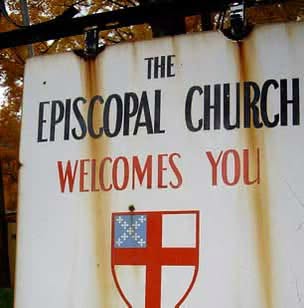
At the heart of this crisis lies the question of authority. Anglicanism understood the Church as the recipient and guardian of a faith grounded in Holy Scripture, confessed in the catholic creeds, and expressed through the Anglican formularies. The Church was not understood to possess unrestricted authority to reconstruct Christian doctrine according to the changing assumptions of society. Its responsibility was to preserve, teach, and transmit the faith entrusted to it.
From the traditionalist perspective, the willingness of The Episcopal Church to revise established teaching in response to contemporary cultural developments represents a departure from this fundamental principle. The issue is not whether the Church may develop its pastoral practice, but whether it can reverse or redefine Christian teaching without undermining its own claim to doctrinal continuity.
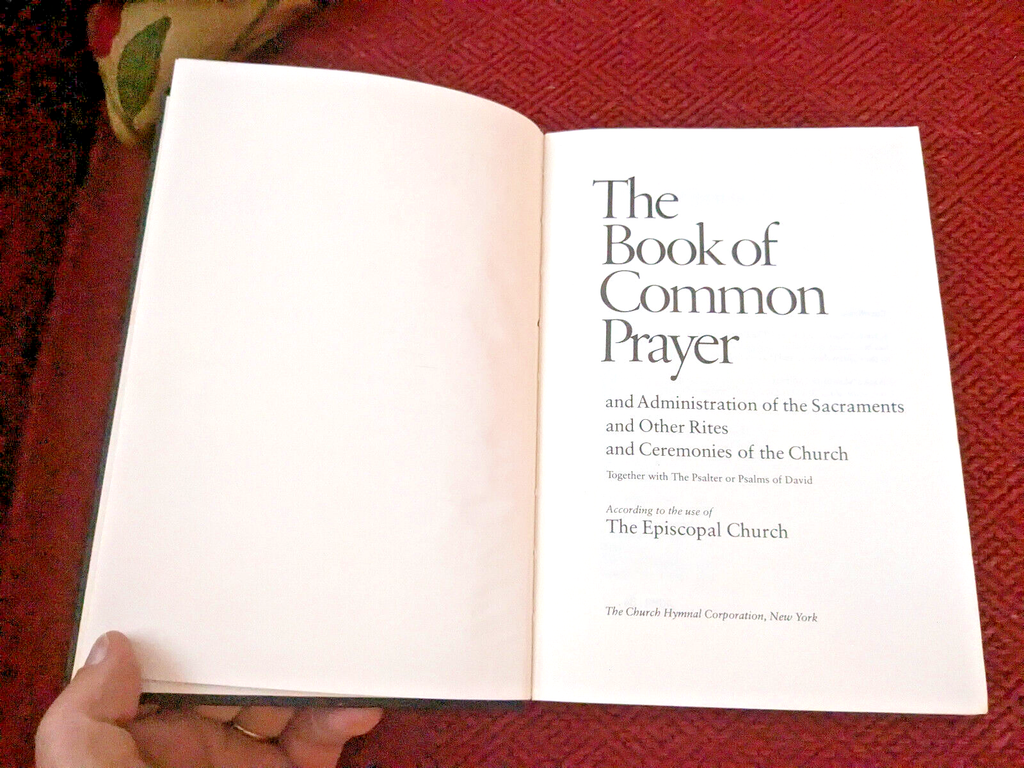
The consequences of this theological rupture have been particularly evident in the Church’s worship. Anglican liturgy has never been merely a matter of ceremonial preference or aesthetic tradition. The Book of Common Prayer historically served as one of the principal instruments through which Anglican doctrine was taught, preserved, and transmitted. Its prayers, offices, sacramental rites, and catechetical instruction formed a coherent theological vision grounded in Scripture and the historic Christian faith. The 1662 Book of Common Prayer, in particular, represents a mature expression of classical Anglican worship, uniting biblical proclamation, confession, absolution, thanksgiving, sacramental theology, and corporate prayer within a common liturgical framework.
The abandonment of the classical Prayer Book as the normative standard of Anglican worship therefore carries consequences far greater than the replacement of seventeenth-century English with contemporary language. The twentieth-century liturgical reforms, culminating in the Episcopal Church’s 1979 Book of Common Prayer, introduced substantial changes in the structure and theological emphases of Anglican worship. Although such reforms were defended as necessary developments, they contributed to a broader displacement of Anglican liturgy as it was received, becoming increasingly subject to contemporary theological preferences.
This is the essential connection between doctrinal apostasy and liturgical experimentation. When confidence in the authority of doctrine diminishes, the authority of worship becomes easier to question. If the Church considers its theology open to fundamental reconstruction, its liturgy will inevitably become vulnerable to the same process. The Prayer Book consequently risks being treated as a historical resource from which individual congregations and ecclesiastical authorities may select or discard elements according to present priorities, rather than as a coherent expression of the faith the Church is called to preserve.
The resulting liturgical fragmentation has weakened the common identity that once distinguished Anglican worship. Common prayer historically enabled Anglicans separated by geography, social circumstances, and generations to participate in a recognizable pattern of worship. The Prayer Book gave them a shared language of repentance, redemption, thanksgiving, intercession, and Christian hope. When that common inheritance is displaced by competing liturgical models, the unity it sustained becomes more difficult to maintain. Although legitimate cultural and linguistic diversity has a place within worldwide Anglicanism, diversity without a stable theological foundation can become fragmentation rather than catholicity. The consequences extend to the formation of future generations.
Liturgy is a powerful instrument of theological education because Christians learn the faith not only by reading theological texts but by repeatedly praying, hearing Scripture, confessing sin, receiving the sacraments, and participating in the Church’s common life. The classical Prayer Book formed generations of Anglicans through its biblical language and theological structure. Its marginalization risks producing Christians who retain an Anglican affiliation without acquiring a substantial understanding of classical Anglican theology. The loss is therefore not merely literary or ceremonial; it is a loss of ecclesial memory and theological continuity.
The crisis has also contributed to the fragmentation of Anglicanism in North America. Disputes over doctrine, authority, ordained ministry, and sexuality led to the departure of clergy and congregations and contributed to the formation of alternative Anglican jurisdictions, including the Anglican Church in North America in 2008. This fragmentation demonstrates that the controversy cannot be reduced to disagreements over administrative arrangements. It concerns competing understandings of Anglican identity itself. For traditionalists, institutional unity cannot be preserved at the expense of doctrinal fidelity, because a common ecclesiastical structure without a sufficiently shared faith offers only a superficial form of unity.
The recovery of the 1662 Book of Common Prayer must therefore be understood as an essential part of Anglican renewal. Its purpose is not to glorify the past or to insist that every aspect of seventeenth-century English culture must be reproduced in the contemporary Church. Rather, it is to restore the principle that Anglican worship should remain accountable to the theological inheritance from which it arose. Contemporary translations and carefully considered adaptations may serve legitimate pastoral needs, but they should preserve the doctrinal substance and liturgical integrity of the classical tradition rather than facilitate its displacement.
The cost is the erosion of a common theological and liturgical inheritance. Doctrinal revision has contributed to liturgical revision; liturgical discontinuity has weakened intergenerational formation; and competing understandings of authority have contributed to ecclesial division. These consequences reveal why the question of the Prayer Book cannot be separated from the question of the Church’s faith. The liturgy expresses the theology of the Church, while the theology of the Church determines what its worship confesses and transmits.
North American Anglicanism therefore faces a choice between continuing to accommodate an increasingly fragmented theological and liturgical identity and recovering the classical inheritance that historically gave it coherence. The 1662 Book of Common Prayer offers a compelling foundation for such recovery because it reconnects Scripture, doctrine, sacrament, and common prayer within a historically established Anglican framework. Its restoration as the principal standard of Anglican worship would represent more than a liturgical preference: it would be a public reaffirmation that the Church is not the master of the faith it proclaims, but its steward.