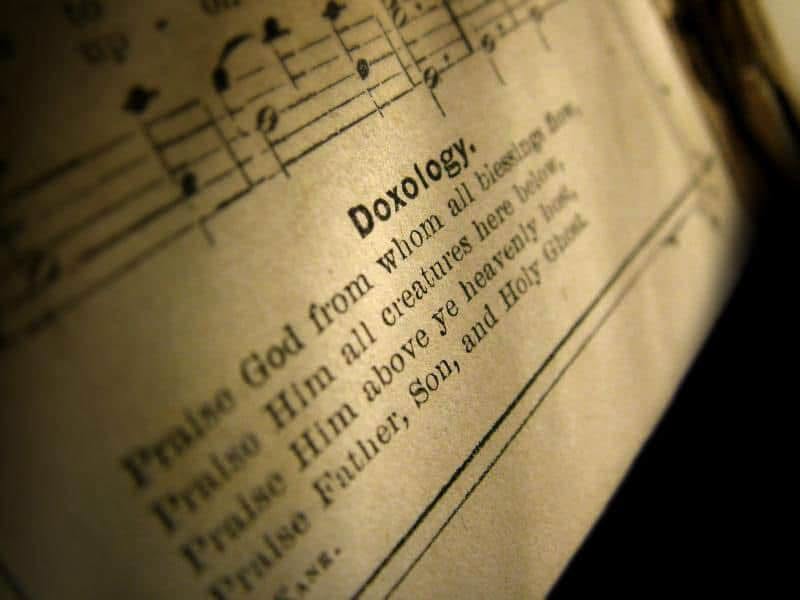
Praise God, from Whom All Blessings Flow, commonly known as The Doxology, was written in 1674 by Thomas Ken, an Anglican bishop and hymnwriter.
It originated as the final stanza for three hymns intended for morning, evening, and midnight worship at Winchester College, where Ken served as a teacher.
The lyrics were later published in Ken’s 1695 pamphlet, A Manual of Prayers for the Use of the Scholars of Winchester College.
The most widely known hymn, “Praise God, from Whom All Blessings Flow,” was written in 1674 by Thomas Ken, an Anglican bishop and chaplain at Winchester College. Originally intended as the closing stanza for his morning and evening hymns for students, it was composed for private devotion rather than public worship because, at the time, singing non-biblical lyrics in church was considered controversial. The text was first published in print in 1709 in a collection of Ken’s works.
The melody traditionally associated with this text is OLD HUNDREDTH, composed by Louis Bourgeois in 1551 for the Genevan Psalter. This tune was originally set to Psalm 100 and became the standard meter for the doxology, allowing Ken’s concise four-line trinitarian praise to be sung across Protestant traditions. The hymn is distinct from other liturgical doxologies like the Gloria in Excelsis Deo (Greater Doxology) or the Gloria Patri (Lesser Doxology), serving as a brief, metrical ascription of glory to the Father, Son, and Holy Spirit.