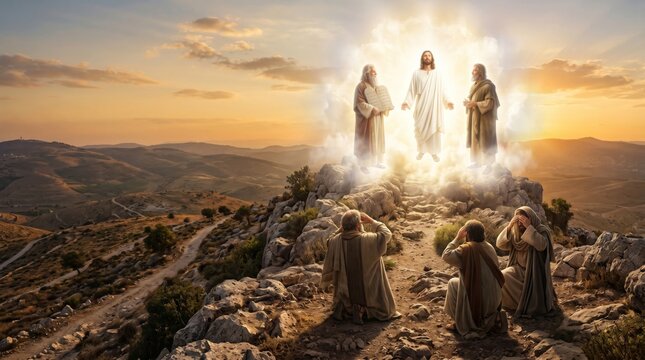

Epiphany is a Christian feast day celebrated on January 6 every year, the day after the twelfth and final day of Christmas. It’s also sometimes known as “Three Kings’ Day,” although the three “kings” referred to were not actually kings but magi—astrologers from eastern countries such as Persia. As noted in our Rookie Anglican Guide to Advent, the Christian year begins with Advent, which leads up to Christmas on December 25. Then come the 12 Days of Christmas (December 25–January 5), which lead to the feast of Epiphany on January 6. Epiphany begins Epiphanytide (or “Season of Epiphany”). Depending on whom you ask, this season
- Lasts until the feast of the Presentation of Our Lord Jesus Christ in the Temple (called Candlemas) on February 2 (40 days inclusive after Christmas, when, according to Leviticus 12:1–8, Mary would have to be ritually purified after childbirth). OR
- Goes until Ash Wednesday, the beginning of Lent.
Why is it called “Epiphany”?
“Epiphany” comes from the Greek epiphaneia, meaning “manifestation” or “appearance.” In 2 Timothy 1:9-10, the word is used to refer to the manifestation of Jesus Christ:
9 who saved us and called us to[a] a holy calling, not because of our works but because of his own purpose and grace, which he gave us in Christ Jesus before the ages began,[b] 10 and which now has been manifested through the appearing of our Savior Christ Jesus, who abolished death and brought life and immortality to light through the gospel, 2 Timothy 1:9-10
In the Church year, Epiphany refers to the appearance of Jesus Christ as the savior of the world, Israel, and the Gentiles. For this reason, Epiphany is commonly associated with the visitation of the magi (or “wise men”), who were almost certainly Gentiles, in Matthew 2:1-12.
The Church has long viewed the Magi finding Jesus (thanks to the leading light of a star) as a fulfillment of the prophecy of Isaiah 60:1-3, particularly verse 3:
Arise, shine; for your light has come,
and the glory of the Lord has risen upon you.
For darkness shall cover the earth,
and thick darkness the peoples;
but the Lord will arise upon you,
and his glory will appear over you.
Nations shall come to your light,
and kings to the brightness of your dawn.
Isaiah 60:1-3
In addition to the magi’s visit, Jesus’s baptism and his changing water into wine at the wedding in Cana are commonly associated with Epiphany, especially in Eastern churches. These are two other “manifestations” of Christ’s glory. You will frequently find Scripture readings about the baptism of Jesus and his miracle at Cana assigned for Epiphanytide services.
The Season of Epiphany is one of two periods in the Church calendar known as “Ordinary Time.” However, there’s nothing unimportant or uninteresting about it! During Epiphany, we focus on the Church’s mission to reach all peoples of the earth and on the great gift of God’s grace in revealing healing truth and light to the world.
(Note that what is celebrated as “Epiphany” in Western churches is called “Theophany” in Eastern churches. “Theophany” means “appearance of God.”)
Common Practices During Epiphany
It turns out that there are many common practices worldwide for Epiphany. Just look at Epiphany’s Wikipedia page to see, here are just a few:
- Twelfth Night celebrations are relatively common, marking the conclusion of the 12 Days of Christmas. This is the time to sing Christmas carols, have one’s house blessed, and (often) to then take Christmas decorations down.
- The house is often blessed by a priest or by the family, with a piece of blessed chalk, in what is called the Chalking of the Door, where a blessed piece of chalk is used to mark the doorway lintel with a configuration of the year and the letters C, M, and B. These letters stand for both the traditional names given to the “Three Wise Men” (Caspar, Melchior, and Balthazar) and the Latin phrase “Christus Mansionem Benedicat,” meaning “Christ, bless this house.” Read more in our Rookie Anglican Guide.
- A special cake often goes along with the Epiphany celebration. These are often called “King Cakes.” They usually include items (such as a miniature figurine of the baby Jesus) that grant the finder specific privileges or obligations. For example, at my local church at Epiphany, we eat King Cakes, which we call “Rosca (de Reyes)” (“ring of the kings”). These contain plastic figurines of baby Jesus. Whoever finds a baby Jesus in their piece of cake must bake cookies for the annual church business meeting, held in early February around the feast of the Presentation.
- Finally, it is customary to make paper crowns to remember the magi (often referred to as “kings”).