
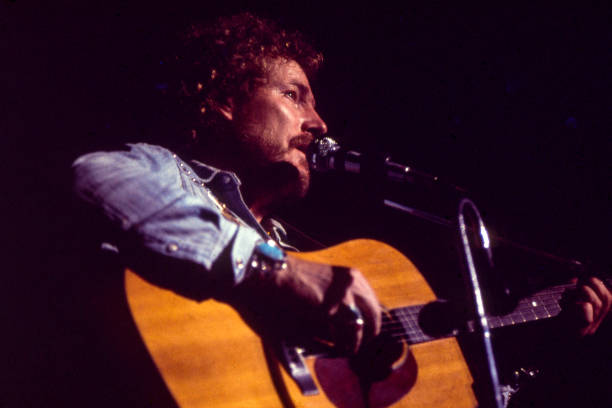
Gordon Lightfoot wrote “The Wreck of the Edmund Fitzgerald” to memorialize the sinking of the bulk carrier SS Edmund Fitzgerald, which sank in Lake Superior on November 10, 1975, killing all 29 crew members. Lightfoot was inspired to write the ballad after reading a Newsweek article titled “The Cruelest Month” and having a melody in mind from an old Irish dirge he had heard as a child.
The song was recorded in December 1975 during sessions for his album Summertime Dream, initially intended as filler but released as a single in 1976. It became a massive hit, reaching No. 2 on the Billboard Hot 100, despite its unusual structure: it is over six minutes long, contains no chorus, and features no guitar solo. Lightfoot considered it his finest work and a factual retelling of the tragedy, though he admitted to taking some creative liberties with the details.
While the song is largely accurate, Lightfoot adjusted lyrics as new information emerged about the disaster. For instance, the ship was bound for Detroit, not Cleveland as originally sung, and the cargo was loaded in Duluth, Minnesota, not Wisconsin. He also removed a reference to a “main hatchway caving in” after underwater investigations suggested the ship was likely lost to rogue waves rather than open hatches. The song remains a cultural phenomenon, credited with keeping the memory of the ship and its crew alive for decades.
[Verse 1]
The legend lives on from the Chippewa on down
Of the big lake they called Gitche Gumee
The lake, it is said, never gives up her dead
When the skies of November turn gloomy
With a load of iron ore twenty-six thousand tons more
Than the Edmund Fitzgerald weighed empty
That good ship and true was a bone to be chewed
When the gales of November came early
[Verse 2]
The ship was the pride of the American side
Coming back from some mill in Wisconsin
As the big freighters go, it was bigger than most
With a crew and good captain well seasoned
Concluding some terms with a couple of steel firms
When they left fully loaded for Cleveland
And later that night when the ship’s bell rang
Could it be the north wind they’d been feelin’?
[Verse 3]
The wind in the wires made a tattle-tale sound
And a wave broke over the railin’
And every man knew, as the captain did too
‘Twas the witch of November come stealin’
The dawn came late and the breakfast had to wait
When the gales of November came slashin’
When afternoon came it was freezin’ rain
In the face of a hurricane west wind
[Verse 4]
When suppertime came the old cook came on deck sayin’
“Fellas, it’s too rough to feed ya”
At seven P.M. a main hatchway caved in, he said
“Fellas, it’s been good to know ya”
The captain wired in he had water comin’ in
And the good ship and crew was in peril
And later that night when his lights went outta sight
Came the wreck of the Edmund Fitzgerald
[Verse 5]
Does anyone know where the love of God goes
When the waves turn the minutes to hours?
The searchers all say they’d have made Whitefish Bay
If they’d put fifteen more miles behind her
They might have split up or they might have capsized
They may have broke deep and took water
And all that remains is the faces and the names
Of the wives and the sons and the daughters
[Verse 6]
Lake Huron rolls, Superior sings
In the rooms of her ice-water mansion
Old Michigan steams like a young man’s dreams
The islands and bays are for sportsmen
And farther below Lake Ontario
Takes in what Lake Erie can send her
And the iron boats go as the mariners all know
With the gales of November remembered
[Verse 7]
In a musty old hall in Detroit they prayed
In the Maritime Sailors’ Cathedral
The church bell chimed till it rang twenty-nine times
For each man on the Edmund Fitzgerald
The legend lives on from the Chippewa on down
Of the big lake they call Gitche Gumee
Superior, they said, never gives up her dead
When the gales of November come early