In Anglican Christianity, a Spiritual Communion at home is a devotion for times when you cannot physically receive Holy Communion at church. It is especially associated with the Book of Common Prayer tradition.
The basic idea is that, although you are unable to receive the consecrated bread and wine physically, you unite yourself by faith with Christ and with the worship of the Church, asking God to give you the spiritual benefits of Holy Communion.
A traditional Anglican approach
A Spiritual Communion can be prayed privately, perhaps while watching or listening to a celebration of Holy Communion, or simply at home using the Communion prayers from the Prayer Book.
Although a spiritual communion can follow all sorts of liturgical patterns or prayers. A simple form would include the following:
A well-known Prayer Book form is:
- Prepare yourself
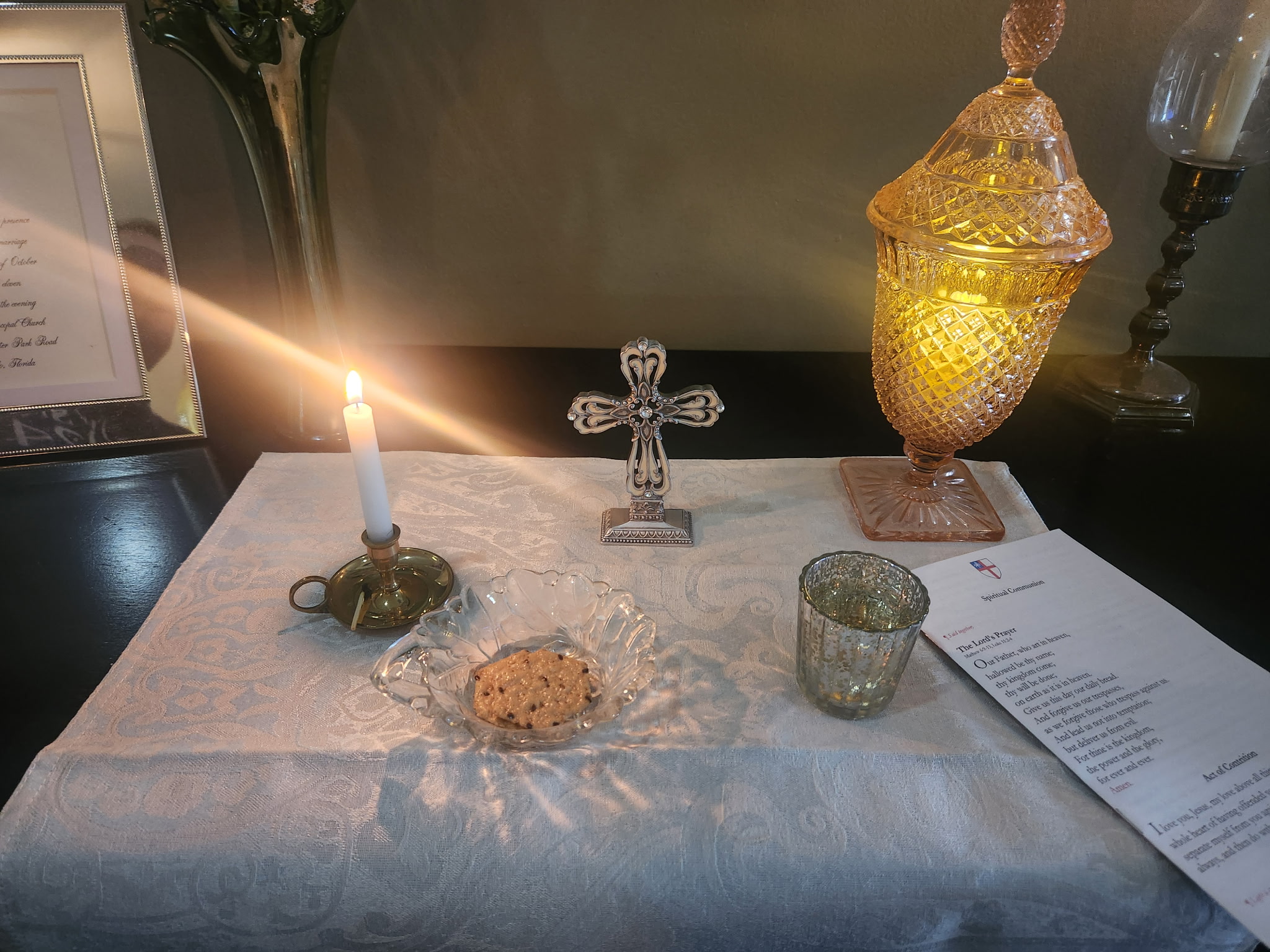
- Be quiet before God. I usually have a Gregorian Chant with a church pipe organ that I play on the TV in a soft volume. It is quite nice and resembles a choir and organ in a traditional Anglican church service when celebrating the Eucharist.
- Recite the Collect of the Day found in the Book of Common Prayer or a liturgical calendar website that provides everything you need. Here is the one that I use. In the 2019 Book of Common Prayer you can find the collects beginning on p.598
- Confess your sins and ask for forgiveness. This is taken from the 2019 Book of Common Prayer, p.112, the online version, or a downloadable version.
- Consider Christ’s death and resurrection and your need for Him. The Prayer of Humble Access can be found on p.119 of the 2019 Book of Common Prayer, the online version, or a downloadable version.
- Read Scripture
- You might read the Gospel appointed for the day or a passage such as John 6:35–58, 1 Corinthians 10:16–17, or 1 Corinthians 11:23–29. My home liturgy consists of the lectionary readings for that particular Sunday. Today was the 13th Sunday after Pentecost in the Liturgical calendar. All lectionaries are maintained by the Divinity Library at Vanderbilt University.
- Make an act of faith
- You acknowledge that Christ is truly present to His people and that you desire to receive Him, even though you cannot receive the Sacrament physically.
- Pray an Anglican Spiritual Communion prayer
- You might read the Gospel appointed for the day or a passage such as John 6:35–58, 1 Corinthians 10:16–17, or 1 Corinthians 11:23–29.
- I choose prayers at random, for the reasons that may fit the season, intercessions that I may want to include or simply sentences of scripture that can be found in the prayer book.
Here are some traditional prayers to get started with:
“Dearly beloved in the Lord, I offer myself to thee, and I beseech thee to receive me, and to make me one with thee, that I may be strengthened by thy grace, and comforted by thy Holy Spirit; and that I may evermore dwell in thee, and thou in me. Amen.”
Another traditional form expresses the desire to receive Christ spiritually:
“I most earnestly repent me of my sins, and am in charity with all men, and I desire to receive the Holy Sacrament of the Body and Blood of Christ; but, as I cannot now receive it, I beseech thee to come spiritually into my heart.”
You then spend some time in silent prayer and thanksgiving, consciously offering yourself to Christ and asking Him to strengthen your faith, unite you to Himself, and enable you to live in obedience to Him.
Is it the same as receiving Communion?
No. Anglican theology traditionally distinguishes between Sacramental Communion—actually receiving the consecrated bread and wine—and Spiritual Communion.
Spiritual Communion is not intended to replace the Eucharist when you are able to attend church and receive Communion. Rather, it is a way of maintaining communion with Christ when circumstances prevent sacramental reception.
For example, someone who is sick, traveling, caring for someone, unable to attend church, or otherwise prevented from receiving Communion might make a Spiritual Communion.
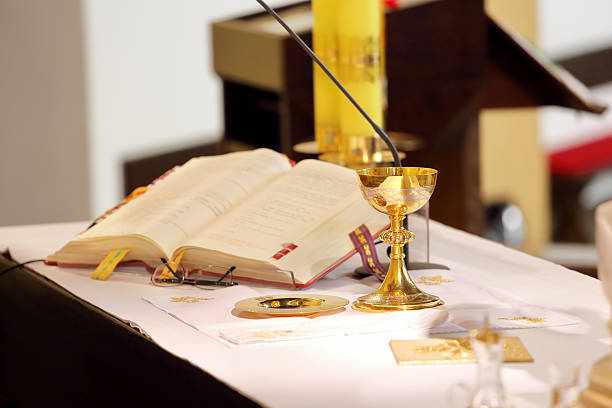
There is also an important Anglican principle here: the efficacy of the Eucharist does not depend simply upon physically eating and drinking. Faith receives Christ and His benefits. Spiritual Communion therefore emphasizes the reality of one’s faith and desire for Christ while still maintaining the distinction between the spiritual devotion and the Sacrament itself.
If you’re interested in the 1662 Book of Common Prayer specifically, I can also show you a traditional 1662-style Spiritual Communion service that you could actually pray at home, using the language and theology of the Prayer Book. Message me here on the site and I can come up with something straight away.
Here is a copy of the liturgy that I came up with for my spiritual guide. Please, also see the downloadable Microsoft Word version that can be edited to your particular circumstances:
The following is a Microsoft Word Version that can also be made into a booklet, instructions to do that are here.
Here is a copy of the 2019 Book of Common prayer: