The Feast of the Transfiguration of Our Lord Jesus Christ is celebrated on August 6 each year. In 2026, this feast day falls on Thursday, August 6.
This date is observed by the Roman Catholic Church, Eastern Orthodox Churches (which may also mark it on August 19 in the Gregorian calendar if using the Julian calendar), Anglican, and many Protestant traditions. The feast commemorates the biblical event where Jesus revealed his divine glory to the apostles Peter, James, and John on a mountain, traditionally identified as Mount Tabor.
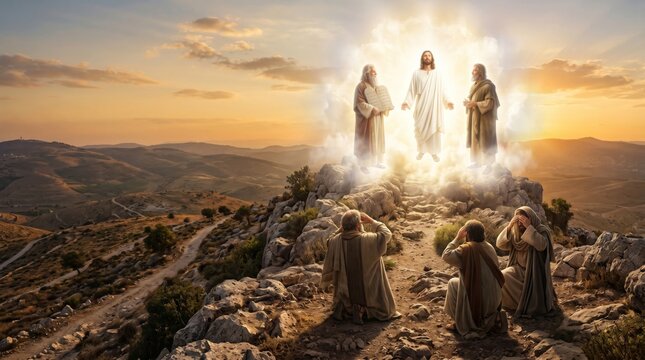
Feast of the Transfiguration, Christian commemoration of the occasion upon which Jesus Christ took three of his disciples, Peter, James, and John, up on a mountain, where Moses and Elijah appeared and Jesus was transfigured, his face and clothes becoming dazzlingly bright (Mark 9:2–13; Matthew 17:1–13; Luke 9:28–36). The festival celebrates the revelation of the eternal glory of the Second Person of the Trinity, which was normally veiled during Christ’s life on earth. According to tradition, the event took place on Mount Tabor.
It is not known when the festival was first celebrated, but it was kept in Jerusalem as early as the 7th century and in most parts of the Byzantine Empire by the 9th century. It was gradually introduced into the Western Church, and its observance was fixed as August 6 by Pope Calixtus III in 1457 as a thank offering for the victory over the Turks at Belgrade on that day in 1456. In 2002 Pope John Paul II updated the meditations of the rosary with five “luminous mysteries,” of which the Transfiguration is one.
In the Orthodox Church it has always been a major festival. In some churches it is celebrated on other dates. The Armenian Apostolic Church keeps it on the fourteenth Sunday after Easter, and some Lutherans on the Sunday after Epiphany.
2019 Book of Common Prayer
Collects – The Transfiguration – August 6
O God, who on the holy mount revealed to chosen witnesses your well-beloved Son, wonderfully transfigured, in raiment white and glistening: Mercifully grant that we, being delivered from the disquietude of this world, may by faith behold the King in his beauty; who with you and the Holy Spirit lives and reigns, one God, for ever and ever. Amen.
Daily Office Lectionary: Morning Prayer
Evening Prayer
Dictionary of the Episcopal Church:
The Transfiguration of Our Lord Jesus Christ is the feast that celebrates Jesus’ radical change of appearance while in the presence of Peter, James, and John, on a high mountain (Mt 17:1-8; Mk 9:2-8; Lk 9:28-36). The Gospel of Matthew records that “he was transfigured before them, and his face shone like the sun, and his garments became white as light.” At this moment Moses and Elijah appeared, and they were talking with Jesus.
Peter, misunderstanding the meaning of this manifestation, offered to “make three booths” for Jesus, Moses, and Elijah. A bright cloud overshadowed them and a voice from the cloud stated, “This is my beloved Son, with whom I am well pleased; listen to him.” The disciples fell on their faces in awe, but Jesus encouraged them to arise and “have no fear.” They saw only Jesus.
This event is alluded to in 2 Pt 1:16-18, which records that “we were eyewitnesses of his majesty” and “we were with him on the holy mountain.” The Transfiguration revealed Christ’s glory prior to the crucifixion, and it anticipated his resurrection and ascension. It may have given strength and comfort to his disciples in the difficult times that followed. It also prefigures the glorification of human nature in Christ.
Celebration of the Transfiguration began in the eastern church in the late fourth century. The feast is celebrated on Aug. 6. This was the date of the dedication of the first church built on Mount Tabor, which is traditionally considered to be the “high mountain” of the Transfiguration.
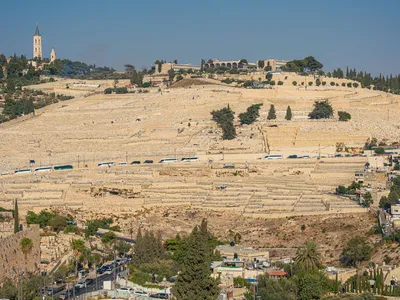
Others locate the Transfiguration on Mount Hermon or the Mount of Olives. Celebration of the feast was not common in the western church until the ninth century. It was declared a universal feast of the western church by Pope Callistus III in 1457.
The feast was first included in the English Prayer Book as a black letter day in the 1561 revision of the calendar of the church year. It was included as a red letter day with proper collect and readings in the American Prayer Book of 1892. Its inclusion reflects the efforts of William Reed Huntington, who wrote the BCP collect for the Transfiguration.
O God, who on the holy mount revealed to chosen witnesses your well-beloved Son, wonderfully transfigured, in raiment white and glistening: Mercifully grant that we, being delivered from the disquietude of this world, may by faith behold the King in his beauty; who with you, O Father, and you, O Holy Spirit, lives and reigns, one God, for ever and ever. Amen.
(1979 BCP, p243; 2019 BCP p630).
The Transfiguration is listed among the holy days of the church year as a Feast of our Lord. Other provinces of the Anglican Communion followed the lead of the Episcopal Church in celebrating the Transfiguration as a major feast. The Transfiguration gospel is used on the Last Sunday after the Epiphany in all three years of the BCP eucharistic lectionary. As an Epiphany story, the Transfiguration provides one of the most distinctive and dramatic showings of Jesus’ divinity.
The Hymnal 1982 provides several hymns for the Transfiguration, including “Christ upon the mountain peak” (Hymns 129-130) and “O wondrous type! O vision fair” (Hymns 136-137).