
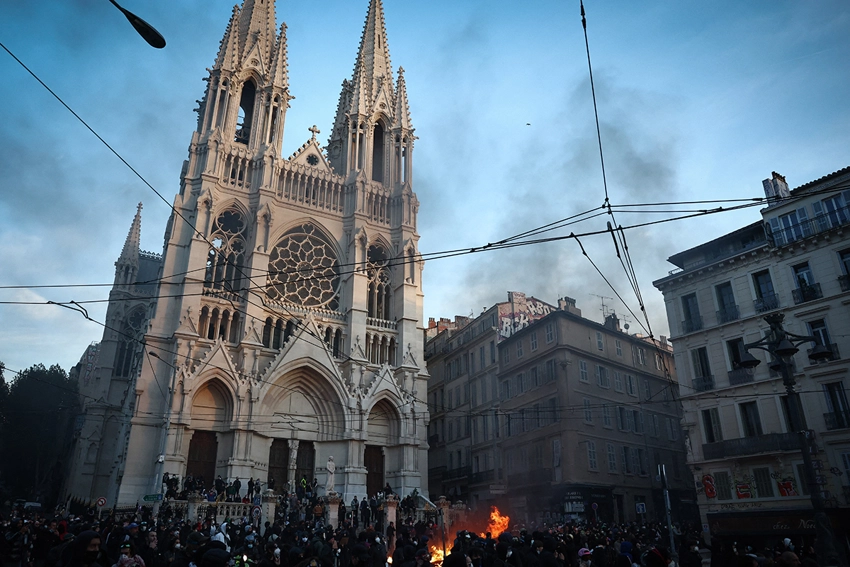
According to a 2026 report published by the Observatory on Intolerance and Discrimination Against Christians in Europe (OIDAC Europe), anti-Christian hate crimes and incidents across the continent reached 2,465 in 2025. Notably, attacks targeting individual Christians surged by 44% compared to the previous year, rising from 274 incidents in 2024 to 395 in 2025. These personal attacks encompassed threats, harassment, physical violence, defamation, and coercion. While differences in national reporting methods make direct comparisons difficult, government data recorded the highest overall incident totals in France (843), England and Wales (624), Germany (337), and Austria (134), with France experiencing a 70% spike in attacks against individuals. Civil-society data collected by the observatory independently logged the highest numbers in Germany, France, Spain, Italy, Poland, and the United Kingdom.
Beyond personal assaults, the watchdog group documented widespread property crimes and disruptions to religious life. These included 966 incidents of theft and break-ins at religious sites, 184 cases of vandalism at churches or cemeteries, 90 instances of desecration, 78 arson-related attacks, and 46 disruptions of worship services. The report also highlighted severe acts of violence, including an attempted homicide in Germany, the stabbing of three Christians in Spain, the death of a Jehovah’s Witness in Russian custody, and at least two religiously motivated killings. The confirmed homicide victims were a Catholic priest who was bound and killed in his Polish presbytery, and Ashur Sarnaya, a disabled Assyrian Christian who was fatally stabbed in Lyon, France, in an Islamic extremist attack while livestreaming Christian messages.
OIDAC Europe further raised concerns over legal and professional restrictions affecting believers, citing the continued targeting of U.K. pro-life activist Isabel Vaughan-Spruce for silent prayer outside an abortion clinic, alongside the dismissal of several British educators and a chaplain over their views on gender, sexuality, and abortion. Executive Director Anja Tang noted that hostile media portrayals, social tensions, and burdensome legal proceedings discourage Christians from openly practicing their faith. To address these trends, the observatory called for new legislation against religious discrimination and urged the European Union to appoint a dedicated coordinator to combat anti-Christian hatred, matching existing EU roles dedicated to fighting antisemitism and anti-Muslim hatred.