Chinese authorities have lifted the bail restrictions imposed on four members of Beijing Zion Church, a prominent unregistered Protestant congregation. However, eight other church leaders and workers remain in detention as they await a trial that has been repeatedly delayed.
The four members—Yang Lijun, Sun Xue, Huang Chunzi and Tuya—completed the necessary procedures at a criminal case processing office in Beihai, in southern China’s Guangxi region. According to the church, they were summoned on November 9 and instructed to report to the Haicheng case center the following day. Their release from bail restrictions means they are no longer subject to criminal compulsory measures.
Previously, the four had been prohibited from traveling or leaving their city of residence without official permission. They were also required to report to their local police station whenever summoned. Violating these conditions could have resulted in their return to detention. Another church member, identified only as Cui, had her restrictions lifted earlier this year, while four additional members remain on bail as investigations continue.
Meanwhile, eight church leaders and workers, known collectively among supporters as the “Zion 8,” remain in custody. They include co-leader Wang Lin, Pastors Gao Yingjia, Yin Huibin, Liu Zhenbin, Lin Shucheng and Wang Cong, Elder Wang Zhong, and Wu Qiuyu. Prosecutors have changed the charges against them to either fraud or illegal business operations, with Wang Lin facing both accusations.
The prosecution’s case centers on church offerings and tuition payments for seminary training. Religious freedom organizations say Chinese authorities have increasingly used these charges against leaders of unregistered churches. The case went to court in July, but a hearing scheduled for August 14–18 was postponed after prosecutors said they needed additional time to review the evidence. In October, prosecutors requested further investigation, acknowledging that the available evidence was insufficient. No new trial date has been announced.
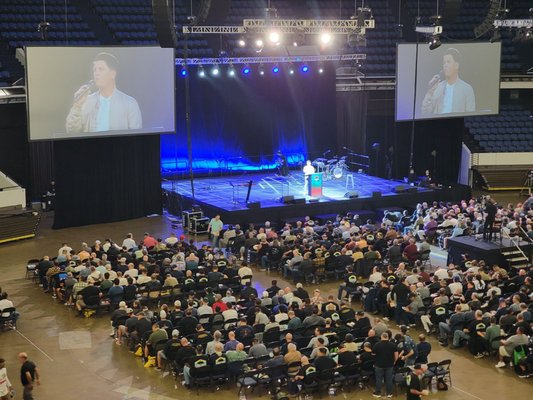
Pastor Ezra Jin Mingri founded Beijing Zion Church in 2007. Over time, its network of house churches expanded into one of China’s largest unregistered Protestant networks, with congregations in approximately 40 cities. The church operates independently of China’s state-controlled Protestant religious system. In 2018, authorities shut down its main Beijing congregation after church leaders refused to install surveillance cameras. Members subsequently continued gathering in smaller groups and conducting services online.

The latest crackdown began in October 2025, when police raided church locations in 11 cities. Reports indicate that between 28 and more than 30 people, including pastors and elders, were detained. Eighteen church leaders, including Jin, were formally arrested on November 18, 2025, on accusations of illegally using information networks and were transferred to Beihai for prosecution.
Jin was released from detention on July 4 and traveled to the United States to reunite with his family following diplomatic discussions between Chinese President Xi Jinping and U.S. President Donald Trump. He had spent approximately nine months in detention.
Families and defense attorneys have criticized the prosecution, accusing authorities of proceeding without adequately examining the evidence or consulting the defense. They argue that the charges effectively characterize religious instruction as an illegal commercial operation and voluntary financial contributions to the church as fraud.
In a letter written from detention on October 22, Wang Lin described harsh conditions at Beihai’s Second Detention Center, including inedible food, psychological distress, severe overcrowding and inadequate medical care. Relatives of the detainees have previously raised similar concerns.
ChinaAid condemned the continued detention of the eight church leaders, describing it as a violation of their fundamental rights. The organization called on Chinese judicial authorities to dismiss unsupported charges, safeguard religious freedom and end the use of legal proceedings as a means of political repression.
Scot Bower, chief executive of Christian Solidarity Worldwide (CSW), welcomed the removal of restrictions on the four church members but emphasized that the broader situation remains troubling. He said the charges, detentions and legal proceedings have seriously undermined the ability of these Christians, and many others throughout China, to practice their faith freely. Bower urged authorities to lift the remaining bail restrictions and immediately and unconditionally release the eight detained church leaders, while ending the crackdown on peaceful, unregistered religious communities.
Jin is also scheduled to receive the 2026 Lantos Human Rights Prize from the Lantos Foundation for Human Rights and Justice. The award recognizes his experience and advocacy following his arrest and detention. He has used the recognition to draw attention to the continued imprisonment of the eight Zion Church leaders and to call for their release.