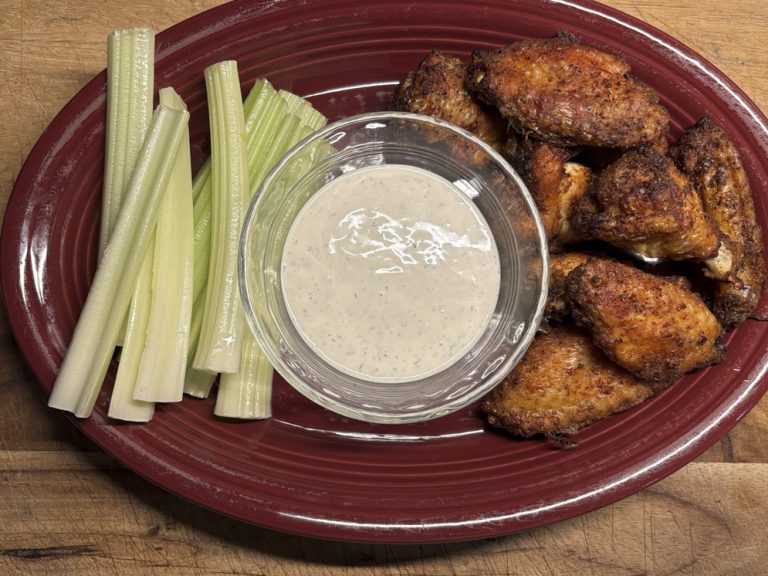
This recipe for Rotisserie Chicken Stock is my go-to kitchen magic trick for turning a leftover rotisserie chicken carcass into liquid gold.
There’s something so satisfying about turning leftovers that would normally be thrown away into something extraordinary. Making chicken stock from a rotisserie chicken carcass maximizes flavor and minimizes waste-a win-win in my book.
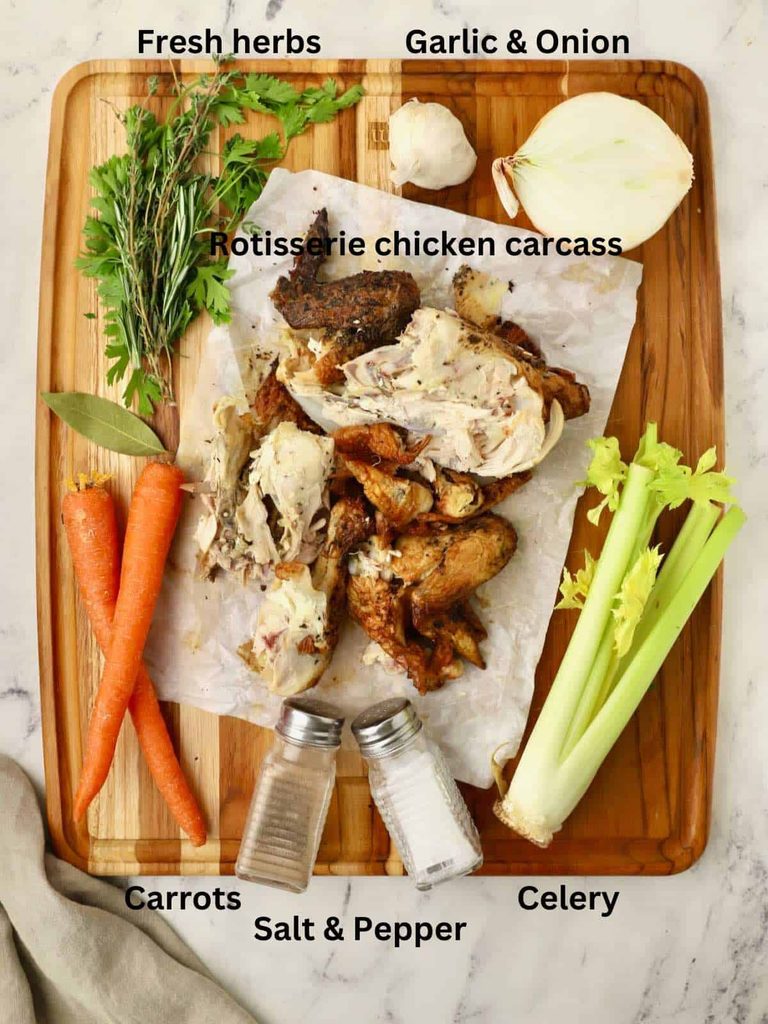
Below are my ingredient notes (including substitutions) for the main ingredients. The recipe card below provides a complete list of all ingredients and measurements.
- Rotisserie Chicken Carcass: The star of the show. After enjoying your rotisserie chicken, save the carcass (bones and skin) to make this flavorful stock. You can also substitute your leftover turkey carcass, which will make fabulous turkey stock, and leftover Oven Baked Bone-In Chicken Breasts.
- Vegetables: Classic choices include onions, garlic, carrots, and celery. Don’t hesitate to use leftovers, vegetable scraps, or vegetables nearing expiration-they’ll impart great flavor.
- Herbs and Spices: Bay leaves and fresh herbs such as parsley, rosemary, or thyme enhance the stock’s complexity. If you don’t have fresh herbs, no worries; dried herbs work, too.
- Better than Bouillon: You won’t believe the difference this flavor enhancer will make in your stock. I use Roasted Chicken flavor. Although it’s an optional add-in, you will thank me when you taste your stock.
What’s the difference between chicken stock, chicken broth, and chicken bone broth?
- Chicken stock is made by simmering chicken bones (often with some meat attached) along with vegetables, herbs, and seasonings for 4-6 hours. The long-simmering time extracts collagen from the bones, giving the stock a rich taste and slightly gelatinous texture when cooled.
- Chicken broth is typically made by simmering chicken meat (instead of just bones) 1-2 hours with vegetables, herbs, and seasonings. Because it doesn’t include long-simmered bones, broth is usually not as flavorful and thinner in consistency.
- Bone broth needs to simmer for at least 12-24 hours. This is necessary to break down the collagen in the bones, which releases gelatin and nutrients. When chilled, this gives bone broth a thick, almost jelly-like texture.
If you’re feeling extra patient (or want an even more nutrient-packed stock), add a splash of apple cider vinegar to your chicken stock pot and let it simmer for 12+ hours, and you’ll have homemade rotisserie chicken bone broth! You’ll know you did it right if the bone broth gels up in the fridge!
Rotisserie Chicken Stock
Ingredients
- 1 rotisserie chicken carcass (includes leftover meat, bones, and skin)
- 1 onion (halved or quartered, leave the peel on)
- 2 cloves garlic unpeeled
- 2 carrots unpeeled, roughly chopped
- 2 celery stalks and tops roughly chopped
- 1 sprig herbs rosemary, thyme, and parsley, (use what you have, can substitute dried herbs too)
- 1-2 bay leaves
- 2 teaspoons kosher salt
- ½ teaspoon ground black pepper (or whole peppercorns)
- 4 quarts water to cover
- 1 tablespoon Knorr Chicken Bouillon Chicken Flavor, (optional)
- 1 tsp Accent Flavor Enhancer (MSG) (optional)
Instructions
- Place the rotisserie chicken carcass in a large stockpot or Dutch oven. Add onions, garlic, and carrots, peel and all. For the celery, include the leaves as well. Add enough water to cover the ingredients, typically around four quarts. Throw in a couple of bay leaves and any fresh herbs you have on hand and season with salt and pepper.
- Bring the mixture to a gentle boil over medium heat. Once boiling, reduce the heat to low, cover, and let it simmer for 4-6 hours. The longer it simmers, the richer the flavor.
- After simmering, remove from heat and allow it to cool slightly. Strain the stock first through a large mesh strainer, then through a fine-mesh sieve or cheesecloth into a clean container, discarding the solids.
- Let the stock cool completely before transferring it to airtight storage containers. Refrigerate for up to 4 days or freeze for up to 3 months.
Notes

- During the initial simmering, foam may rise to the top. Skim it off with a spoon for a clearer stock.
- A gentle simmer is essential for the best flavor. Avoid boiling, which can make the stock cloudy.
- Use a fine-mesh sieve or cheesecloth to ensure a clear, clean stock.
- This homemade chicken stock recipe is more of a guide than an actual recipe. The ingredient amounts don’t have to be exact, and the vegetables and herbs you add can be different depending on what you have on hand. Experiment with different combinations. However, I would not add broccoli or cauliflower except in small amounts. Their flavors are too intense.
- You can use raw chicken, but since I always make this stock using leftovers, my chicken is cooked. Roasted chicken has a richer flavor, but you can use what you have on hand. I’ve even made chicken stock with leftover fried chicken bones.
- Don’t worry if your chicken stock congeals when it’s cold. This means you rendered a lot of gelatin from the bones, and the more it resembles jelly, the deeper your flavor will be. It will melt when you heat it.
- When the stock has cooled, use a spoon to remove any accumulated fat from the top.