On August 6, 1945 at 8:16 am in Hiroshima (7:16 pm August 5th on the US East Coast), after falling for 43 seconds from the B-29 Superfortress Enola Gay, the Little Boy atomic bomb detonated 1,968 feet (600 meters) above the city, 550 feet (168 meters) from the Aioi Bridge. One second later the fireball reached maximum size, 900 feet in diameter (274 meters). The mushroom cloud began to form.
As temperatures on the ground reached 7,000 degrees Fahrenheit (3871 Celsius), buildings melted and fused together, human and animal tissue vaporized. The blast wave traveled at 984 miles per hour in all directions, demolishing over two-thirds of Hiroshima’s buildings in a massive, expanding firestorm. Eighty thousand people were instantly killed or grievously wounded. Over 100,000 more would die from the bomb’s effects in the coming months.
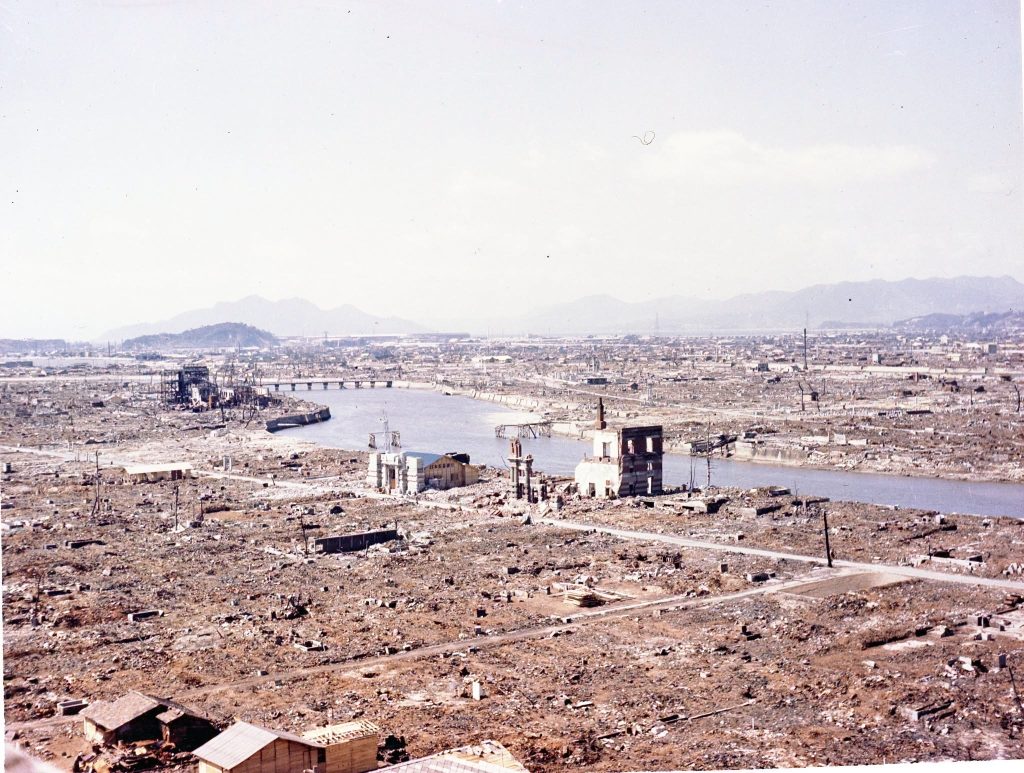
On August 6, 1945, the United States dropped the world’s first combat nuclear weapon, an atomic bomb codenamed “Little Boy”, on the Japanese city of Hiroshima during the final days of World War II.
Dropped from the B-29 bomber Enola Gay, the bomb detonated at 8:15 AM approximately 1,900 feet (580 meters) above the city center. The explosion, equivalent to 15 kilotons of TNT, instantly killed an estimated 70,000 to 80,000 people and vaporized much of the city center, reducing the area to ashes.
By the end of 1945, the death toll had risen to approximately 140,000 due to burns, injuries, and radiation sickness. This event marked the only use of nuclear weapons in armed conflict to date and hastened Japan’s surrender, effectively ending World War II.
Why did the United States drop a second bomb on Japan?
The United States dropped a second atomic bomb on Nagasaki primarily to convince Japan to surrender by demonstrating that the U.S. possessed an endless supply of atomic weapons and was prepared to continue using them.
Key factors driving this decision included:
- Psychological Impact: Military leaders believed that a second, rapid bombing would shatter Japanese resolve more effectively than a single attack, preventing them from viewing the Hiroshima bomb as a unique or isolated event.
- Weather and Logistics: The primary target for the second mission was Kokura, but cloud cover forced the bomb, Fat Man, to be dropped on Nagasaki instead. The U.S. wanted to avoid delaying the mission due to a typhoon, which could have postponed the attack for weeks.
- Soviet Geopolitics: The bombing served as a strategic message to the Soviet Union, which had just declared war on Japan. The U.S. aimed to end the war quickly to limit Soviet influence in post-war Asia and demonstrate American military supremacy.
- Avoiding Invasion: The bombings were intended to force an unconditional surrender before the planned Allied invasion of the Japanese home islands, which was expected to result in hundreds of thousands of casualties on both sides.

The mission to Kokura on August 9, 1945, was Special Mission 16 (codenamed Operation Centerboard II), the second atomic bombing mission of World War II. The primary target was the city of Kokura, home to one of Japan’s largest munitions arsenals, with Nagasaki designated as the secondary target.
The mission was flown by the B-29 Superfortress Bockscar, piloted by Major Charles Sweeney, carrying the 21 kiloton plutonium-implosion bomb “Fat Man.” Although weather reconnaissance planes reported clear skies over Kokura, the city was obscured by morning fog, clouds, and smoke from a prior conventional bombing raid on the neighboring industrial city of Yawata.
Because the mission required visual bombing and the crew could not identify the aiming point after three unsuccessful passes, Sweeney diverted to the secondary target, Nagasaki. The bomb was dropped on Nagasaki at 11:02 AM, killing approximately 35,000 people immediately. The event is often referred to in Japan as “Kokura’s Luck,” describing the city’s narrow escape from atomic devastation.