
Skip to content
website logo

Primary Menu
  • Home
  • My Bibles
  • RESOURCES
  • LinkTree
  • LINKS
  • Software
  • About Me
  • Home
  • 2026
  • July
  • 10
  • The Revision of the 1928 Book of Common Prayer: An Argument for Its Unnecessity

The Revision of the 1928 Book of Common Prayer: An Argument for Its Unnecessity

Mike July 10, 2026

Share this:

  • Share on Facebook (Opens in new window) Facebook
  • Share on Threads (Opens in new window) Threads
  • Share on X (Opens in new window) X
  • Print (Opens in new window) Print
  • Email a link to a friend (Opens in new window) Email
  • More
  • Share on WhatsApp (Opens in new window) WhatsApp
  • Share on Telegram (Opens in new window) Telegram
  • Share on Reddit (Opens in new window) Reddit
  • Share on Bluesky (Opens in new window) Bluesky
  • Share on Tumblr (Opens in new window) Tumblr
  • Share on Pinterest (Opens in new window) Pinterest
  • Share on Mastodon (Opens in new window) Mastodon

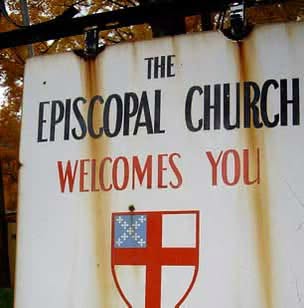
The Episcopal Church’s decision to revise the 1928 Book of Common Prayer in 1979 raised significant questions, particularly given the Church of England’s continued retention of the 1662 Prayer Book as its official standard. Critics of the revision argued that the stated reasons for change failed to demonstrate any fundamental defect in the existing liturgy. The 1928 book remained doctrinally coherent, pastorally effective, and widely used throughout the Episcopal Church. While scholars associated with the twentieth-century Liturgical Movement pointed to historical research that revealed earlier Christian patterns of worship, opponents maintained that the mere existence of older forms did not justify displacing a liturgy that had developed organically within the Anglican tradition and had served the church faithfully for generations. Anglicanism, they noted, had never treated liturgical antiquity as the sole criterion for reform; continuity with inherited practice held its own theological and ecclesiastical value.

Opponents further questioned whether updating the language alone warranted a full replacement of the Prayer Book. They argued that the traditional language of the 1928 edition remained intelligible to most worshippers and possessed a literary, devotional, and theological precision that contemporary alternatives risked diminishing. Pastoral accommodation, they suggested, could have been achieved more modestly through supplementary materials rather than a comprehensive revision of the church’s principal liturgical standard. In this regard, the example of the Church of England was instructive: although it authorized supplementary liturgical resources for modern use, it preserved the 1662 Book of Common Prayer as the normative standard of doctrine and worship. This approach demonstrated that genuine adaptation and flexibility were possible without discarding a historic prayer book, reinforcing the view among traditionalists that substantial revision was more a matter of preference than necessity.

Critics also contended that the 1979 revision introduced substantive theological and liturgical shifts under the banner of renewal. These included a heightened emphasis on Baptism as the foundation of Christian identity, the repositioning of the Eucharist as the normative Sunday service, and various alterations in language and ceremonial practice. Such changes, they argued, reflected particular twentieth-century movements within Anglicanism rather than necessary corrections to deficiencies in the 1928 book. From this perspective, the burden of proof lay with the reformers, who had shown a desire for innovation but not a compelling case for overhauling the church’s established liturgy. Traditionalists concluded that the 1928 Prayer Book could have remained the Episcopal Church’s standard, with limited and optional adaptations permitted where truly needed. In their view, the revision represented not an essential response to shortcomings in the existing book, but a discretionary reorientation of Anglican worship shaped by contemporary scholarly and ecclesiastical trends.
Like this:

Like Loading…

Post navigation

Previous: One Nation Under God
Next: Do Anglicans believe in the rapture?

Related Stories

transfiguration

The Transfiguration of Our Lord Jesus Christ

Mike August 6, 2026 0
sarah mullaly 2

The Archbishop of Canterbury continues to face backlash over 100 million pound slavery fund

Mike August 3, 2026 0
BCP

Why Classical Anglicanism Still Has Life

Mike August 2, 2026 0
Log in

Abortion Anglican bible business california Christ christian Christmas church church of england cofe college football Coronavirus covid covid-19 dogs episcopal church Florida food football fsu god gospel hurricane Jesus john macarthur lawsuit los angeles Music nfl orlando pets Politics pope Prayer recipe religion roman catholic salvation seminoles target acquired Thanksgiving trans unemployment Weather

  • Setting the Stage for the Book of Romans
  • How Chiasms in the Bible Point Us to the Chiasm of Human Life
  • The 3 Ways the Bible Describes the Church and What That Means for You
  • How to Avoid Individualism When Listening to Sermons
  • Why Is It So Hard for Parents to Extend Grace to Themselves?
  • Psalms 10 (Secret)
  • Acts 27 (Family)
  • Jeremiah 37 (Secret)
  • Ruth 2 (Family)
  • Revelation 21:23 - Morning Devotional for Aug. 9th
  • Isaiah 59:5 - Morning Devotional for Aug. 8th
  • Song of Songs 1:4 - Morning Devotional for Aug. 7th
  • Isaiah 21:11 - Morning Devotional for Aug. 6th
  • Romans 8:28 - Morning Devotional for Aug. 5th
  • Mark 9:23 - Evening Devotional for Aug. 8th
  • 1 Thessalonians 2:18 - Evening Devotional for Aug. 7th
  • Psalms 72:19 - Evening Devotional for Aug. 6th
  • Numbers 32:6 - Evening Devotional for Aug. 5th
  • Haggai 2:17 - Evening Devotional for Aug. 4th

RECENT:

  • Did Joseph Really Have a Coat of Many Colors? What the Hebrew Says
  • The WNBA has a serious problem on their hands
  • Armenia building world’s largest statue of Jesus Christ
  • Vibrio vulnificus, deadly ‘flesh-eating’ bacteria kills 5 in Florida
  • Deadly Fungus Confirmed in 23 States. Nearly Impossible to Treat

July 2026
M T W T F S S
 12345
6789101112
13141516171819
20212223242526
2728293031  
« Jun   Aug »
Copyright 2026 © All rights reserved. | MoreNews by AF themes.
%d