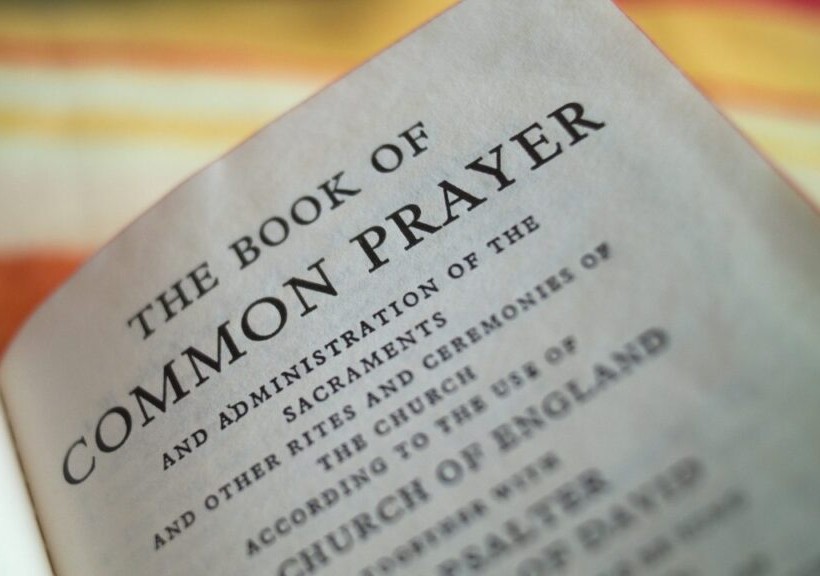
Critics of the 1979 revision of the Episcopal Church’s Book of Common Prayer argue that replacing the 1928 edition was unnecessary because it suffered from no fundamental doctrinal or pastoral flaws. While twentieth-century liturgical scholars advocated for returning to earlier Christian worship patterns, opponents contended that ancient origins alone did not justify discarding an organic tradition that had effectively served generations of worshippers. In the Anglican tradition, continuity with inherited practice holds intrinsic theological value, and critics maintained that the traditional language of the 1928 text remained both intelligible and uniquely capable of conveying theological precision.
Furthermore, traditionalists pointed to the Church of England as proof that full-scale revision was a discretionary choice rather than a necessity. Although the Church of England introduced supplementary resources for contemporary worship, it retained the historic 1662 Book of Common Prayer as its official doctrinal and liturgical standard. Opponents argued that the Episcopal Church could have similarly met modern pastoral needs through optional supplements rather than overhauling its primary text.
Ultimately, critics viewed the 1979 revision not as a necessary correction of existing deficiencies, but as a deliberate theological reorientation driven by contemporary trends. By elevating Baptism as the foundation of Christian identity, establishing the Eucharist as the standard Sunday service, and altering traditional language and ceremony, reformers imposed specific twentieth-century preferences on the broader Church. From this perspective, the burden of proof for overhauling a functional, historic liturgy was never met, leaving the 1979 Prayer Book as a matter of scholarly preference rather than ecclesiastical need.