Israel’s Foreign Ministry has announced a formal push to prepare for 2030, when Christians worldwide will mark the 2,000th anniversary of Jesus’ baptism. Foreign Minister Gideon Sa’ar has set up a dedicated working group for the effort, led by Ambassador George Deek, and called the anniversary a moment of deep spiritual weight for more than two billion Christians globally. According to a ministry post on X, the group’s mission is to build deeper dialogue with churches and Christian leaders around the world while getting ready for an expected surge of pilgrims.
Although Israel’s baptismal sites along the Jordan River already draw thousands of visitors annually, this new initiative signals a more ambitious, coordinated campaign spearheaded by Deek, who serves as Israel’s Special Envoy to the Christian World.
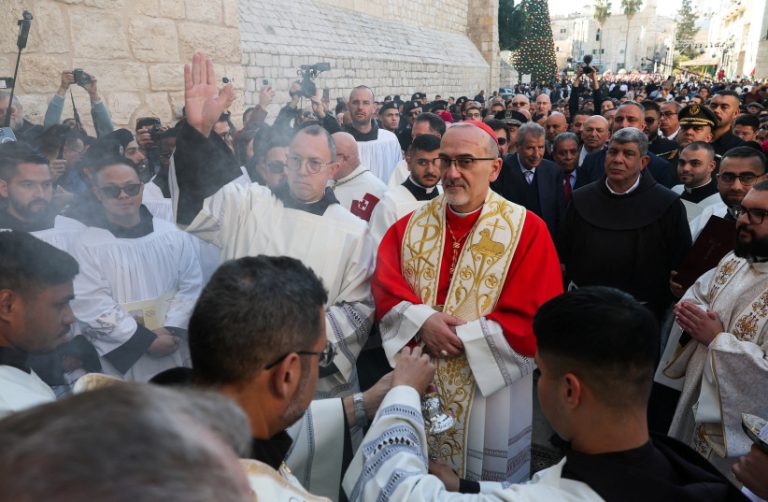
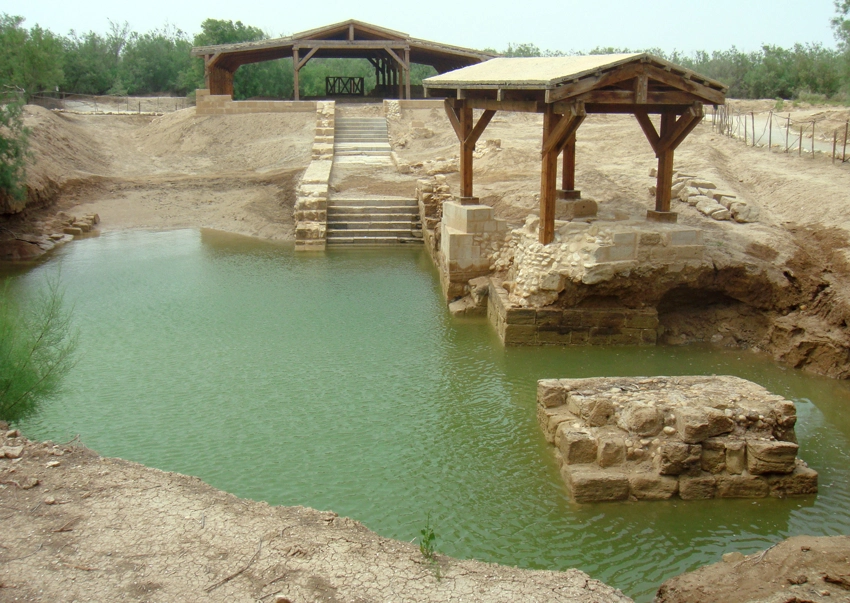
Jordan, meanwhile, has been moving in parallel on its own side of the river. Earlier this year, King Abdullah II convened Catholic and Orthodox church leaders — including Cardinal Pierbattista Pizzaballa, the Latin patriarch of Jerusalem — at Al-Maghtas, also known as Bethany Beyond the Jordan, which sits across from Israel’s Qasr el-Yahud site. At that May gathering, the king pledged that Jordan would oversee its own 2030 jubilee preparations, including upgraded infrastructure and expanded pilgrim services. Pizzaballa used the occasion to reflect on the lasting importance of the baptism story, describing it as something that still resonates with believers today rather than just a moment frozen in history.
Jordanian officials have been careful to frame their upgrades as respectful of the site’s sanctity. Samir Murad, who leads the government-established foundation overseeing the project, emphasized to the BBC that the location ranks as Christianity’s third-holiest site, and that mishandling it in any way would be unacceptable.
On the Israeli side, it’s still unclear exactly what preparations are planned for Qasr el-Yahud, which only opened to pilgrims in 2011 after a major demining operation — a legacy of the 1967 Six Day War — carried out by Israeli forces and later supported by the HALO Trust. The site’s name, meaning “Castle of the Jews,” is thought to reference the Israelites’ biblical crossing of the Jordan.
Beyond the logistics of hosting millions of expected visitors, Israel appears to see the anniversary as a chance to strengthen ties with major Christian denominations, particularly the Catholic and Orthodox churches. The choice of Deek — himself an Orthodox Christian — as envoy is widely seen as part of that outreach strategy. Per the Foreign Ministry, the working group will keep up continuous engagement with churches and religious leaders internationally, and will also launch a cross-government coordination effort to prepare Israel’s infrastructure and services for the influx of pilgrims.
Sa’ar framed the effort as a top national priority: 2030 represents a singular milestone for Christians everywhere, and he stressed that Israel is committed to keeping the Holy Land open and accessible to all who wish to visit, while continuing to protect freedom of worship at holy sites for people of every faith.