Skip to content
website logo

Primary Menu
  • Home
  • My Bibles
  • My Music
  • RESOURCES
  • LINKS
  • Software
  • LinkTree
  • About Me
  • Home
  • 2025
  • November
  • 8
  • The Holiness Code

The Holiness Code

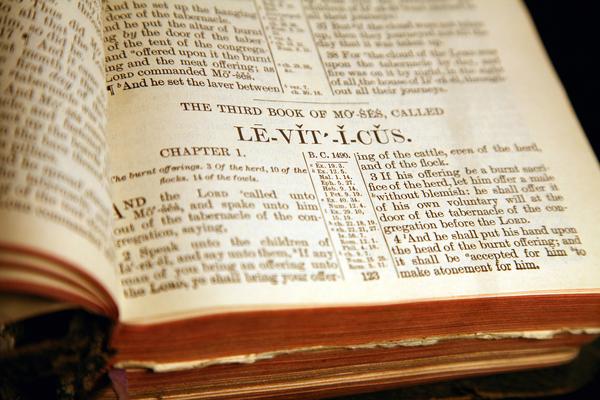
Leviticus 17-27, called the “Holiness Code” by scholars, is distinguished from the rest of the book by its particular language and concerns.
Mike November 8, 2025

Share this:

  • Share on Facebook (Opens in new window) Facebook
  • Share on Threads (Opens in new window) Threads
  • Share on X (Opens in new window) X
  • Print (Opens in new window) Print
  • Email a link to a friend (Opens in new window) Email
  • More
  • Share on WhatsApp (Opens in new window) WhatsApp
  • Share on Telegram (Opens in new window) Telegram
  • Share on Reddit (Opens in new window) Reddit
  • Share on Bluesky (Opens in new window) Bluesky
  • Share on Tumblr (Opens in new window) Tumblr
  • Share on Pinterest (Opens in new window) Pinterest
  • Share on Mastodon (Opens in new window) Mastodon

BIBLE TEXT

Leviticus 17:1-27:34

SUMMARY

Leviticus 17-27, called the “Holiness Code” by scholars, is distinguished from the rest of the book by its particular language and concerns.

ANALYSIS

Leviticus 17-26 (and often including chapter 27) are commonly called the “Holiness Code” by biblical scholars. These chapters are marked by a concern for holy

Holy is a term that originally meant set apart for the worship or service of God. While the term may refer to people, objects, time, or places, holiness in Judaism and Christianity primarily denotes the realm of the divine living on the part of the people rather than a concern with sacrificial systems or ritual purity, as are the first sixteen chapters of the book. The holy living to which the Holiness Code calls the people is to be exemplified in all arenas of life–economic, social, sexual, familial. Leviticus 19:2 provides the foundation for this call to holiness: “You shall be holy, for I the LORD your God am holy” (compare 20:7, 26; 21:8). The refrain that marks these chapters seems to be a “shorthand” way of saying the same thing: “I am the LORD” or “I am the LORD your God.” (These two phrases occur only two times in Leviticus 1-16, but forty-seven times in chapters 17-26.) The people are to be holy because the Lord their God is holy. Their holiness is to mirror God’s.

The composition of the Holiness Code is attributed by many scholars to a circle within the larger priestly tradition, the so-called Holiness source or school (H). Some scholars argue that the Holiness Code was written after much of the rest of the P material, and that it is essentially an inner-priestly response to the concerns of the eighth century BCE prophets for social justice and for a reformation of the priestly religious establishment (see Isaiah 1:10-17; Amos 2:6-16; and Micah 3:9-12). There is still considerable scholarly debate over the dating of H and P. Nevertheless, there is general consensus on the existence of a distinct Holiness Code in Leviticus, marked by the refrain, “I am the LORD,” and by a concern with holiness, with moral and ethical living on the part of the Israelites.
Like this:

Like Loading…

Post navigation

Previous: Pascal’s Wager
Next: 5 Minutes After Death

Related Stories

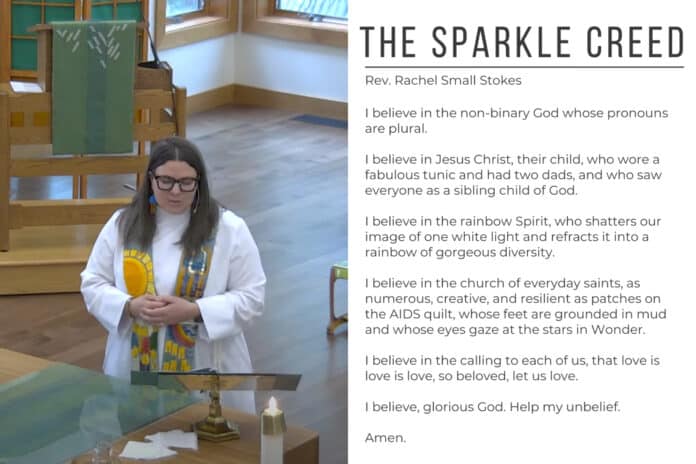
Pastor Anna Helgen - The Sparkle Creed

Edina Lutheran church recites ‘sparkle creed,’ professes belief in ‘non-binary god’

Mike September 7, 2026
scott aniol

G3 President Scott Aniol and 3 Pastors Resign, Apologize to Tom Buck

Mike August 26, 2026
creeds-confessions

The importance of Creeds and Confessions

Mike August 17, 2026
Log in

Abortion Anglican bible business california Christ christian Christmas church church of england cofe college football Coronavirus covid covid-19 dogs episcopal church Florida food football fsu god hurricane Israel Jesus john macarthur lawsuit los angeles Music nfl orlando pets Politics pope recipe religion roman catholic salvation sbc seminoles target acquired Thanksgiving trans unemployment Weather

  • Podcast: Complex Questions About When and How to Forgive (Chris Brauns)
  • A Battle Against Covetousness Is a Battle Against Unbelief
  • Four Simple, Beautiful Words: “You Are with Me”
  • 7 Tips to Help You Preach Persuasively
  • How Can I Be Freed from the Fear of Death?
  • Psalms 73 (Secret)
  • 2 Corinthians 11 (Family)
  • Ezekiel 25 (Secret)
  • 2 Samuel 18 (Family)
  • Psalms 149:2 - Morning Devotional for Sep. 22nd
  • Jeremiah 32:41 - Morning Devotional for Sep. 21st
  • Judges 7:20 - Morning Devotional for Sep. 20th
  • Galatians 5:1 - Morning Devotional for Sep. 19th
  • Galatians 5:25 - Morning Devotional for Sep. 18th
  • Psalms 61:2 - Evening Devotional for Sep. 22nd
  • Psalms 26:9 - Evening Devotional for Sep. 21st
  • Ecclesiastes 11:6 - Evening Devotional for Sep. 20th
  • 1 Samuel 1:27 - Evening Devotional for Sep. 19th
  • John 10:27 - Evening Devotional for Sep. 18th

RECENT:

  • My readthrough of the Quran and what I found
  • Why Did God Command Killing in the Bible? Justice, Canaan, and the Unchanging Character of God
  • Central Florida Episcopal diocese elects new bishop after nearly 3-year vacancy
  • Carnegie Mellon professor on leave as her disturbing X posts call for ‘white men’ to die
  • China releases pastor ‘tortured,’ accused of ‘endangering national security’

November 2025
M T W T F S S
 12
3456789
10111213141516
17181920212223
24252627282930
« Oct   Dec »
Copyright 2026 © All rights reserved. | MoreNews by AF themes.
%d