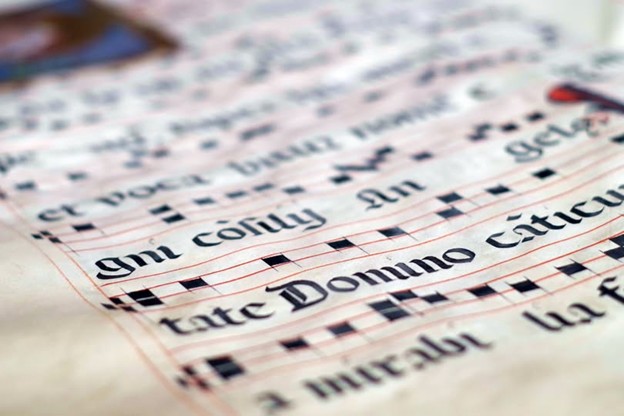
Anglican plainchant, also known as English chant, is a form of unaccompanied or simply accompanied liturgical singing that developed within the worship of the Church of England following the English Reformation in the sixteenth century. Its origins can be traced back to the ancient traditions of Gregorian chant, which had been used for centuries in the worship of the Western Church.
Gregorian chant consisted of simple, flowing melodies sung in Latin, following the natural rhythm of the sacred texts, particularly the Psalms, canticles, and prayers. Before the Reformation, these chants formed an essential part of the daily worship of English monasteries and cathedrals. However, when King Henry VIII broke with Rome in the 1530s, followed by the religious reforms under Edward VI, the English Church gradually began replacing Latin services with worship conducted in the English language.
The introduction of the Book of Common Prayer in 1549, compiled under the direction of Archbishop Thomas Cranmer, created a new need for musical settings that could accommodate the English language while preserving the dignity, solemnity, and continuity of the ancient liturgical tradition. During this period, composers and church musicians began adapting traditional plainsong melodies to English texts, giving rise to what became known as Anglican chant or Anglican plainchant.
One of the most important developments occurred during the reign of Elizabeth I, when the Church of England sought to establish a distinctive form of worship that combined elements of the ancient Catholic tradition with the theological and liturgical principles of the Reformation. Anglican chant developed in two principal forms: metrical or simple plainsong, which retained the flowing melodic character of medieval chant, and Anglican chant, in which the words of the Psalms were fitted to harmonised musical phrases. The latter became particularly prominent during the seventeenth century, especially through the work of composers such as Thomas Tallis, William Byrd, Orlando Gibbons, and later Henry Purcell.
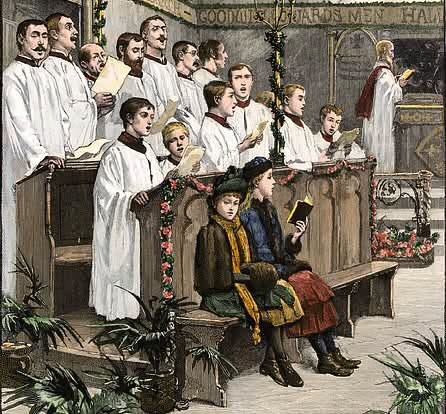
Unlike Gregorian chant, which is generally monophonic, Anglican chant gradually developed into a harmonised musical tradition, often written for four vocal parts: soprano, alto, tenor, and bass. Its characteristic structure consists of musical phrases arranged to correspond with the natural divisions of the Psalms, allowing the sacred words to be sung in a measured and dignified manner. During the seventeenth and eighteenth centuries, Anglican chant became firmly established in English cathedrals and collegiate churches, particularly through the daily services of Matins and Evensong.
The tradition expanded considerably during the nineteenth century, when the Oxford Movement encouraged renewed interest in the ceremonial, musical, and devotional heritage of the ancient Church. This revival brought greater attention to Gregorian chant, medieval liturgical practices, and the spiritual significance of traditional church music. Anglican musicians and composers consequently developed new chant settings, improved existing musical arrangements, and established a rich repertoire of single and double chants for the singing of the Psalms. Important contributors included John Stainer, George C. Martin, and Thomas Attwood Walmisley. The publication of collections such as The Psalter and various cathedral chant books helped standardise the musical tradition and spread its use throughout Anglican churches in Britain and beyond.
As Anglicanism expanded across the British Empire, Anglican plainchant and Anglican chant were introduced into churches in Africa, Asia, Australia, and the Americas, where they became part of the musical and devotional life of local Anglican communities. In modern Anglican worship, plainchant continues to occupy an important place, particularly in the singing of Psalms, canticles, responses, and other elements of the Daily Office.
Although contemporary Anglican churches employ a wide variety of musical styles, plainchant remains valued for its simplicity, reverence, contemplative character, and close relationship between music and sacred text. It represents a living connection between the worship of the early Christian Church, the medieval English liturgical tradition, the English Reformation, and the continuing musical heritage of the Anglican Communion.