
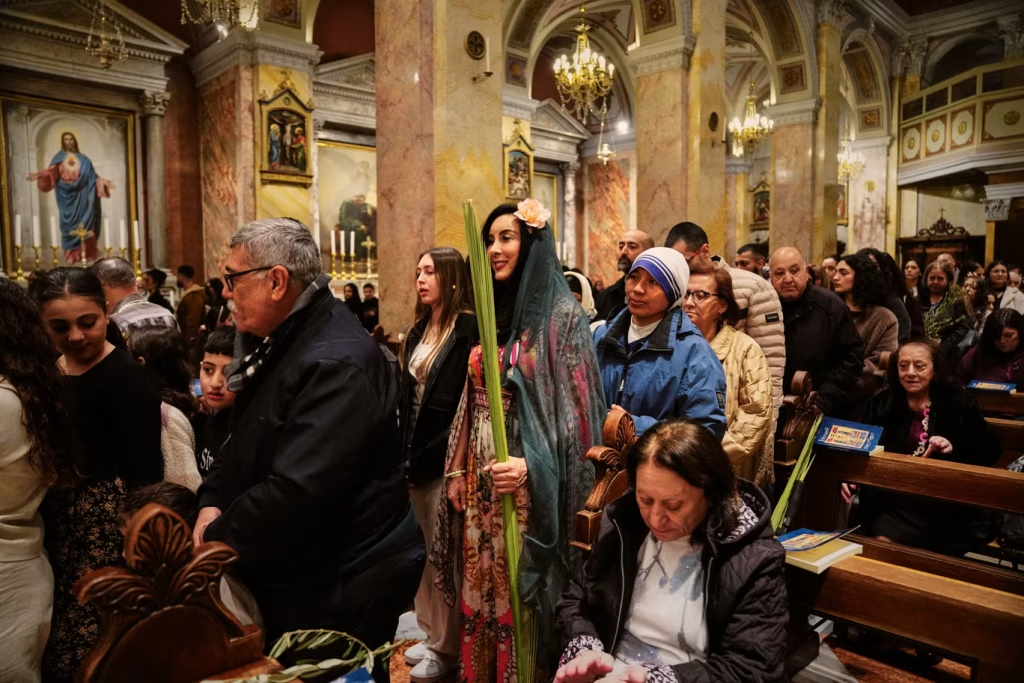
JERUSALEM – On Palm Sunday, March 29, 2026, Israeli police prevented Cardinal Pierbattista Pizzaballa, the Latin Patriarch of Jerusalem, and Custos of the Holy Land Fr. Francesco Ielpo from entering the Church of the Holy Sepulchre to celebrate Mass, triggering immediate international condemnation from the Vatican, Catholic leaders, European governments, and others. Church officials called it the first such denial of senior Catholic leaders at the site in centuries on the day commemorating Jesus’ entry into Jerusalem.
The incident occurred against the backdrop of Israel’s ongoing war with Iran, which began escalating in late February. Iranian missiles have repeatedly targeted Jerusalem, with shrapnel from interceptions falling near the Holy Sepulchre, the Al-Aqsa Mosque compound, and the Western Wall. In response, Israeli authorities closed major Old City holy sites to public worship since Feb. 28 and imposed strict Home Front Command guidelines limiting gatherings to 50 people in areas with adequate bomb shelter access. The narrow streets of the Old City complicate emergency response in a potential mass-casualty event.

These restrictions applied equally to Jewish, Christian, and Muslim observances. Jewish Passover seders were advised to limit guests, the large Birkat Kohanim (Priestly Blessing) gathering was curtailed, and similar limits affected Ramadan and Holy Week events. The Church of the Holy Sepulchre itself lacks a modern bomb shelter—a point of friction, as Christian denominations controlling the site have not agreed on installing one despite building codes requiring such protections in newer constructions since the 1990s.
Police cited safety concerns when stopping the cardinal’s small, private group en route, despite reported prior coordination. The Latin Patriarchate described the move as “manifestly unreasonable and grossly disproportionate.” Cardinal Pizzaballa instead led an alternative service at the Church of Gethsemane outside the Old City. Israeli officials, including Prime Minister Benjamin Netanyahu’s office, emphasized there was “no malicious intent whatsoever, only concern for his safety and that of his party,” while defending the rules as necessary to protect worshippers amid active missile threats.
President Isaac Herzog personally called the cardinal to express sorrow and reaffirm Israel’s commitment to freedom of religion and the status quo at holy sites. Cardinal Pizzaballa later noted the interaction was polite, with no clashes.
Initial media coverage focused heavily on the denial without full wartime context, leading to swift criticism portraying it as an attack on Christian rights in Jerusalem. Arab officials and others condemned it as encroachment. However, broader reporting soon highlighted that the measures mirrored restrictions on Jewish sites like the Western Wall and affected all faiths equally due to the security emergency.
In response to the backlash, Netanyahu quickly reversed the decision, instructing authorities to grant the cardinal “full and immediate access” to the Church of the Holy Sepulchre for the remainder of Holy Week. Israeli security agencies were said to be developing plans for limited clergy access while maintaining crowd controls.
The episode underscored the tension between religious observance and emergency protocols during active conflict. Critics of the initial decision argued it was overly rigid; supporters pointed out the genuine risks, noting that a mass-casualty incident at a holy site would likely draw blame toward Israel regardless of precautions taken. A bomb shelter at the church could potentially have mitigated the issue.
As Passover and Easter approached, both sides appeared to draw lessons from the event. Israeli leaders expressed regret over the optics, while the cardinal adopted a conciliatory tone. An agreement easing access for church leaders under safety guidelines was expected soon. The incident served as a reminder of how wartime necessities can clash with longstanding religious traditions—even in a city sacred to multiple faiths—when external threats like Iranian missile attacks loom over Jerusalem’s ancient streets.


