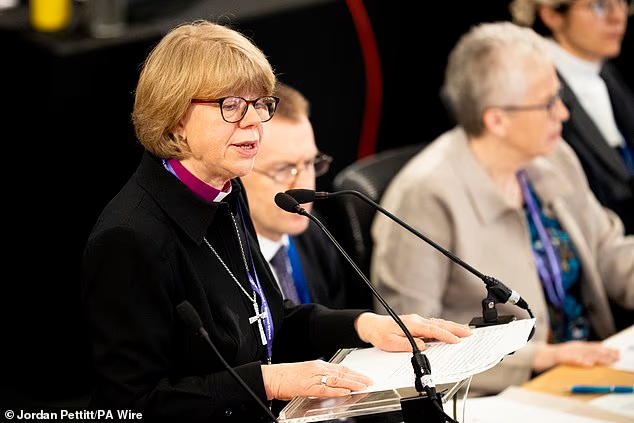
In a recent interview, former Archbishop of Canterbury Rowan Williams (2002–2012) expressed uncertainty about the future of the Anglican Communion, stating, “I don’t know whether the Communion will survive.” Williams, whose new book Solidarity: The Work of Recognition is due out next week, explained he will not attend the installation of his successor, Archbishop Sarah Mullally, set for March 25, humorously noting, “You don’t want to be Marley’s ghost.”

He warned that Mullally will likely face the same divisive issues he encountered, particularly women’s ordination and same-sex blessings—areas where Mullally has voiced support. While noting that tensions over women’s ordination have eased in England, Williams acknowledged that gender and sexuality debates are fracturing the global Communion. He attributed such internal conflicts to broader societal anxieties, including rapid social change and feelings of powerlessness.
Mullally’s appointment last October drew sharp criticism from the Global Anglican Futures Conference (GAFCON), a conservative movement that declared the Archbishop of Canterbury can no longer serve as a credible leader or unifying figure. Although GAFCON recently stopped short of appointing a formal rival to the office, its leaders have firmly rejected the archbishop’s traditional role as “first among equals” within the global church.