
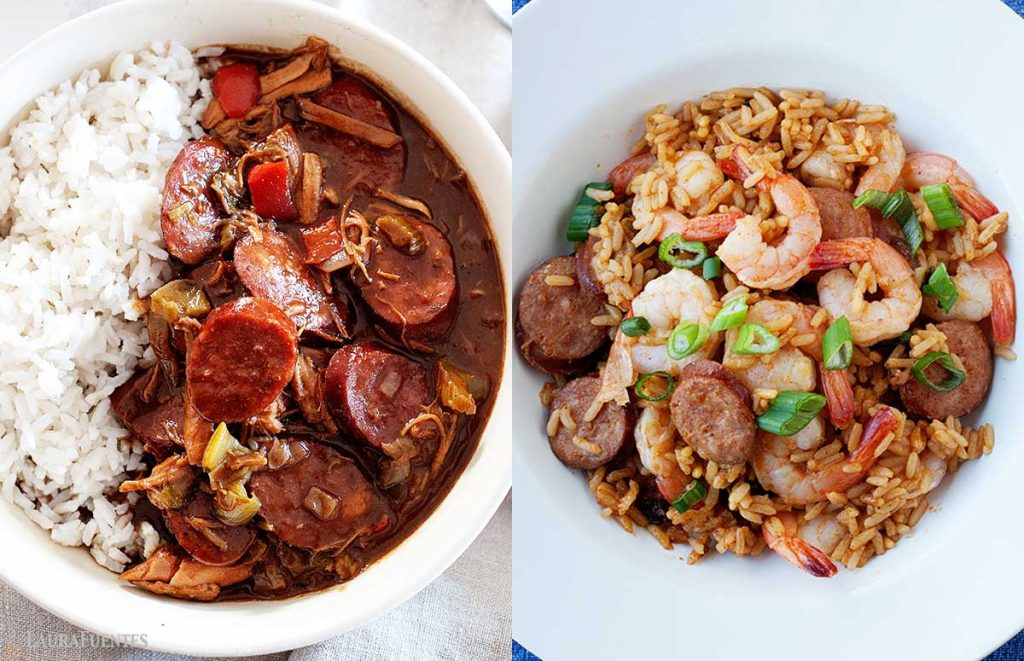
Gumbo and Jambalaya
Jambalaya, gumbo, and etouffee are distinct dishes within Creole and Cajun cuisines, each with unique characteristics in preparation, consistency, and ingredients.
Jambalaya is a one-pot rice dish where the rice is cooked directly in the broth and ingredients, resulting in a dry, hearty meal similar to paella or biryani. It typically includes a mix of meats such as chicken, sausage (like andouille), and shellfish, and does not use a roux. The dish is often seasoned with cayenne pepper, giving it a bold flavor profile, and is distinct from both gumbo and etouffee in its preparation and texture.
Gumbo is a thick, flavorful stew or soup that is traditionally served with rice on the side or mixed in, rather than being cooked with the rice. It is known for its dark roux, which is cooked slowly until it reaches a deep brown or chocolate-like color, contributing to its rich, savory flavor. Gumbo can include a wide variety of proteins such as chicken, sausage, and shellfish, and is often thickened with okra, file powder (dried sassafras leaves), or the dark roux itself. The dish is deeply rooted in cultural fusion, with the name derived from a West African word for okra.
Etouffee, meaning “smothered” in French, is a thick, gravy-like sauce served over rice. It is typically made with a lighter, blond roux (often butter-based), which gives it a sweeter and lighter flavor compared to gumbo. Etouffee traditionally emphasizes seafood, especially crawfish and shrimp, and is less likely to include sausage. The dish is often served with a mound of rice topped with the rich, chunky sauce, and may include seasonings like Worcestershire sauce and hot sauce.
In summary, jambalaya is a dry, one-pot rice dish with mixed meats and no roux , gumbo is a dark, roux-thickened stew with a wide range of proteins and thickeners , and etouffee is a lighter, seafood-focused gravy served over rice.
Evaluate the main ingredients
To understand the difference between jambalaya and etouffee, start by taking a closer look at the main ingredients. Etouffee always begins with the Holy Trinity: onions, bell peppers, and celery, chopped and cooked as the base of the dish. It’s also important to note that etouffee includes a roux to thicken the sauce, though jambalaya doesn’t use one. Another key indicator of etouffee is that it is typically made with shellfish, like crawfish, shrimp, or crab, though it is sometimes made with meat. Whatever the star protein might be, etouffee only has one, maybe two at the most.
Jambalaya is all about the combination of proteins — namely, andouille sausage, chicken, smoked ham, and shrimp. It isn’t uncommon to see at least three of these (if not all four) in a pot of jambalaya. The dish is also simmered with the rice in the pot already, too, which makes sense, because it is a distant relative to paella.
Now that you know the difference between etouffee (the thick, seafood gravy dish) and jambalaya (a simmered stew of meat, shellfish, and rice), you can easily make either example of Cajun and Creole cooking.

Crawfish Etoufee
Étouffée (pronounced ay-too-fay) is a classic dish from Cajun and Creole cuisine in Louisiana. The name comes from the French word meaning “smothered” or “braised,” referring to the cooking technique where ingredients slowly cook in a covered pot with little liquid.
Key Features
It features shellfish (most commonly crawfish or shrimp, sometimes crab or even chicken) served over white rice in a rich, flavorful sauce.
Primary Ingredients
- A roux (flour and fat, like butter or oil, cooked to varying degrees—blonde for lighter versions or darker for deeper flavor).
- The “holy trinity” of Cajun/Creole cooking: onions, bell peppers, and celery.
- Stock (often seafood-based), garlic, seasonings (like cayenne, paprika, and bay leaf), and sometimes tomatoes (more common in Creole versions).
Differences from Similar Dishes
Unlike gumbo (which is soupier, often includes okra or filé, and a wider mix of proteins), étouffée has a thicker, gravy-like consistency and focuses on one main protein “smothered” in the sauce.
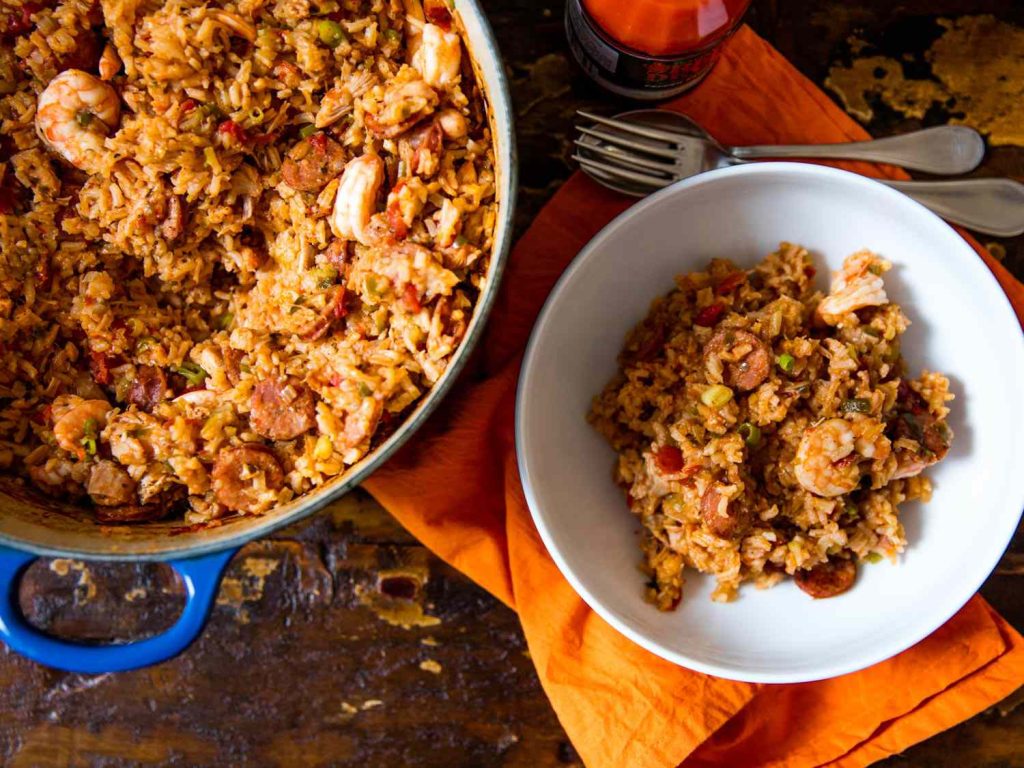
Jambalaya
Jambalaya is a flavorful, one-pot rice dish originating from Louisiana, blending influences from West African (like jollof rice), Spanish (paella-inspired), French, and local Creole/Cajun traditions. It’s a hearty mix of rice, meats (often chicken and smoked sausage like andouille), seafood (such as shrimp), vegetables, and bold spices.
Key Features
- Base: Long-grain rice cooked in a seasoned broth, absorbing all the flavors.
- Holy Trinity: The essential veggie mix of onion, celery, and bell pepper (similar to mirepoix in French cooking).
- Proteins: Commonly includes andouille sausage for smokiness, chicken thighs for tenderness, and shrimp or crawfish. Variations might add ham, duck, or other game.
- Spices: Cajun or Creole seasoning, garlic, thyme, bay leaves, cayenne for heat, and black pepper.
Two Main Styles
- Creole Jambalaya (also called “red jambalaya”): Includes tomatoes for a reddish hue and slightly tangier flavor. More common in urban areas like New Orleans.
- Cajun Jambalaya (often “brown jambalaya”): No tomatoes; the meat is browned first, giving a deeper, smokier taste and brown color. Typical in rural Acadiana regions.
It’s a versatile, crowd-pleasing dish—perfect for gatherings, as it scales easily and uses whatever ingredients are on hand. Unlike gumbo (a soup/stew served over separate rice), jambalaya cooks the rice right in the pot.
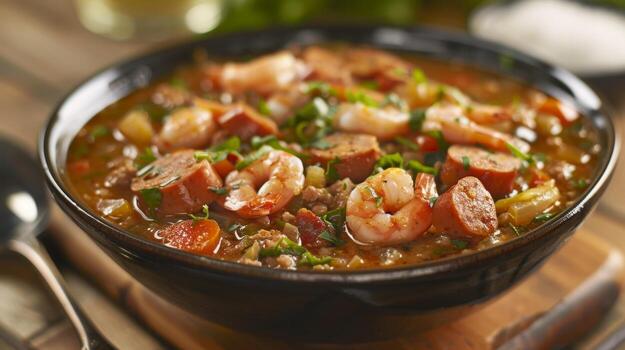
Gumbo
Gumbo is a hearty, flavorful stew originating from southern Louisiana, considered the official state cuisine there. It’s a quintessential dish of Creole and Cajun cooking, blending influences from West African, French, Native American (Choctaw), and other cultures.
Key Components
- A strongly flavored stock.
- Proteins like chicken, andouille sausage, shrimp, crab, or other seafood.
- The “holy trinity” of vegetables: onions, celery, and bell peppers.
- Thickened with one or more of: okra (the pod vegetable that gives it a distinctive texture), filé powder (ground sassafras leaves), or a dark roux (flour cooked slowly in fat until chocolate-brown for deep flavor).
It’s typically served over rice and simmers for hours to develop rich tastes.
Varieties
- Creole gumbo — Often includes tomatoes and seafood, with a refined urban style from New Orleans.
- Cajun gumbo — More rustic, usually tomato-free, focusing on darker roux and meats like sausage or fowl.
The name “gumbo” likely comes from a West African term for okra (like “ki ngombo” in Bantu languages).