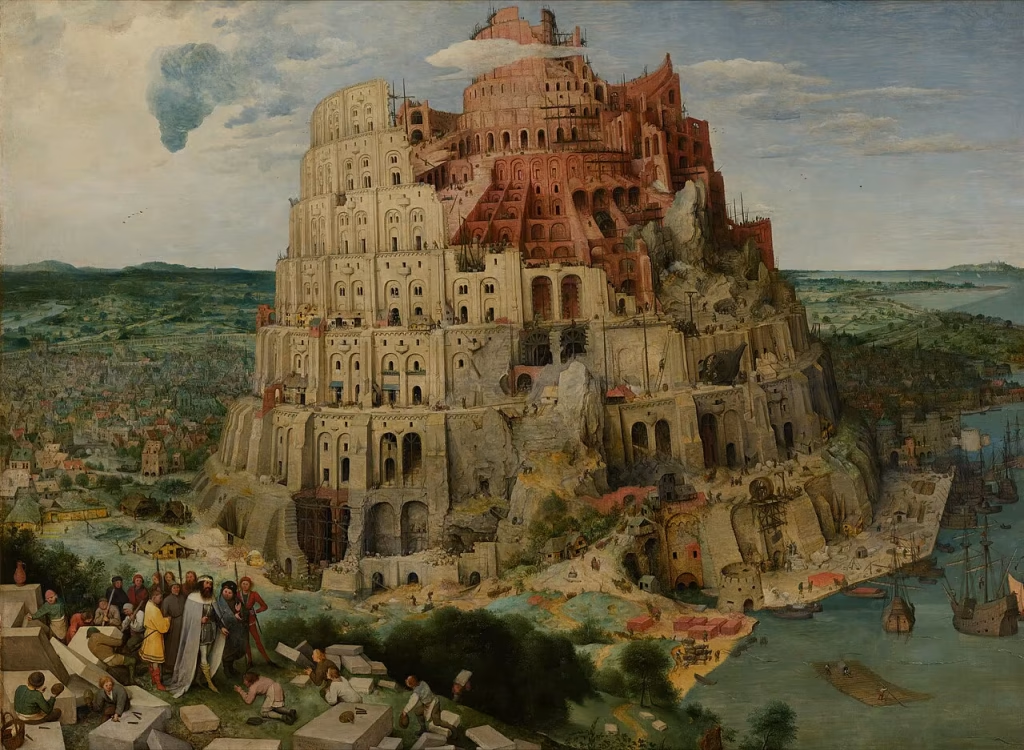
The Tower of Babel story in Genesis 11:1–9 remains enigmatic due to its concise nine-verse account, which leaves the builders’ exact sin and God’s reasons for intervention strikingly ambiguous.
Traditional readings often portray it as a cautionary tale against human pride or hubris, with people attempting to reach the heavens or make a name for themselves in defiance of God. However, the text never directly calls the builders wicked or sinful. Their explicit aim—to build a city and tower to avoid being scattered and to stay united—appears more pragmatic than inherently immoral.
Recent scholarly work by Matthieu Richelle and David S. Vanderhooft adds nuance through analysis of Hebrew grammar and syntax (particularly in verse 6). They argue that the tower may have been completed (or at least fully achievable) before God acted, shifting the narrative from prevention of overreach to a divine response to an accomplished feat. This raises provocative questions about whether the text implies God felt genuinely threatened by humanity’s unified potential to “achieve anything” they set out to do.
Other interpretations include:
- Viewing the project as disobedience to God’s earlier command to “fill the earth” (Genesis 9:1).
- Seeing it as a critique of centralized power and monumental architecture, evoking the Babylonian Empire.
- Interpreting the use of human-made mudbricks (instead of natural stone) as symbolic of over-manipulating or reshaping the world through human effort.
Ultimately, the passage serves as an etiology—an origin story—explaining the diversity of languages and cultures through God’s confusion of speech and scattering of peoples. Its deliberate lack of clear moral resolution keeps questions about human unity, ambition, and divine limits open, making it one of the Bible’s most enduringly provocative and debated texts.