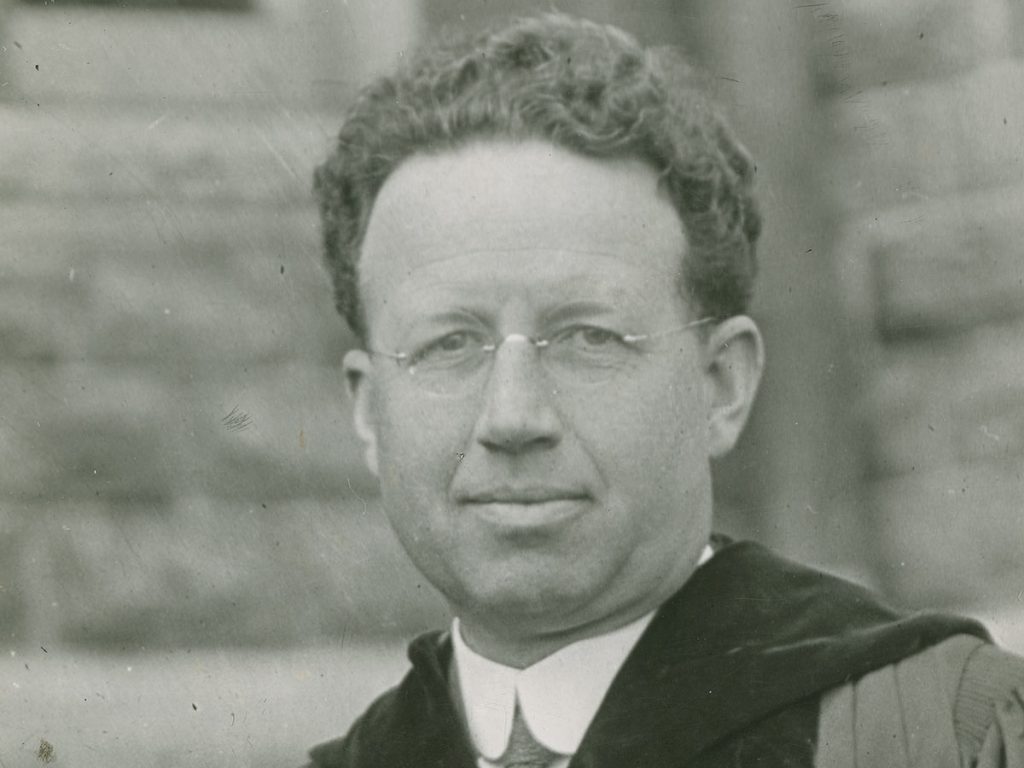
Harry Emerson Fosdick (May 24, 1878 – October 5, 1969) was an American Baptist pastor, theologian, author, and a central figure in the fundamentalist–modernist controversy within American Protestantism during the 1920s and 1930s. Born in Buffalo, New York, he graduated from Colgate University in 1900 and Union Theological Seminary in 1904, where he was ordained a Baptist minister in 1903.
He served as pastor at First Baptist Church in Montclair, New Jersey, from 1904 to 1915, and later volunteered as an Army chaplain during World War I.
Fosdick became widely known for his 1922 sermon “Shall the Fundamentalists Win?”, in which he defended a modernist interpretation of the Bible, viewing it as a record of the unfolding of God’s will rather than a literal, inerrant text. This sermon sparked national debate and led to a formal investigation by the Presbyterian Church, prompting his resignation from First Presbyterian Church in Manhattan in 1924. He was then called to lead Park Avenue Baptist Church, which was funded by John D. Rockefeller Jr., and subsequently became the founding pastor of the interdenominational Riverside Church in New York City when it opened in 1930, a position he held until 1946.
As a prominent liberal minister, Fosdick advocated for theistic evolution, opposed racism and injustice, and supported civil rights, including influencing Ruby Bates to testify in the Scottsboro Boys trial. He was a pacifist and a major influence on Martin Luther King Jr., who regarded him as “the greatest preacher of this century” and drew heavily on his sermons and writings. Fosdick was also a prolific writer, authoring 47 books and numerous articles, including works on biblical interpretation, social justice, and the role of religion in modern life. He was a regular preacher on the National Vespers radio program from 1926 to 1946, reaching millions of listeners.
Fosdick wrote the hymn “God of Grace and God of Glory” for the opening of Riverside Church and was known for his skill in pastoral counseling and for integrating psychology with religious practice. He remained active in social and religious causes during his retirement, publishing his autobiography, The Living of These Days, in 1956. He died at the age of 91 in Bronxville, New York, leaving a lasting legacy as a key figure in American religious liberalism.