The tradition of the Christmas tree as we know it today—bringing an evergreen tree indoors and decorating it—originated in early modern Germany during the 16th century among Protestant Christians.
Ancient and Pre-Christian Roots
Evergreen trees and branches symbolized eternal life and renewal during winter, used in ancient cultures like Egyptians, Romans (during Saturnalia), and northern European pagans to ward off evil spirits or celebrate the winter solstice. These practices influenced later customs but did not involve full decorated trees indoors.
Medieval and Early Christian Influences
In medieval Germany, “paradise trees” (fir trees hung with apples) represented the Garden of Eden in plays performed on December 24 (Adam and Eve’s feast day). These evolved into home decorations, often with wafers (later cookies) symbolizing the Eucharist.
16th-Century Development in Germany
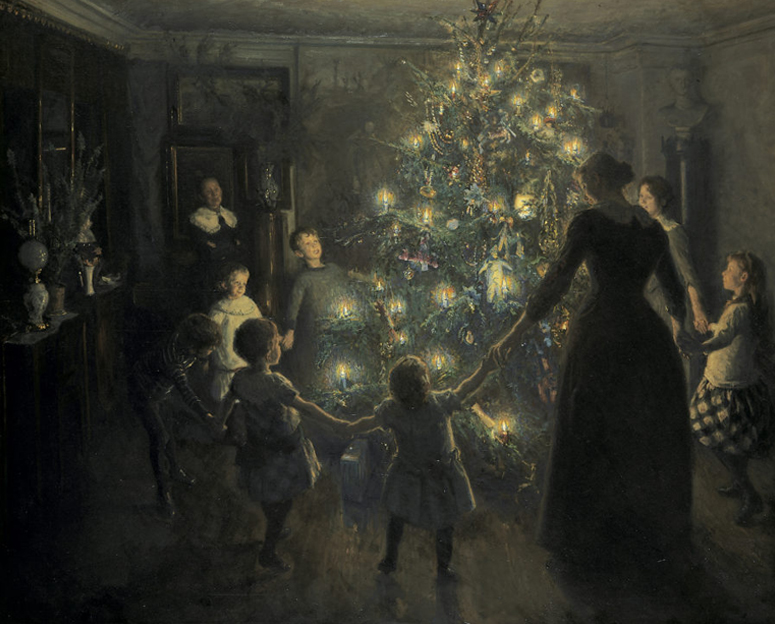
The first documented indoor decorated Christmas trees appeared in the Baltic region and Germany around 1605 (e.g., in Strasbourg). Protestant reformer Martin Luther is credited in legend with adding lighted candles to evoke starry skies, though evidence is later.
Spread and Popularization
By the 19th century, the custom was widespread in Germany.
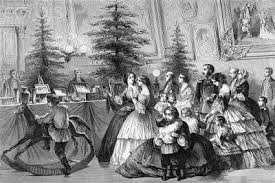
It reached England in the early 1800s (introduced by German royals like Queen Charlotte), but exploded in popularity after an 1848 illustration of Queen Victoria, Prince Albert (German-born), and their family around a decorated tree.
In the United States, German immigrants brought it in the 1700s–1800s (early records in Pennsylvania), but it gained broad acceptance in the 1840s–1850s, boosted by the same royal image republished in American magazines.
Today, it’s a global, largely secular tradition with lights, ornaments, and gifts.