The Jerusalem cross is a Christian symbol composed of a large central cross potent—also known as a cross with bars at the ends of each arm—surrounded by four smaller Greek crosses, one in each quadrant. It is also referred to as the five-fold cross, the Crusader’s cross, or cross-and-crosslets. Visually distinctive, it has served as a heraldic emblem and religious icon for centuries.
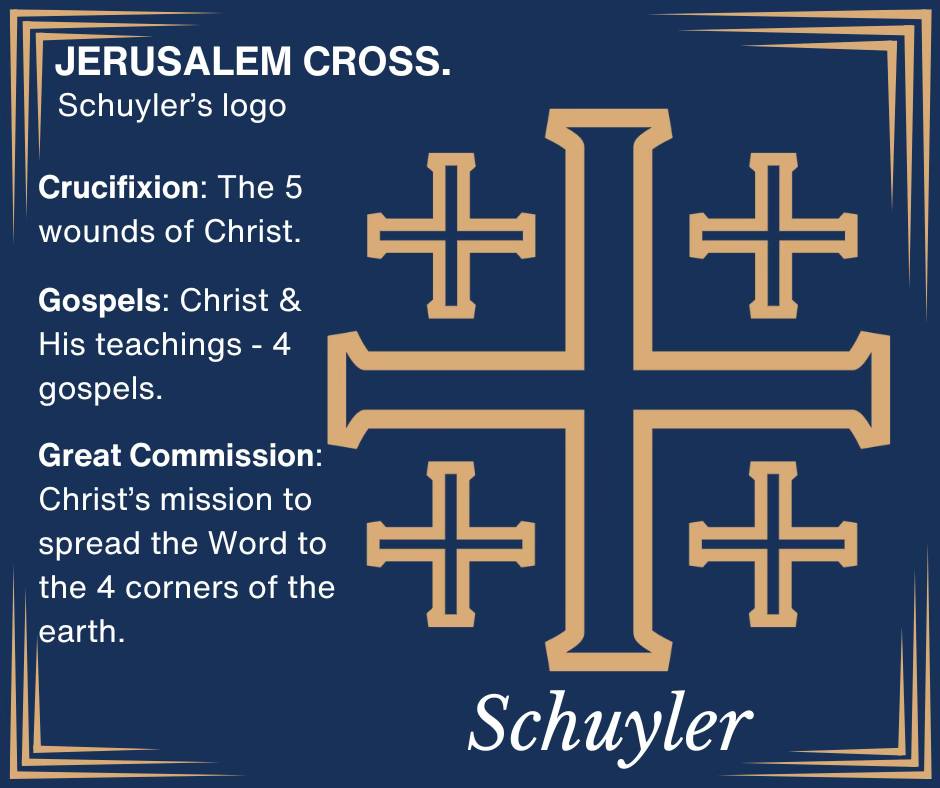
The Jerusalem cross, also known as the five-fold cross, Crusader’s cross, or cross-and-crosslets, is a distinctive Christian heraldic symbol consisting of a large central cross (often a cross potent with T-shaped ends on each arm) surrounded by four smaller Greek crosses, one in each quadrant.
Historical Context
It emerged during the Crusades and became associated with the Kingdom of Jerusalem (established after the First Crusade in 1099), serving as its coat of arms in the 13th century and traditionally linked to Godfrey of Bouillon, a key Crusader leader. Some sources trace similar designs back further, possibly to Eastern Christianity in the 5th–6th centuries or even Anglo-Saxon coins.

Symbolism
Common Christian interpretations include:
- The five crosses representing the five wounds of Christ (the large one for the spear wound in his side, and the smaller ones for the nails in his hands and feet).
- The four smaller crosses symbolizing the Four Evangelists (Matthew, Mark, Luke, John) or the spread of the Gospel to the four corners of the world.
It remains an official emblem of the Equestrian Order of the Holy Sepulchre of Jerusalem, a Catholic chivalric order, and appears in variants on the flag of Georgia.
Modern Context
In contemporary times, it is popularly used in Christian jewelry, tattoos (historically by pilgrims to the Holy Land), and decor as a symbol of faith tied to Jerusalem. However, it has also been adopted by some far-right, Christian nationalist, and white supremacist groups, who interpret it as representing a “crusade” for Western Christian dominance, leading to controversies in recent years (e.g., its appearance in political or military contexts). Traditional Christian usage emphasizes Christ’s sacrifice and evangelization rather than militancy.