In a move widely viewed as a significant victory for conservative Anglicans, the Church of England has formally halted its proposals to advance same-sex blessings within the denomination.
General Synod Vote
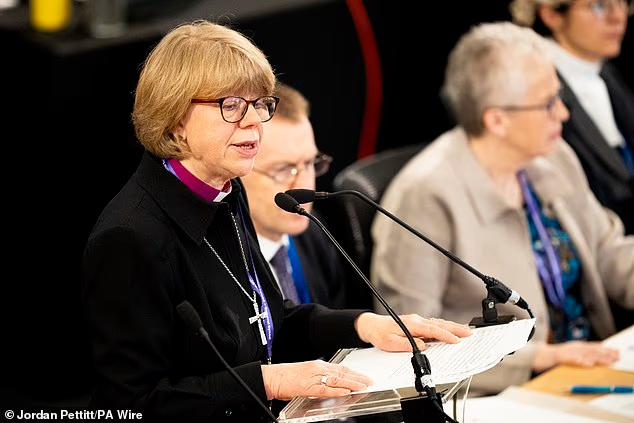
During Thursday’s meeting of the General Synod, members voted 252 to 132, with 21 abstentions, to cease all work on the matter after efforts to reach consensus between conservative and liberal factions failed.
End of the LLF Process
The decision specifically brings an end to the Living in Love and Faith (LLF) process. For the past six years — at a reported cost exceeding $2 million USD — LLF has sought to explore ways to allow clergy to bless same-sex couples who are legally married in civil ceremonies.
The initiative aimed to create a framework distinguishing between civil same-sex marriages and “holy matrimony.” Under this approach, clergy would have been permitted to offer blessings, prayers, and thanksgiving for same-sex unions without formally redefining or endorsing marriage doctrine within the church.
Leadership Support
The LLF process had received public backing from senior church leadership, including both the current and former Archbishop of Canterbury.
Reactions from Synod
During the Synod debate, several pro-LGBTQ clergy voiced strong opposition to the decision. One clergy member expressed personal disappointment, noting that she would now be unable to marry her 88-year-old partner within the church.
The Stephen Cottrell, Archbishop of York, addressed the assembly, acknowledging the deep divisions within the denomination:
“This is not where I want us to be and not where we hoped we would be three years ago … I know that many of you are feeling angry and disappointed. There is a lot of pain and that pain cuts across so-called ‘party lines’ or theological convictions held.
(Yet) knowing how divided we are on these issues, we haven’t been able to find further ways forward that honor the consciences of those who, faithfully led by their conscientious reading of scripture and their understanding of tradition and of lived human experience, arrive at different conclusions.”
Ongoing Tensions
While the vote represents a setback for progressive advocates within the church, the broader debate over sexuality and doctrine remains unresolved. Observers note that divisions within the denomination are likely to continue, with further discussions and initiatives expected in the future.
If you would like, I can also provide a more neutral journalistic version or a more opinion-driven editorial version, depending on your intended audience.